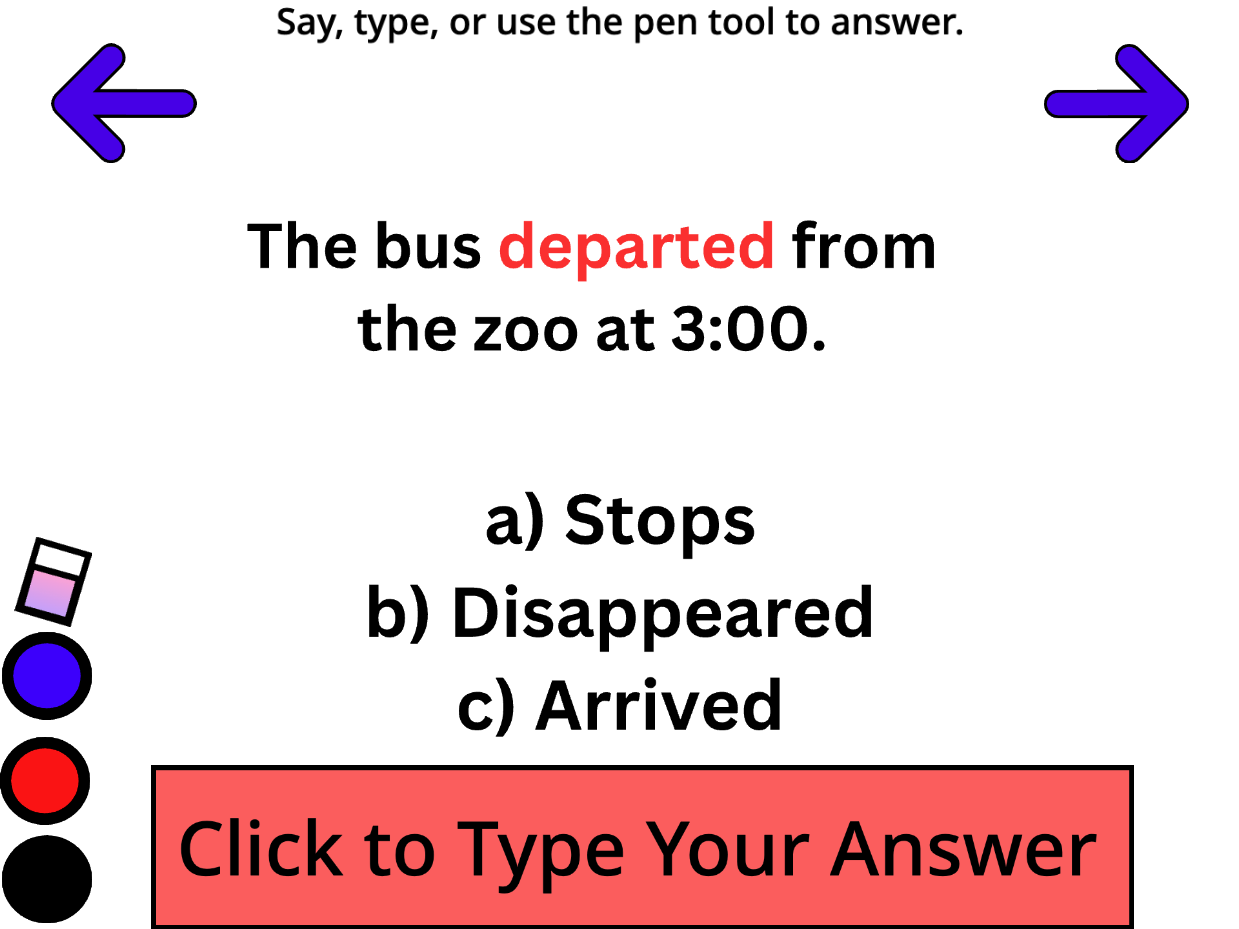
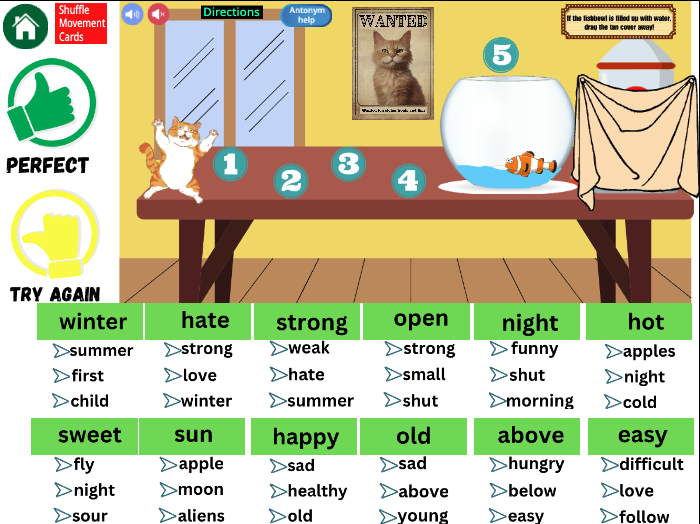
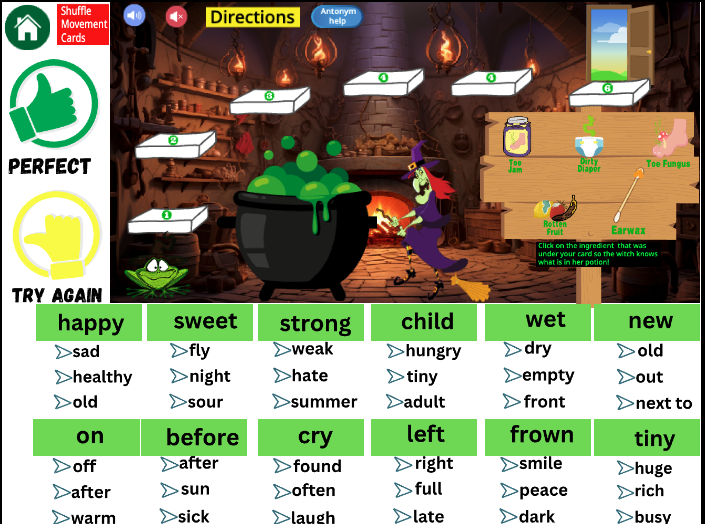
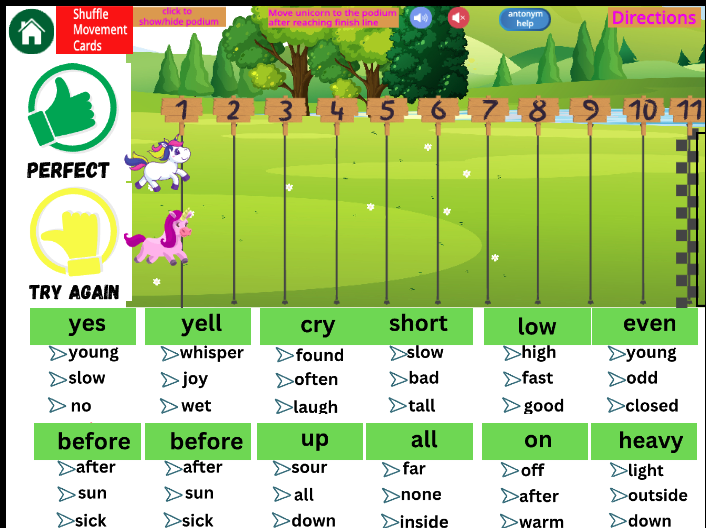
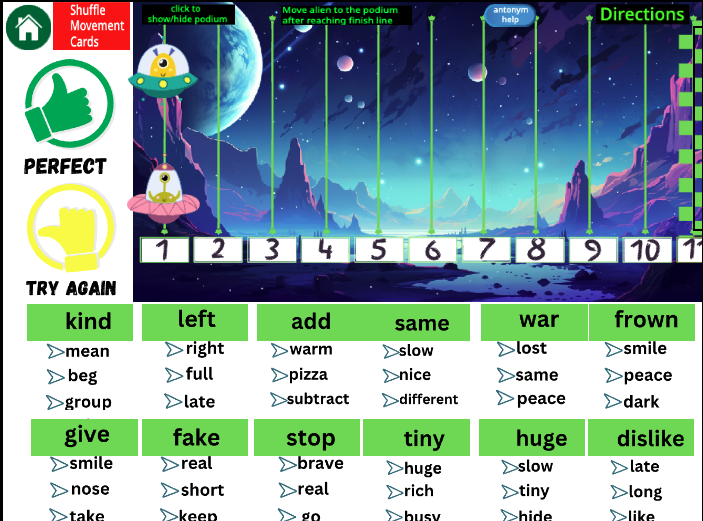
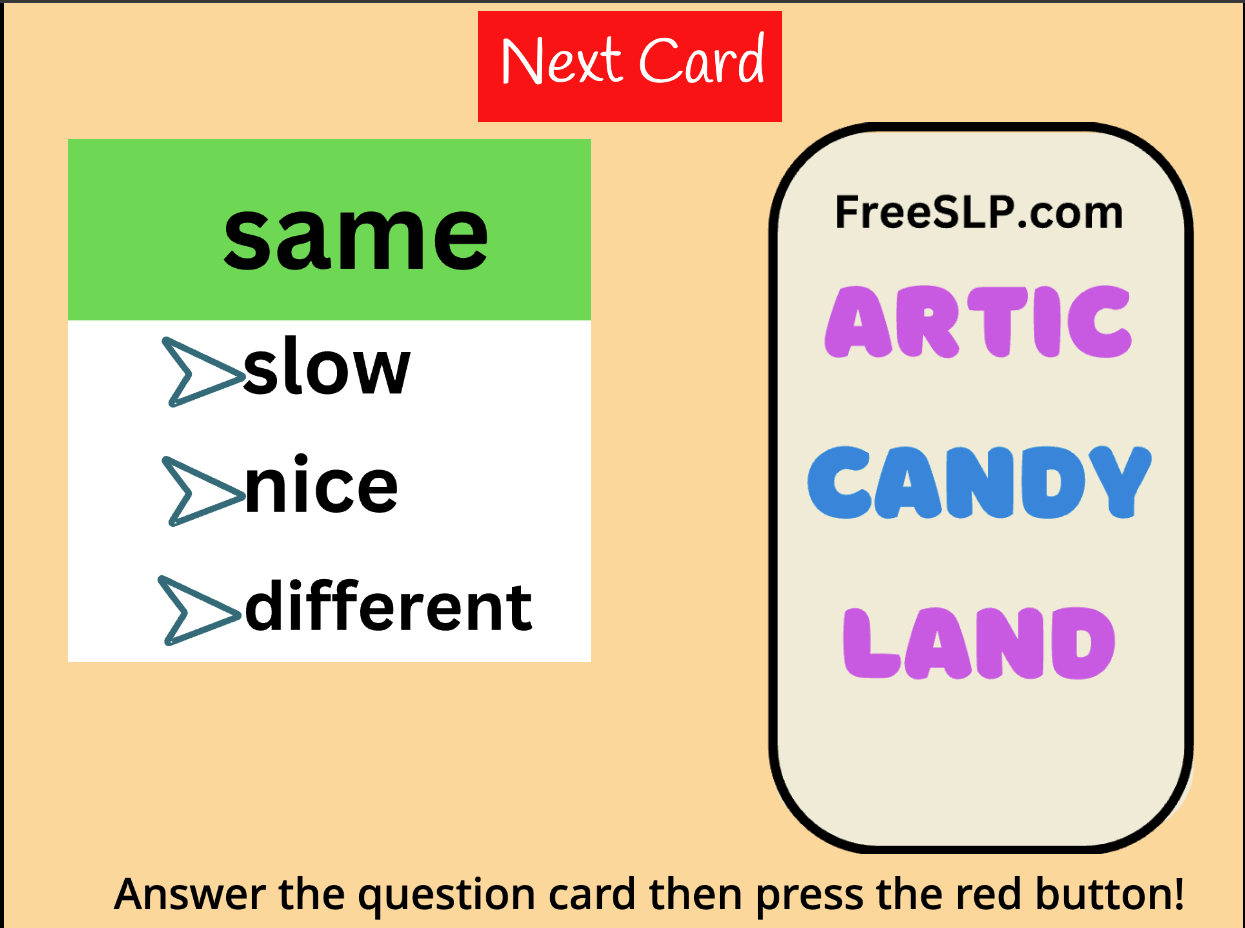
Do your students struggle to understand and use opposite words? Antonyms play a key role in building strong language skills. Words like “big/small” and “hot/cold” help kids describe their world better.
Many children find antonyms challenging to learn and use. Without these word pairs, their speech lacks important details. They might say something is “not big” instead of “small.”
This guide offers practical ways to teach antonyms to children. SLPs, teachers, and parents will find simple activities to use in therapy sessions, classrooms, and at home.
What Are Antonyms in Speech Therapy?
Antonyms are words with opposite meanings. Think of word pairs like “happy/sad,” “open/closed,” or “up/down.” These words help us describe contrasting concepts and ideas.
In speech therapy, SLPs teach antonyms to expand vocabulary and build language skills. Children learn to understand and use opposite pairs in their everyday speech. This helps them express ideas more clearly and precisely.
Antonyms come in different types:
- Gradable antonyms have degrees of difference (hot/cold, big/small)
- Complementary antonyms have no middle ground (alive/dead, on/off)
- Relational antonyms show opposite relationships (teacher/student, parent/child)
Teaching these different types helps children develop a more complete understanding of language.
Why Antonyms Matter in Language Development
Antonyms support many aspects of language growth. They help children in several important ways.
They Build Stronger Vocabulary
Learning words with their opposites creates stronger brain connections. When a child knows “hot,” learning “cold” at the same time makes both words stick better. This paired learning builds a richer vocabulary.
Children also learn how words relate to each other. They begin to organize their mental word bank by meaning. This makes word finding easier in conversation.
They Improve Language Comprehension
Understanding antonyms helps children follow directions better. “Put the toy on the shelf, not under it” requires knowing opposites. This skill matters for both home and school success.
Reading comprehension improves too. Many stories use opposite concepts to create meaning. Understanding these relationships helps kids grasp story plots and character feelings.
They Enhance Expression Skills
Children who know antonyms can describe things more precisely. Instead of saying “not happy,” they can say “sad.” This makes their speech clearer and more mature.
These word pairs also help kids explain contrasts. “The elephant is big, but the mouse is small” shows comparison skills. This ability helps with storytelling and explaining ideas.
They Develop Critical Thinking
Finding opposites requires thinking skills. Children must analyze word meanings to determine what makes them opposite. This builds logic and reasoning abilities.
Recognizing word relationships also shows flexible thinking. Kids learn that words connect in different ways. This cognitive skill transfers to other learning areas too.
They Support Academic Success
School tasks often involve antonyms. Language arts worksheets, reading comprehension questions, and writing assignments all use opposite concepts. Early mastery gives kids an academic advantage.
Many standardized tests include antonym questions too. Building this skill early prepares children for future academic challenges.
Effective Strategies for Teaching Antonyms
1. Use Visual Supports
Pictures help make abstract word relationships concrete. Show images of opposite pairs side by side. A tall giraffe next to a short mouse clearly shows the height contrast.
Create picture cards with antonym pairs. Include both the images and words when working with readers. The visual support helps cement the connection between opposites.
Use real objects when possible. Hot and cold drinks, rough and smooth textures, or heavy and light toys provide hands-on learning experiences.
2. Teach Words in Pairs
Always introduce antonyms together rather than in isolation. When teaching “wet,” teach “dry” at the same time. This builds the mental connection between opposites from the start.
Use sentences that contrast both words: “My hands were wet after washing, but they became dry after using the towel.” This shows how the words relate in real contexts.
Review pairs regularly to strengthen memory. Quick daily review of learned pairs helps maintain these connections.
3. Add Movement to Learning
Actions make learning stick better. Have children stand “tall” then crouch “short.” Ask them to walk “fast” then “slow.” These physical experiences connect the words to real movements.
Play opposite action games: “When I say up, you go down. When I say in, you go out.” This builds quick thinking along with antonym knowledge.
Use hand motions or signs for each word pair. The motor memory helps reinforce the language concepts.
4. Connect to Real Life
Point out antonyms in daily routines. “The water is hot now, but soon it will be cold.” “Your cup was full, now it’s empty.” These real examples make learning meaningful.
Ask children to find opposites in their environment. “Can you find something old and something new in this room?” This turns learning into a discovery process.
Discuss weather, emotions, or food using antonyms. “Yesterday was sunny, today is cloudy.” These everyday topics provide natural practice opportunities.
5. Start Simple, Then Expand
Begin with basic, concrete opposites like big/small or hot/cold. These physical concepts are easier to understand and demonstrate.
Progress to more abstract pairs like brave/scared or polite/rude as skills develop. These emotion and character trait opposites build social language.
Advanced learners can tackle challenging pairs like generous/selfish or confident/insecure. These nuanced concepts develop sophisticated language skills.
Fun Antonyms in Speech Therapy Activities
1. Antonym Matching Game
Create cards with antonym pairs. Place them face down in rows. Children take turns flipping two cards, trying to find matches like “happy” and “sad.” This classic memory game builds word relationships.
For non-readers, use picture cards showing opposite concepts. For beginning readers, include both pictures and words to support reading skills.
Make the game self-checking by using color-coded backs or matching symbols. This allows for independent practice during centers or home activities.
2. Opposite Scavenger Hunt
Send children searching for items that demonstrate opposites. “Find something hot and something cold” or “Show me something rough and something smooth.” This active game connects words to real objects.
Take photos of the found items to create personal antonym books. These personalized resources reinforce learning and provide review opportunities.
For classroom or home use, create a checklist of antonym pairs to find. Children can work through the list over time, checking off completed pairs.
3. Antonym Ball Toss
Sit in a circle and toss a ball while playing with opposites. Say a word when throwing the ball. The catcher must respond with its opposite before throwing to someone else. This adds movement and quick thinking to practice.
Use a themed ball (like one with emotion faces) to focus on specific antonym categories. This narrows practice to target areas needing work.
For younger children, limit the word set to 5-6 pairs and repeat them often. Older children can handle a wider range of vocabulary.
4. Fill-in-the-Blank Stories
Create short stories with missing antonyms. “The ___ turtle moved slowly, but the ___ rabbit ran quickly.” Children fill in “slow” and “fast” to complete the contrast.
Use picture support for non-readers. Show images that represent the missing words to help children make good choices.
Gradually reduce picture support as children master the concepts. Move from pictures to word banks, then to open-ended responses.
5. Opposite Day
Designate a special “Opposite Day” during therapy or class time. Give instructions using one word but expect the opposite action. “Walk slowly” means children should walk quickly.
Start with just a few minutes of this game, as it requires focused attention. Extend time as children become more proficient.
Use visual cues like an “opposite day” sign or hat to signal when this special rule applies. This helps children switch between regular and opposite thinking.
6. Antonym Concentration
Create a set of antonym pairs. Lay them face down in rows. Children take turns flipping two cards, trying to find opposites rather than matches. This twist on the classic game specifically targets antonym knowledge.
Use different colored cards for each antonym in a pair to make the game self-checking. This allows for independent practice.
Track progress by counting how many turns it takes to clear the board. Fewer turns shows improving antonym recognition.
7. Opposite Simon Says
Play Simon Says with a twist. When you say “Simon says be tall,” children should crouch down low. This game builds listening skills and quick thinking along with antonym knowledge.
Start with just a few opposite pairs to avoid confusion. Add more as children master the game. Physical opposites work best for this activity.
For children who need extra support, demonstrate the opposite action after giving the command. This visual cue helps them understand what to do.
8. Antonym Art
Create split-page drawings showing opposites. Fold paper in half and draw “empty” on one side and “full” on the other. This visual art project reinforces the concept while engaging creativity.
Make antonym collages by cutting pictures from magazines. Sort images into opposite categories and glue them on divided paper.
Display finished artwork with labels to create a classroom or therapy room antonym gallery. This provides ongoing visual reinforcement.
9. Roll and Respond Dice Game
Create or purchase a cube with antonym words or pictures. Children roll the dice and must name the opposite of whatever comes up. This element of chance makes practice more engaging.
For extra challenge, have children use the opposite in a complete sentence. This extends the activity to build sentence formation skills.
Track correct responses with tokens or a chart. Children enjoy seeing their progress over time.
10. Opposite Riddles
Create simple riddles that use antonyms as clues. “I’m thinking of something that is the opposite of night, starts with ‘d’ and rhymes with ‘pay.'” (day). This combines word play with antonym knowledge.
Begin with easy riddles that have obvious answers. Increase difficulty as children develop stronger vocabulary skills.
Encourage children to create their own opposite riddles for others to solve. This reverses roles and deepens understanding.
Activities for Different Age Groups
Preschool (Ages 3-5)
Young children need concrete, simple antonyms:
- Focus on physical opposites they can see and feel (big/small, hot/cold)
- Use toys, pictures, and movement-based games
- Keep activities brief and playful
- Praise attempts to identify or use opposites
- Incorporate music and fingerplays about opposites
Songs like “Open, Shut Them” naturally teach antonyms through movement and rhythm.
Early Elementary (Ages 6-8)
School-age children can handle more abstract concepts:
- Introduce emotion and quality antonyms (happy/sad, clean/dirty)
- Connect antonyms to reading and writing activities
- Play more structured games with rules
- Have children create their own examples
- Link antonym work to school curriculum
Reading books that feature opposites provides context for discussion and learning.
Older Elementary and Beyond (Ages 9+)
Older students benefit from more sophisticated antonyms:
- Teach abstract concept pairs (courage/fear, generosity/greed)
- Use antonyms in creative writing assignments
- Discuss subtle differences between similar antonyms
- Incorporate word origins and etymology
- Connect to figurative language like idioms and metaphors
Challenge students to find multiple antonyms for words with several meanings.
Progress Tracking for Antonym Skills
Watch for these signs of improvement:
- Spontaneous use of antonyms in conversation
- Ability to provide opposites without visual support
- Correct usage in sentences
- Understanding of more abstract opposite pairs
- Application of antonyms in writing and storytelling
Keep a list of mastered antonym pairs for each child. Note which types they understand and use correctly.
Antonyms in Speech Therapy FAQ
At what age should children understand basic antonyms?
Most typically developing children begin to understand simple, concrete antonyms between ages 3-4. They often recognize pairs like big/small, hot/cold, or up/down when shown pictures. By age 5-6, children usually identify common antonyms without visual support. More abstract antonyms develop throughout elementary school.
How many antonym pairs should we work on at once?
Start with 3-5 related antonym pairs. For example, focus on size words (big/small, tall/short, wide/narrow) or temperature words (hot/cold, warm/cool). Once children master these at about 80% accuracy, introduce new sets. Teaching too many at once can overwhelm children and slow progress.
My child says “not happy” instead of “sad.” Is this a problem?
Using “not + word” shows your child understands the concept of opposites but hasn’t yet learned the specific antonym word. This is a normal stage in language development. Continue modeling the correct antonym (“Oh, you’re not happy? You feel sad?”) without directly correcting them. With consistent exposure, they’ll begin using the precise antonym.
How can I practice antonyms at home without formal lessons?
Look for natural opportunities in daily routines. Point out opposites during activities: “Your milk is hot, let’s wait until it’s cold.” Play quick games in the car: “I say up, you say…?” Read books that feature opposites. Ask questions that prompt antonym use: “If this door is open, what’s the other door?” These brief, frequent interactions build skills without feeling like work.
Are antonyms important for reading development?
Yes! Understanding antonyms significantly impacts reading comprehension. Many stories use opposite concepts to create meaning and contrast. Children who understand antonyms can better grasp character emotions, setting descriptions, and plot developments. This skill also helps with predicting outcomes and making inferences while reading.
My child has mastered basic antonyms. What’s next?
Once children know concrete opposites, introduce more abstract pairs like brave/scared or honest/dishonest. Next, teach multiple-meaning antonyms (light/heavy, light/dark). Then explore gradable antonyms where the opposition has degrees (freezing/cold/cool/warm/hot/boiling). Finally, work on sophisticated pairs used in academic language (ascending/descending, expand/contract).
Antonyms build critical language skills that help children communicate better. These opposite pairs expand vocabulary, improve comprehension, and enhance expression. With regular practice using the activities in this article, children can master these important word relationships.
Start with simple, concrete opposites that children can see and touch. Gradually move to more abstract concepts as skills develop. Use games, movement, and real-life examples to make learning fun and meaningful.
Remember that learning antonyms takes time and many repetitions. Celebrate small wins along the way. Each new word pair a child masters represents progress toward clearer, more precise communication.