



Activities to Teach Sequencing Skills to Young Children
Discover why sequencing skills are crucial for child development and learn 10 engaging activities from FreeSLP.com to help your child master this important cognitive skill.
Why Sequencing Skills Matter for Your Child’s Development
Does your child struggle to tell stories in the right order? Do they get confused when following multi-step directions? These challenges might be related to sequencing skills.
Sequencing is the ability to put events, ideas, and objects in a logical order. This skill is fundamental to how we navigate daily life. We use sequencing all day long—planning our tasks in order, understanding life events, and making sense of stories and information.
For many children, especially those with language delays, sequencing can be a difficult concept to grasp. At FreeSLP.com, we understand the importance of building these skills early. Let’s explore why sequencing matters and how you can help your child develop this critical ability.
The Connection Between Sequencing and Learning
Sequencing skills impact many areas of a child’s development:
Reading Comprehension
When children read, they need to follow the logical flow of a story. Understanding that stories have a beginning, middle, and end helps them make predictions and understand plot development.
Writing Skills
Creating coherent written work requires organizing thoughts in a logical sequence. Children must learn to order their ideas to communicate effectively.
Math Abilities
Many mathematical processes involve specific sequences of steps. From counting to solving complex problems, sequencing is essential.
Following Directions
Daily tasks require following steps in order. From tying shoes to completing homework, sequencing skills help children become more independent.
Verbal Expression
When telling stories or explaining events, children need to organize their thoughts in a way that makes sense to listeners.
Key Sequence Words to Teach Your Child
Using specific language helps children understand and express sequence. Introduce these important transitional words:
- First, second, third, last
- Beginning, middle, end
- Before, after
- Next, then
- Finally
- First of all
- Meanwhile
- Subsequently
Model these words in everyday conversation to help your child internalize sequencing concepts.
10 Engaging Activities to Develop Sequencing Skills
Here are fun, practical ways to help your child develop sequencing abilities at home:
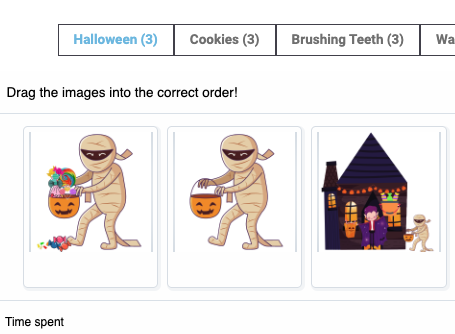
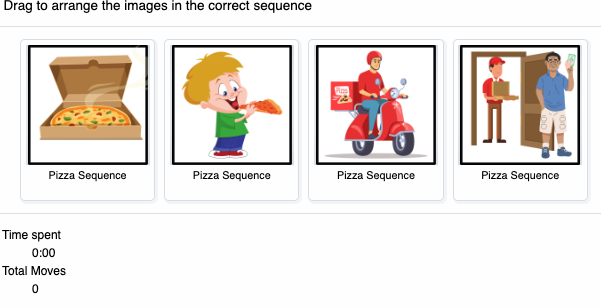
1. Picture Sequencing Stories
Materials needed: Sequential pictures from magazines, picture books, or comics
How to play: Cut out pictures that show a clear sequence of events. Start simple with younger children—just two pictures showing beginning/end or first/last. For older children, use three to six pictures.
Scramble the pictures and have your child arrange them in logical order. Ask them to tell the story using sequence words like “first,” “next,” and “last.” If they place pictures in an illogical order (like a clean dog before a dog getting bathed), gently ask why that doesn’t make sense and encourage them to rearrange.
Learning boost: Use nature sequences like tadpole metamorphosis, plant growth, or changing seasons to enhance science learning while practicing sequencing.
2. Personal Timeline with Family Photos
Materials needed: Family photos from different stages of your child’s life
How to play: Gather photos showing your child from infancy to the present. Mix them up and help your child arrange them chronologically.
As they order the photos, encourage them to use words like “younger,” “older,” “shorter,” and “taller.” Have them tell stories about themselves at different ages: “This is when I was born. Next, I learned to crawl. Then, I learned to walk when I was older.”
Learning boost: This activity not only builds sequencing skills but also strengthens your child’s sense of personal history and identity.
3. Alphabet and Number Sequencing Games
Materials needed: Index cards or paper
How to play: Create flashcards with letters or numbers. For younger children, use sequential letters or numbers (like A-B-C-D or 1-2-3-4). For more challenge, use non-sequential letters or numbers (like A-C-F-H or 2-5-8-10).
Have your child arrange the cards in proper sequence. This activity is more challenging because they must figure out which letters or numbers are missing between the ones you’ve provided.
Learning boost: This game reinforces basic literacy and numeracy skills while building sequencing abilities.
4. Story Sequence Strips
Materials needed: Short stories or nursery rhymes, scissors, paper strips
How to play: Write simple sentences from a familiar story on strips of paper—one sentence per strip. Start with just two strips (beginning and end), then gradually add more complexity with additional sentences.
Mix up the strips and have your child arrange them in the correct order to tell the complete story. Familiar songs and nursery rhymes like “Jack and Jill” or “Happy Birthday” work perfectly for this activity.
Learning boost: This activity bridges the gap between sequencing and reading comprehension skills.
5. Mapping Familiar Routes
Materials needed: Paper, crayons or markers
How to play: Choose a familiar route in your home, neighborhood, or school. Have your child walk the route with you and then draw a simple map with symbols representing landmarks along the way.
Older children can write directions in numbered steps or in paragraph form. Exchange maps with siblings or friends to see if they can follow the directions to reach the destination.
Learning boost: This activity combines sequencing with spatial awareness and direction-following skills.
6. Cooking with Kids
Materials needed: Simple recipe ingredients, paper, crayons
How to play: Select an easy recipe that doesn’t require using the stove or oven—like making a sandwich or preparing a bowl of cereal. Talk through each step as you prepare the food together.
Afterward, have your child repeat the steps verbally, write them down (if age-appropriate), and draw pictures showing the sequence of preparation.
Learning boost: This practical activity makes sequencing concrete while teaching life skills and following directions.
7. Music and Movement Sequences
Materials needed: Familiar songs, open space for movement
How to play: Sing familiar songs with your child, stopping occasionally to let them fill in the next phrase. Clap or tap out simple rhythmic patterns and have them repeat and continue the pattern.
Create a simple dance routine with 4-6 steps. Practice together, then take turns leading. Start the sequence, then stop and let your child continue.
Learning boost: This activity incorporates auditory sequencing, memory, and physical movement.
8. “I Spy” Sequence Game
Materials needed: Everyday objects around your home
How to play: Play a modified version of “I Spy” by adding logical reasoning. After identifying an object, create a sequence of how and why we use it.
For example: “I spy a fork. I use a fork to eat food. I eat food to keep healthy. I need to be healthy so I can run and play.” Encourage your child to continue the sequence until they can’t think of additional logical connections.
Learning boost: This game develops sequential thinking and logical reasoning skills.
9. Daily Routine Charts
Materials needed: Paper, markers, photos or clipart (optional)
How to play: Create a visual chart showing your child’s daily routine—waking up, getting dressed, eating breakfast, brushing teeth, etc. Review the sequence each morning.
Ask questions like, “What do we do after breakfast?” or “What comes before bedtime?” to reinforce their understanding of the sequence.
Learning boost: This practical tool helps children understand time concepts while building independence in following routines.
10. Sequence Storytelling with Props
Materials needed: Small toys, stuffed animals, or dolls
How to play: Use props to act out simple stories with clear sequences. Model the storytelling first, using sequence words prominently.
Then give your child the props and encourage them to retell the story in the correct order. Gradually increase the complexity of the stories as their skills improve.
Learning boost: This activity combines sequencing with narrative skills and creative expression.
Incorporating Sequencing into Everyday Life
Beyond formal activities, look for natural opportunities to practice sequencing throughout your day:
- In the car: “Which way will I turn at the stop sign? What comes next on our route?”
- During household tasks: “What will I do with these dirty dishes? What happens after I put them in the dishwasher?”
- At bedtime: “Tell me what happened at school today, from the beginning to the end.”
- During transitions: “Before you go outside in the cold, what do you need to do first? What comes next?”
These everyday moments reinforce sequencing concepts naturally and help children understand their importance in daily life.
When to Seek Additional Help
Most children develop sequencing skills gradually through everyday experiences and the types of activities described above. However, some children may need additional support.
Consider consulting a speech-language pathologist if your child:
- Has significant difficulty following multi-step directions
- Struggles to retell simple stories in order
- Cannot describe routine events in sequence
- Shows frustration when trying to organize thoughts or tell stories
- Has trouble with reading comprehension despite adequate decoding skills
Frequently Asked Questions About Sequencing Skills
At what age should children develop sequencing skills?
Basic sequencing skills begin developing in toddlerhood (around age 2-3) when children start following simple two-step directions. By age 4-5, most children can sequence 3-4 steps in familiar routines and simple stories. These skills continue to develop throughout the elementary school years as children encounter more complex narratives and multi-step problems.
How do sequencing skills affect reading abilities?
Sequencing is fundamental to reading comprehension. When children understand that stories follow a logical order (beginning, middle, end), they can better predict outcomes, understand cause and effect, and comprehend the overall narrative. Poor sequencing skills often contribute to difficulties with reading comprehension.
Can sequencing difficulties indicate other learning challenges?
Yes, difficulties with sequencing can sometimes be associated with other learning differences. Children with language disorders, ADHD, auditory processing disorders, or certain learning disabilities may struggle with sequencing tasks. However, many children simply need additional practice and explicit instruction in sequencing concepts.
How can I help my child who gets frustrated with sequencing activities?
Start with very simple sequences (just two steps) and gradually increase complexity as your child experiences success. Use visual supports like pictures whenever possible. Break down multi-step tasks into smaller chunks. Provide plenty of encouragement and celebrate small improvements to build confidence.
Are there digital resources that help with sequencing skills?
Yes, many educational apps and websites offer sequencing games and activities. Look for story sequencing apps, digital puzzle games that arrange pictures in order, or interactive story creators. However, hands-on activities and real-life practice remain extremely valuable for developing these skills.
How do executive function skills relate to sequencing abilities?
Sequencing is closely related to executive function skills like planning, organizing, and time management. When children practice sequencing, they’re also strengthening these important cognitive skills that will serve them throughout their academic careers and daily lives.
Conclusion
Sequencing is a foundational skill that impacts many aspects of your child’s development—from basic communication to academic success. By incorporating sequencing activities into your daily routines and playtime, you’re helping your child build essential cognitive skills.
Remember that children develop at different rates, and some may need more practice than others. The key is to make sequencing practice fun, engaging, and relevant to your child’s interests and daily life.
For more resources on language development, learning activities, and speech-language skills, visit FreeSLP.com.