Analogies are powerful tools for building language, reasoning, and vocabulary skills. They help children make connections between ideas—an essential part of problem-solving, comprehension, and higher-level thinking.
In speech therapy, teaching analogies supports both expressive language and critical thinking, helping students describe relationships between words, concepts, and experiences.
Let’s look at what analogies are, how to teach them effectively, and some easy-to-use examples you can bring into therapy sessions right away.
What Is an Analogy?
An analogy shows how two pairs of words or ideas are related.
It often follows this pattern:
A is to B as C is to D.
For example:
Dog is to puppy as cat is to kitten.
Both “puppy” and “kitten” are baby animals. This helps students understand relationships like “animal–baby,” “part–whole,” or “cause–effect.”
Analogies are everywhere—stories, tests, and everyday conversations. Teaching them helps students understand relationships between ideas, not just memorize words.
Why Analogies Matter in Speech Therapy
Analogies build semantic relationships—connections between meanings of words. When students understand how ideas relate, they can:
Expand vocabulary
Improve reading comprehension
Strengthen reasoning and problem-solving
Enhance expressive language for writing and conversation
Understand figurative and abstract language
For SLPs, analogies are also a great way to target goals like:
Common Types of Analogies
Understanding the relationship between words is key. Here are the most common types SLPs teach:
| Type | Example | Relationship |
|---|
| Synonym | hot : warm :: cold : chilly | Same meaning or similar |
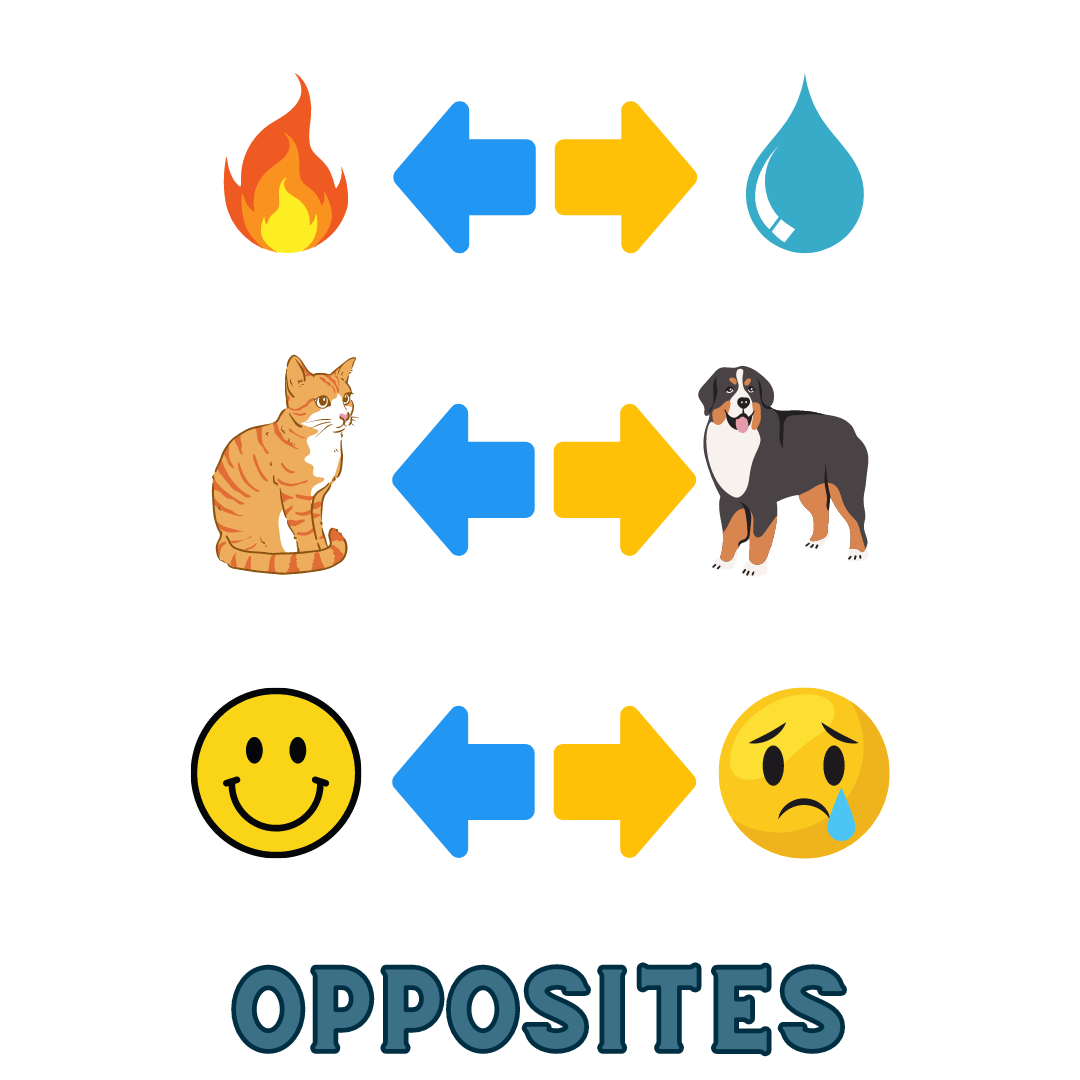
| Antonym | big : small :: tall : short | Opposite meanings |
| Part to Whole | petal : flower :: wheel : car | A part belongs to a whole |
| Category | apple : fruit :: carrot : vegetable | One belongs to a group |
| Function | broom : sweep :: pen : write | What something is used for |
| Cause and Effect | rain : puddle :: fire : smoke | One causes the other |
| Characteristic | pillow : soft :: rock : hard | Describes an attribute |
| Degree | drizzle : storm :: breeze : hurricane | Shows intensity or strength |
| Sequence | breakfast : lunch :: spring : summer | One follows the other |
These patterns teach children how words connect beyond surface meanings.
Analogy Sentence Examples
Here are some easy-to-understand examples you can use during speech or language lessons:
Bird is to fly as fish is to swim.
Fire is to hot as ice is to cold.
Teacher is to school as doctor is to hospital.
Knife is to cut as broom is to sweep.
Smile is to happy as cry is to sad.
Seed is to plant as egg is to bird.
Sun is to day as moon is to night.
Wheel is to car as wing is to airplane.
Dog is to bark as cat is to meow.
Rain is to umbrella as snow is to coat.
You can adapt these examples to fit different ages and speech goals by adjusting vocabulary complexity.
How to Teach Analogies in Speech Therapy
1. Start with Simple Relationships
Begin with familiar categories (animals, foods, or school items).
“Apple is to fruit as carrot is to…?”
This helps students focus on the relationship rather than memorizing words.
2. Use Visuals
Pictures make relationships concrete. Use images or real objects to show pairs like key–lock or sock–shoe.
Ask:
“What do these have in common?”
“How are they different?”
Visual cues build conceptual understanding before expecting verbal reasoning.
3. Think Aloud to Model Reasoning
Demonstrate your thought process:
“A broom is for sweeping. What is a pen for? Writing! So broom is to sweep as pen is to write.”
Hearing modeled thinking teaches students how to reason through relationships.
4. Turn It into a Game
Try these fun no-prep activities:
Analogy Cards: Match pictures or words that complete analogies.
“What’s Missing?” Game: Give the first three parts of an analogy and have the child fill in the last one.
Analogies in Action: Act out pairs—pretend to bark and meow to illustrate animal sounds.
Mystery Match: Mix up pairs and have students find which two belong together.
Games keep abstract concepts engaging and memorable.
5. Relate to Real-Life Experiences
Tie analogies to familiar routines:
“Fork is to eating as pencil is to writing.”
“Winter is to snow as summer is to sunshine.”
Personalizing analogies helps students retain meaning and apply reasoning beyond therapy.
6. Encourage Explanations
Ask follow-up questions to deepen comprehension:
“How do you know they go together?”
“Why does that make sense?”
Explaining their reasoning strengthens expressive language and critical thinking.
Fun Extension Activities
Story Analogies: Identify relationships in stories (“Hero is to villain as good is to bad”).
Drawing Analogies: Have students draw both pairs to visualize connections.
Analogy Hunt: Find analogies in books, songs, or classroom posters.
Opposite Challenges: Create analogies using antonyms to build contrast vocabulary.
FAQs
At what age can children start learning analogies?
Basic analogical reasoning begins around age 5–6, but formal analogies (like “A is to B as C is to D”) are typically introduced in upper elementary grades.
How do analogies help language development?
They strengthen word associations, reasoning, and the ability to explain relationships—all crucial for academic and conversational language.
Can I use analogies with children who have language delays?
Yes! Start with visual, concrete examples and simplify vocabulary. Analogies can be adapted for any level by using familiar concepts.