Helping Every Child Find Their Voice — Without Spending a Dime
Finding quality speech therapy materials that are both effective and free can feel like a full-time job. Whether you’re an SLP managing a large caseload, a teacher supporting communication in your classroom, or a parent looking to help your child at home, you’ve probably spent hours scrolling for the right tools.
The good news? You don’t have to buy expensive subscriptions or spend your weekends making worksheets. There are incredible free resources available online that can make your sessions more engaging, organized, and productive.
At FreeSLP.com, our mission is to make sure every speech-language pathologist, teacher, and parent has access to research-based, easy-to-use materials—without the price tag. Let’s explore the best free speech therapy materials for every age and how you can use them to support speech and language growth in your students or children.
Best Free Materials for Preschool Speech Therapy
Preschool speech therapy is all about play, movement, and exploration. Young learners learn best when they’re having fun and when language is embedded naturally into activities.
1. Picture Cards and Play Themes
Classic picture cards never go out of style. They help children label objects, practice sounds, and answer questions. FreeSLP.com offers themed picture sets like animals, foods, and toys that pair beautifully with pretend-play scenes. You can also use them in quick turn-taking games or “I Spy” sessions.
2. Early Sound Games
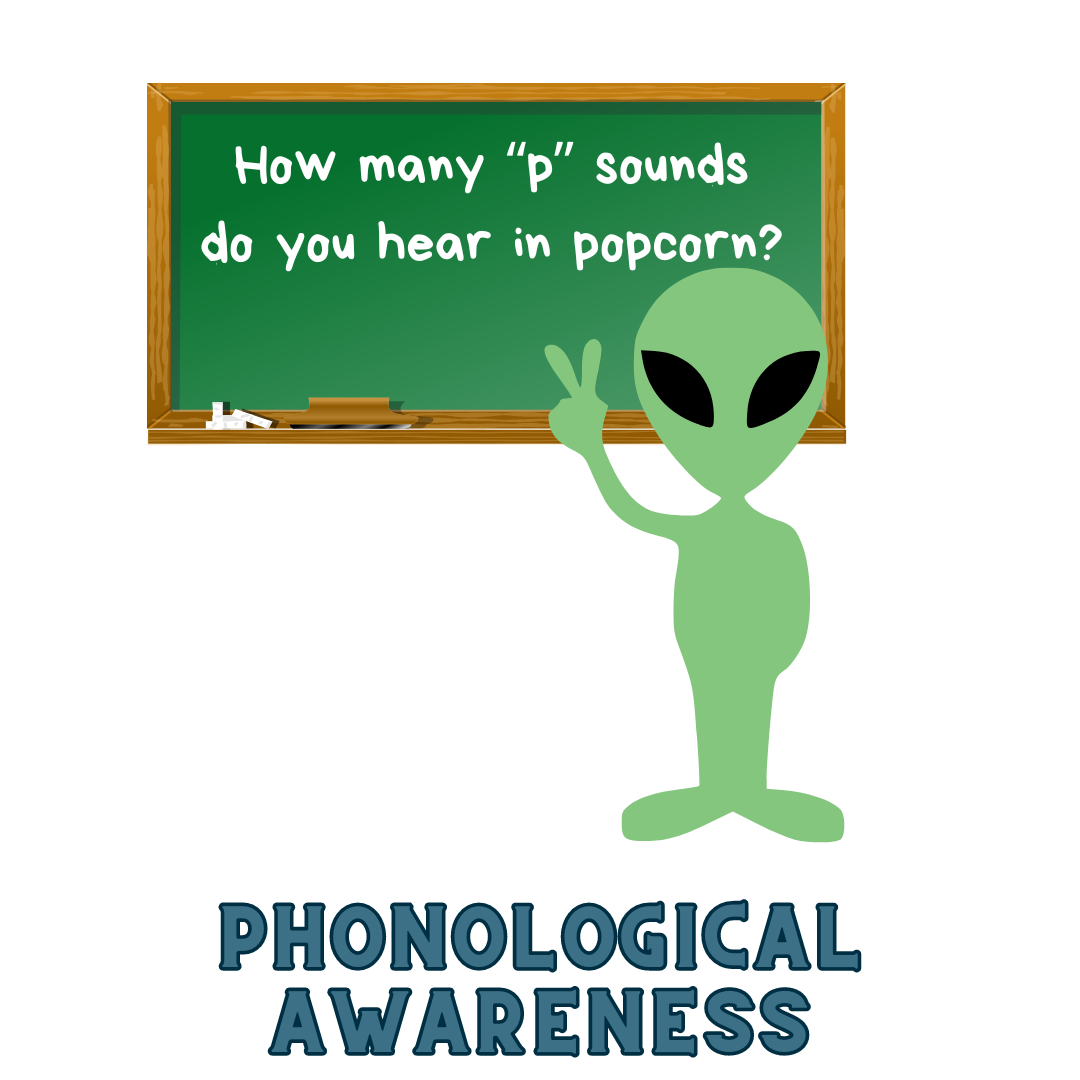
Many preschoolers work on early developing sounds like /p/, /b/, /m/, /t/, and /d/. Use free printable articulation cards to create matching games or scavenger hunts. Place cards around the room and have students “find the /p/ words.”
3. Storytelling with Simple Books
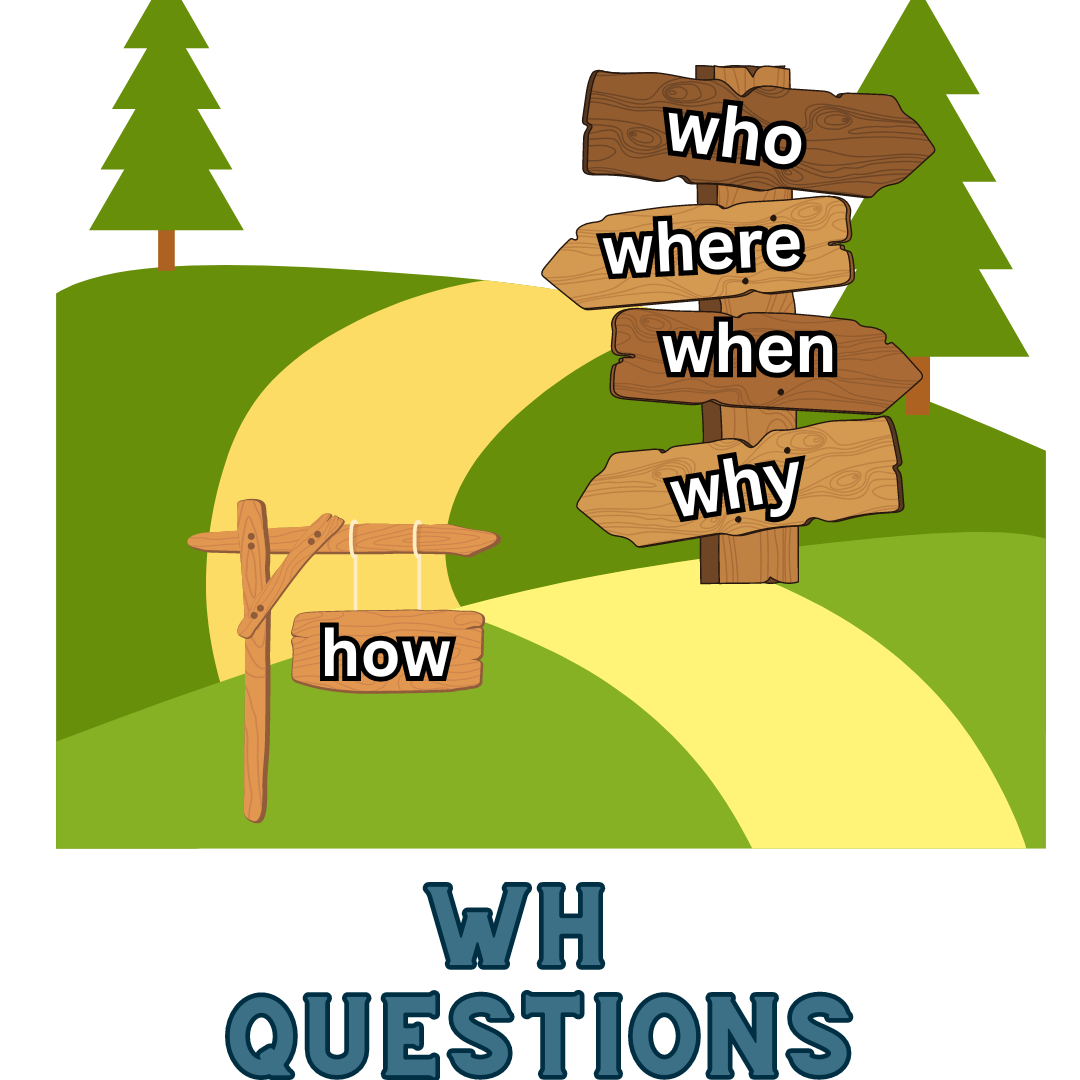
Short picture books or story cards are perfect for targeting early vocabulary and sentence length. After reading a book, ask questions like “Who?” and “What happened?” Encourage children to retell parts of the story using toys or puppets.
4. Play-Based Learning Ideas
Cooking play: Target sequencing (“First we stir, then we bake”)
Farm play: Practice animal sounds and action verbs
Car play: Use prepositions like under, over, behind
All of these can be supported with free printable visuals from FreeSLP.com to keep your sessions structured yet flexible.
Best Free Materials for Elementary Students
By elementary school, speech therapy sessions begin focusing more on specific goals—articulation, language structure, and early literacy. Children are ready for games, stories, and challenges that make practice feel like play.
1. Articulation Word Lists and Games
Articulation practice doesn’t have to be repetitive. FreeSLP.com’s articulation word lists cover every sound in English and include printable board games and digital spinners. These help students stay motivated while practicing target words in sentences and short stories.
2. Phonological Process Activities
Common processes at this age include fronting, gliding, and cluster reduction. Minimal pair cards are perfect for these goals. You can print free sets, cut them apart, and play “Same or Different?” to help students hear and correct their speech differences.
3. Language-Building Worksheets
Many SLPs love themed worksheets that match the school calendar. Try no-prep seasonal packets—fall for describing, winter for sequencing, spring for problem solving. Each theme keeps sessions fresh and aligned with classroom vocabulary.
4. Story Retell and Comprehension
Printable story sequences and picture stories make comprehension practice easy. Have students retell the story in order, answer “wh-questions,” or draw what happens next. For higher engagement, pair visuals with story cubes or picture dice.
5. Social Skills Scenarios
Elementary students benefit from free social situation cards. Role-play scenarios like “asking to join a game” or “handling losing politely.” They’re quick, engaging, and easy to use in groups or individual sessions.
Best Free Materials for Middle School Speech Therapy
Middle school therapy can be tricky. Students want to feel mature and independent, so materials must match their age and interests while still targeting language and communication skills.
1. Figurative Language and Idiom Practice
Free idiom cards and worksheets help students understand figurative language used in conversation and reading. Discuss idioms like “break the ice” or “hit the books,” then have students draw or act them out.
2. Vocabulary and Context Clues
Middle school students often need support building academic vocabulary. Use free vocabulary organizers, synonym/antonym worksheets, and sentence completion games. Encourage them to identify word meanings from context during short reading passages.
3. Conversation Starters
Printable “Would You Rather” or “What Would You Do If…” cards work wonderfully for social language and pragmatic practice. They help students practice turn-taking, elaborating, and perspective taking.
4. Reading Comprehension Activities
Use short nonfiction texts with comprehension questions that focus on inferencing, main idea, and summarizing. FreeSLP.com has leveled comprehension passages that work perfectly for mixed-group sessions.
5. Goal-Setting and Self-Reflection
Older students can start taking ownership of their goals. Use free printable progress trackers or “My Speech Goals” templates. Reviewing progress builds confidence and encourages carryover into daily communication.
Best Free Materials for High School Speech Therapy
In high school, therapy shifts toward functional language, executive function, and real-world communication. Students need tools that prepare them for jobs, relationships, and life after graduation.
1. Executive Function Printables
Free planners, checklists, and task-management charts help students plan assignments and manage time. Teach strategies for prioritizing tasks and breaking big projects into smaller steps.
2. Life-Skills Communication Activities
Role-play real-world situations like ordering food, making appointments, or interviewing for a job. You can download free scripts or visual prompts from FreeSLP.com to make sessions interactive.
3. Vocabulary for Work and College
Practice words commonly found in workplace or academic settings. Free “real-world vocabulary” lists focus on professional language, customer service, and communication in group projects.
4. Social Thinking and Perspective Activities
High school students often need explicit teaching around tone of voice, body language, and empathy. Use free social scenario worksheets and group discussions to build awareness and confidence.
5. Functional Reading and Writing
Provide free materials that focus on interpreting directions, writing clear emails, and reading informational texts. These activities help bridge therapy with real-life success.
Using Free Speech Therapy Materials at Home or in the Classroom
Parents and teachers play a key role in supporting speech and language growth beyond therapy sessions. The best part? Many materials from FreeSLP.com are designed to be flexible for both home and school.
For Parents
Use printable word lists during daily routines (mealtime, car rides, bedtime stories).
Read short stories together and talk about characters’ feelings or choices.
Celebrate small wins—every corrected sound or longer sentence is progress!
For Teachers
Incorporate free language worksheets into literacy centers or morning work.
Use social scenario cards for group discussions.
Keep a binder of quick articulation activities for five-minute “speech breaks.”
The more consistent the practice, the faster children carry over their new skills into everyday life.
Conclusion
Speech therapy doesn’t have to be complicated—or expensive. Whether you’re helping a preschooler say their first words or guiding a high school student to communicate confidently, free materials can make all the difference.
You can find hundreds of no-prep printables, games, and therapy tools at FreeSLP.com, all created by SLPs who understand your challenges and your passion for helping kids communicate.
Explore, download, and make therapy easier today.
FAQ Section
1. Where can I find free speech therapy materials?
You can find a wide range of free materials on websites like FreeSLP.com, which offers printable games, articulation lists, language activities, and themed packets for every age group. Many are no-prep and ready to use instantly.
2. How do I know which materials fit my student’s age?
Preschoolers do best with play-based visuals and simple vocabulary. Elementary students need games and stories. Middle and high schoolers prefer real-world language and social-thinking materials. Start with age-appropriate themes and adjust complexity as they grow.
3. Can parents use these materials at home?
Absolutely! Free speech therapy materials are designed to be user-friendly. Parents can use word lists, story cards, or comprehension passages during daily routines. Short, frequent practice is best for building carryover.
4. How can teachers support speech goals in class?
Teachers can embed speech and language activities into reading, writing, and small-group lessons. Use visuals, sentence starters, or vocabulary cards from FreeSLP.com to reinforce what students are learning in therapy.
5. What are the best free articulation activities?
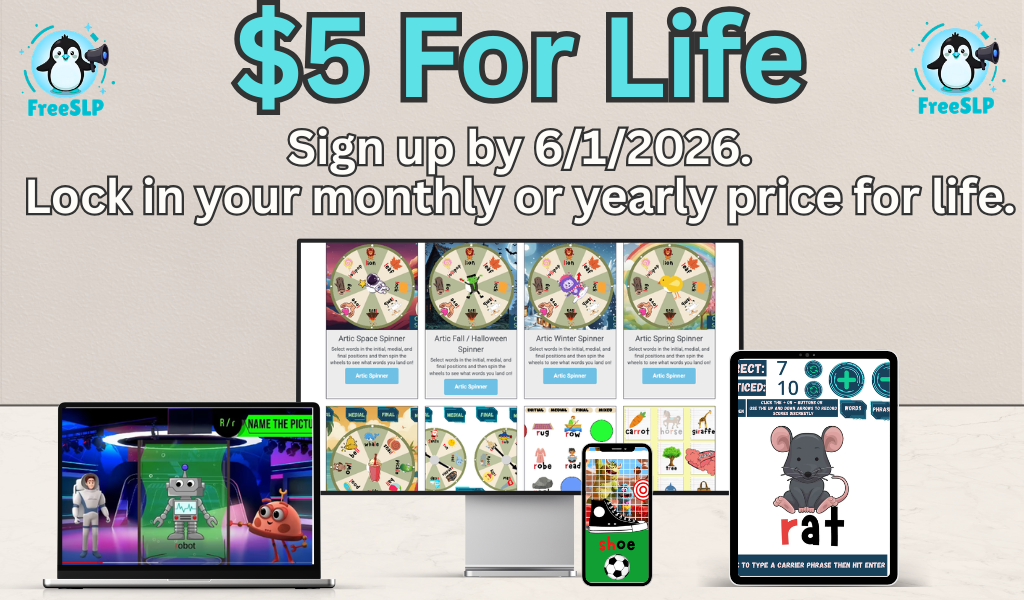
Printable board games, spin-and-say sheets, and digital spinners make articulation fun. Try grouping practice words by sound or theme—like S-sound safari or R-word race. FreeSLP.com has hundreds of sound-specific resources.
6. How often should speech materials be updated?
Refreshing your materials keeps sessions exciting. Rotate themes each month or season, and save favorites for quick review days. FreeSLP.com releases new materials regularly to keep your toolbox full and fresh.
7. Are digital materials as effective as printables?
Yes! Many digital speech activities are highly engaging, especially for students who enjoy screens. Just make sure the focus stays on communication, not technology. Blending printable and digital options offers the best balance.