

- Name three animals that live on a farm.
- Tell me three foods that are fruits.
- Name three things you wear on your feet.
- Tell me three colors.
- Name three things that have wheels.
- Tell me three things that fly in the sky.
- Name three toys you can play with.
- Tell me three animals that live in the ocean.
- Name three things you eat for breakfast.
- Tell me three places you can go with your family.
- Name three things that are cold.
- Tell me three things you do at school.
- Name three body parts.
- Tell me three things that are round.
- Name three people who help others.
- Tell me three things that make noise.
- Name three outdoor toys.
- Tell me three things you can drink.
- Name three animals that have fur.
- Tell me three things in the bathroom.
- Name three vehicles that people drive.
- Tell me three feelings people can have.
- Name three things that grow in a garden.
- Tell me three things you do before bedtime.
- Name three things that are hot.
- Tell me three things in the kitchen.
- Name three clothes you wear when it’s cold.
- Tell me three things at a playground.
- Name three things with the color red.
- Tell me three animals that can swim.
- Name three weather types.
- Tell me three things in your bedroom.
- Name three vegetables.
- Tell me three things you can build with blocks.
- Name three holidays.
- Tell me three things that are soft.
- Name three baby animals.
- Tell me three things you use to draw or color.
- Name three things you see at night.
- Tell me three members of a family.
- Name three things that are sticky.
- Tell me three places where people shop.
- Name three things at a birthday party.
- Tell me three things you eat with a spoon.
- Name three things that are heavy.
- Tell me three things you read.
- Name three things at the doctor’s office.
- Tell me three wild animals.
- Name three things you can put in your backpack.
- Tell me three shapes.
Does your child struggle to group similar things together? Teaching categories helps kids organize words in their minds. This skill forms the foundation for better thinking and talking.
Many children find it hard to sort items into groups. This affects both understanding and speaking. With the right activities, kids can master these important skills.
SLPs, teachers, and parents all play key roles in teaching categories. This article shares practical strategies that work in therapy, classrooms, and homes.
What Are Categories in Speech Therapy?
Categories are groups of words that share common features. In speech therapy, children learn to sort items like animals, foods, or clothing into these groups. They discover how words relate to each other.
SLPs use category activities to build many skills at once. Kids learn new words as they explore different groups. They form better mental connections between related items. Their thinking skills grow stronger through this process.
Categories appear in daily life all the time. “Get your toys.” “Put on your clothes.” Children need to understand these groupings for both school and home success.
Why Categories Matter in Language Development
Category skills boost many language areas. They help children in several important ways.
They Build Better Vocabulary
When kids learn categories, they connect words that go together. Learning that “apple,” “banana,” and “orange” all belong to “fruits” helps them remember these words better.
Children also learn new words faster when they fit into known groups. If a child knows several animals, learning new animal names becomes easier. This pattern helps vocabulary grow quickly.
They Improve Word Finding
Categories create mental shortcuts for finding words. When a child wants to name something round that bounces, the “toys” category helps narrow down options. This makes speaking more fluent.
Children with word-finding problems often benefit from category practice. The mental organization helps them retrieve words more easily during conversation.
They Organize Thinking Skills
Categories help kids make sense of their world. They learn to sort information into logical groups. This skill transfers to many learning tasks in school.
Children who understand categories can follow directions better. They grasp the meaning of group terms like “vegetables” or “furniture” without needing each item named.
They Support Better Descriptions
Categories help children describe things better. Knowing that a tiger belongs to “animals” and “jungle animals” gives kids more ways to talk about it. This leads to richer conversation.
Children can explain unknown items by using category knowledge. “It’s a fruit that’s red and grows on trees” helps communicate even when they forget “apple.”
They Prepare for School Success
Many school tasks involve categories. Reading comprehension, science classification, and math grouping all use this skill. Tests often ask questions about which items belong together.
By building category skills early, you prepare children for academic challenges. Strong classification abilities lead to better grades across subjects.
Effective Strategies for Teaching Categories
1. Start with Basic Groups
Begin with simple, everyday categories children encounter often. Foods, animals, clothing, and toys make good starting points. These concrete groups are easier to understand than abstract ones.
Show real examples whenever possible. Actual clothing items work better than just pictures for young children. This hands-on approach makes learning more meaningful.
Keep early categories distinct and different from each other. Animals and foods don’t overlap, making them clear for beginners to separate.
2. Use Visual Supports
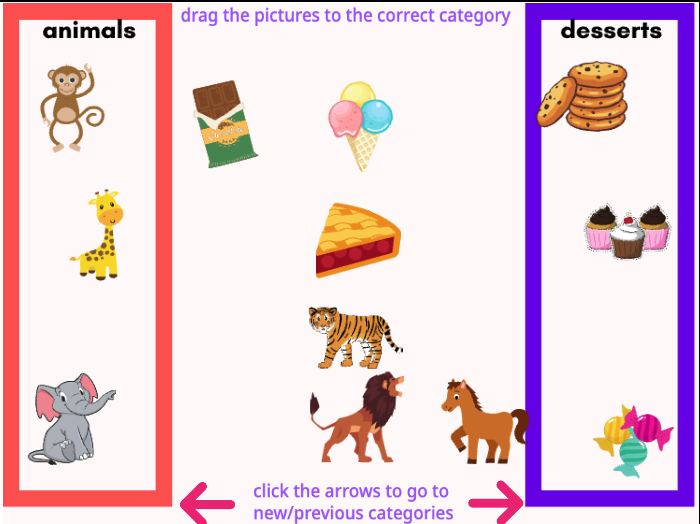
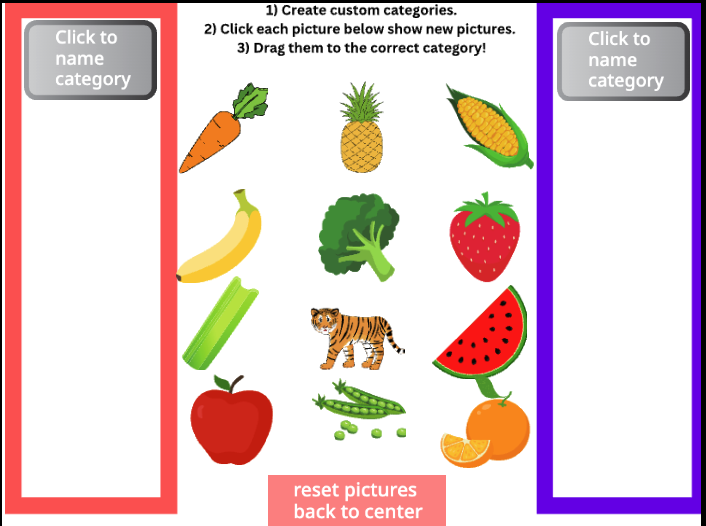
Pictures help children see how items relate. Create sorting mats with category headers and pictures. Children can place items under the right headings.
Make category charts for therapy rooms or classrooms. Show examples under each heading as visual reminders. Add new pictures as children learn more items.
Color-code different categories when possible. This provides another visual cue to help children remember which items go together.
3. Teach Clear Category Names
Explicitly teach category labels like “furniture,” “vehicles,” or “tools.” Don’t assume children know these terms. Practice the category names along with examples.
Create simple definitions for each category. “Furniture means things we use in our house for sitting, sleeping, or putting things on.” These explanations help children understand the group concept.
Review category names often. Ask “What category is this?” while showing items. This reinforces the connection between items and their groups.
4. Compare Items Within Categories
Talk about how items in a category are alike. “Apples and oranges are both fruits. They both grow on trees and have seeds inside.” This helps children understand what makes the category work.
Discuss differences within categories too. “Cats and dogs are both pets, but cats meow and dogs bark.” This builds critical thinking about group features.
Create Venn diagrams to show overlapping categories. A penguin could appear in both “birds” and “ocean animals” sections, showing complex category relationships.
5. Make Category Learning Active
Turn category practice into movement games. “Jump to the corner with all the animals.” “Hop to the foods group.” This connects physical action with mental concepts.
Use sorting activities with real objects. Gathering all the red items or all the things made of wood makes categories concrete. Children enjoy the hands-on aspect of these tasks.
Create category scavenger hunts around the room or house. “Find three things in the kitchen category.” This makes learning fun while reinforcing concepts.
Fun Categories in Speech Therapy Activities
1. Category Sorting Boxes
Create boxes labeled with different categories. Provide pictures or small objects for children to sort into the correct boxes. This hands-on activity makes abstract grouping concrete.
Start with just two category boxes for beginners. Add more as skills improve. Keep the categories clearly different (animals vs. foods) before moving to more similar groups (fruits vs. vegetables).
Make it self-checking by color-coding items on the back to match their category box. This allows for independent practice during therapy or at home.
2. Category Bingo
Create bingo cards with pictures from different categories. Call out category names instead of specific items. Children cover any picture on their card that belongs to that category.
For example, if you call “animals,” children could cover pictures of a dog, cat, or elephant on their cards. This reinforces category membership in a fun game format.
Offer small prizes or stickers for completed rows. The game aspect keeps children engaged while they practice important skills.
3. “I’m Thinking Of” Category Game
Say, “I’m thinking of something in the furniture category that you sit on.” Children must guess “chair” or other correct answers. This combines categories with descriptive clues.
Take turns letting children create the clues. This reverses roles and checks their understanding of category relationships. It also builds definition skills.
Start with easy, obvious items before moving to more challenging ones. This builds success and confidence with the task.
4. Category Snap Card Game
Create card pairs showing items from the same category. Play like the classic “Snap” game, where players call out when two cards from the same category appear.
For more advanced players, create cards with both pictures and words. This supports reading skills alongside category development.
Keep score to add excitement. This competitive element often motivates children to pay closer attention to categories.
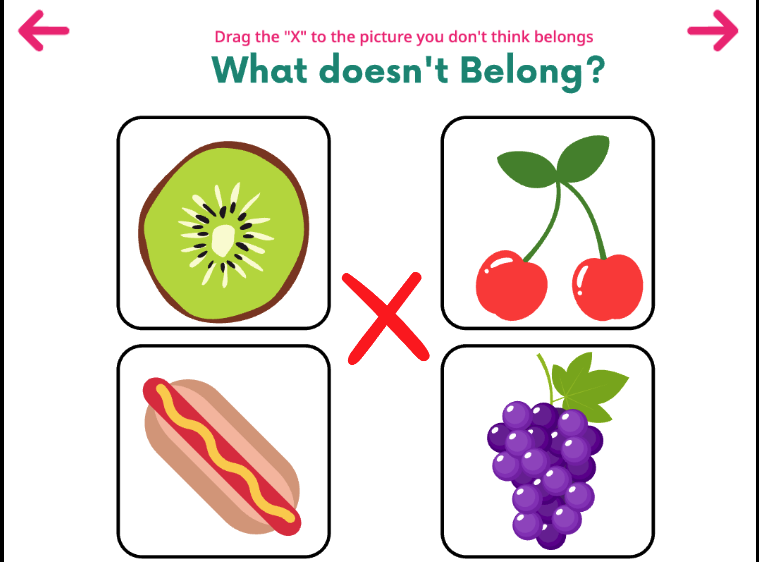
5. Odd One Out
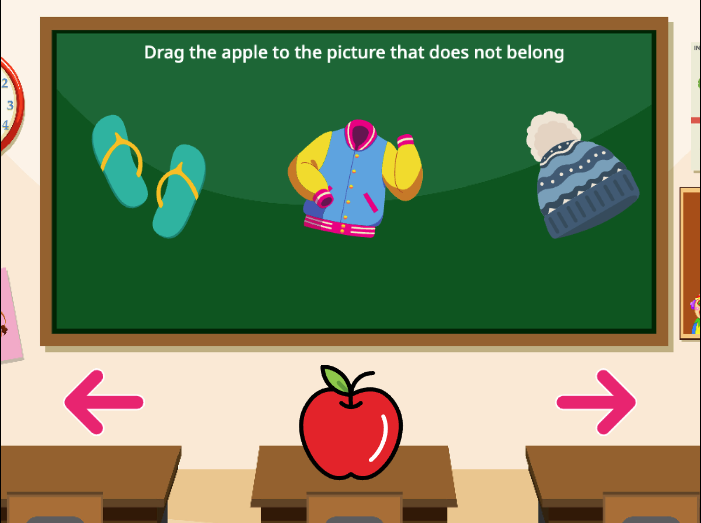
Show four pictures where three belong to the same category and one doesn’t fit. Ask children to find the one that doesn’t belong and explain why.
Start with obvious differences. Three animals and one food clearly don’t all belong together. Progress to more subtle distinctions as skills improve.
Reverse the activity by having children create their own “odd one out” puzzles. This shows deeper understanding of category rules.
6. Category Crafts
Create category collages by cutting pictures from magazines. Sort images into category groups and glue them on separate papers. Label each collage with its category name.
Make category crowns or hats. Cut out pictures of items from one category and glue them to a paper headband. Children become “Kings or Queens” of their category.
These art projects provide a creative outlet while reinforcing category concepts. They also create take-home materials for continued practice.
7. Category Feely Bag
Place items from different categories in a bag. Children reach in without looking, feel an object, and guess what it is and which category it belongs to. This adds tactile learning to category practice.
Use everyday items that are safe and easy to identify by touch. Kitchen items, school supplies, and toys work well for this activity.
For an extra challenge, ask children to pull out only items from a specific category. “Find something from the toy category in the bag.”
8. Roll and Sort Dice Game
Create or buy large foam dice with category names on each side. Children roll the dice and must name an item from whatever category appears on top.
For extra challenge, use two dice. One with categories and one with letters. Children must name something from that category starting with that letter.
Keep a running list of items named to avoid repetition. See how many different items children can generate across multiple turns.
9. Category Obstacle Course
Set up simple obstacles around the room. Before attempting each one, children must name an item from a given category. “Name a fruit before jumping over the pillow.”
Use different categories for each obstacle. This keeps the game fresh and reviews multiple groups in one activity.
For groups, turn this into a relay race. Teams must complete the course while correctly naming items from each category.
10. Category Tree Diagrams
Draw tree diagrams showing how categories break down into subcategories. Start with “Animals” at the top, then branch to “Farm Animals,” “Pets,” and “Wild Animals” below.
Help children place pictures or write words on the appropriate branches. This teaches both categories and hierarchical relationships.
Extend the activity by adding more levels. Under “Pets,” add branches for “Dogs,” “Cats,” and “Fish.” This builds understanding of how categories contain subcategories.
11. Category Board Games
Create simple board games where landing on spaces requires naming items from specific categories. Use colored spaces to represent different groups.
Include challenge spaces where children must name multiple items from one category. This tests their category knowledge depth.
Add “switch” spaces where players exchange category cards. This keeps the game unpredictable and reviews multiple categories.
12. Digital Category Sorting
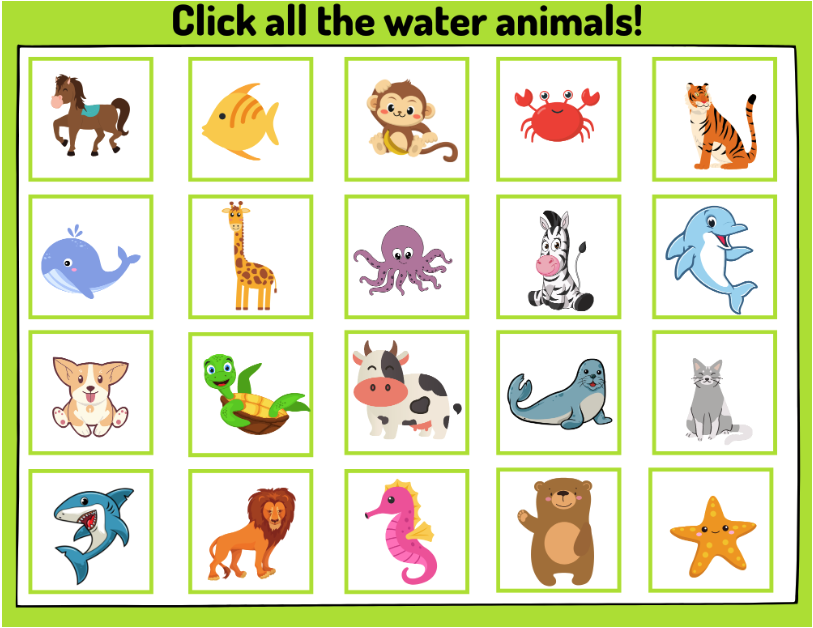
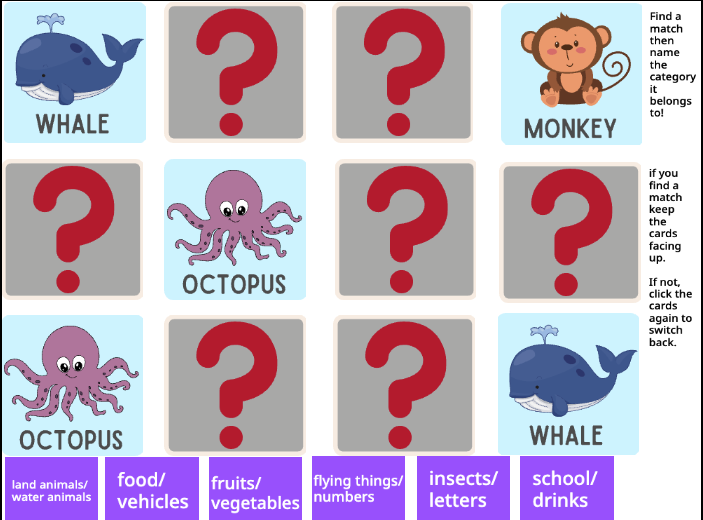
Use tablets or computers for digital sorting activities. Many free apps allow children to drag and drop items into category buckets.
Digital tools often include sound effects and rewards that motivate children. They can be excellent for home practice between therapy sessions.
Look for apps that track progress and adjust difficulty. This provides valuable data on which categories need more practice.
Activities for Different Age Groups
Preschool (Ages 3-5)
Young children need simple, concrete categories:
- Focus on basic groups like foods, animals, and toys
- Use real objects more than pictures
- Keep sessions brief and playful
- Praise all sorting attempts
- Include movement and sensory experiences
Songs like “Old MacDonald” naturally reinforce animal categories through fun repetition.
Early Elementary (Ages 6-8)
School-age children can handle more detailed categories:
- Introduce subcategories (fruits vs. vegetables)
- Use both objects and pictures
- Connect category work to school subjects
- Add writing components for literacy connection
- Introduce concept of “multiple category membership”
Reading books that feature categorization provides context for discussion and learning.
Older Elementary and Beyond (Ages 9+)
Older students benefit from more abstract categories:
- Teach conceptual categories like “things that fly” or “things that are fragile”
- Use language-based category games like 20 Questions
- Discuss exceptions to category rules
- Connect to academic content from science and social studies
- Add reasoning activities about why items belong in groups
Challenge students to create their own categories and explain their sorting rules.
Progress Tracking for Category Skills
Watch for these signs of improvement:
- Spontaneous sorting or grouping of items
- Using category names in everyday speech
- Ability to name multiple items in a category quickly
- Understanding items can belong to multiple categories
- Explaining why items belong in specific groups
Keep a list of mastered categories for each child. Note which types they understand and use correctly.
Categories in Speech Therapy FAQ
At what age should children understand basic categories?
Most typically developing children begin to sort similar objects together around age 2-3. By age 4, they usually understand common category labels like “animals” or “foods.” School-age children develop more refined category skills, including subcategories and abstract groupings. Complete mastery of complex categories continues through elementary school.
How many categories should we work on at once?
Start with just 2-3 distinct categories like animals, foods, and toys. Once children master these with about 80% accuracy, introduce new ones gradually. Working on too many at once can confuse children. It’s better to build strong understanding of a few categories before expanding.
My child puts items in the wrong categories. Should I correct them?
Instead of saying “That’s wrong,” try guided questions: “Let’s think about this. An apple is something we eat, so would it go with toys or foods?” This helps children discover the correct answer through reasoning rather than just memorizing. Always explain why items belong in certain categories.
How can I practice categories at home without special materials?
Everyday routines offer many category practice opportunities. While putting away groceries, talk about food groups. During cleanup, sort toys into types. Playing “I Spy something from the furniture category” works anywhere. Even setting the table involves categories (plates, utensils, cups). Just adding category language to your daily conversations helps tremendously.
Are categories important for reading development?
Yes! Category knowledge strongly impacts reading comprehension. When children read about unfamiliar topics, they use category knowledge to make sense of new information. For example, if they read about a “meerkat” but don’t know what it is, understanding it’s in the “animal” category helps them make predictions and connections. Categories also help with vocabulary development, which directly supports reading.
My child can sort items but doesn’t use category names. Is this a problem?
Physical sorting develops before verbal labeling. A child might correctly group all animals together but not use the word “animals.” This shows understanding of the concept but not the label. Keep modeling the category name while sorting: “Yes, you put all the animals together!” With consistent exposure, they’ll begin using the category terms themselves.
Category skills form building blocks for stronger language and thinking. These abilities help children organize their world and communicate better. With regular practice using the activities in this article, kids can master these important concepts.
SLPs, teachers, and parents each play important roles in teaching categories. Use visual supports, sorting activities, and games to make learning fun. Keep sessions brief but frequent for best results.
Remember that category skills develop over time. Start with simple, concrete categories and gradually move to more complex ones. Celebrate small improvements along the way.