The Best Free Speech Therapy Games for Online and In-Person Sessions
Whether you’re a parent, teacher, or speech-language pathologist (SLP), finding activities that are both effective and fun can be a challenge. Kids learn best when they’re engaged, laughing, and moving — and that’s exactly what great speech therapy games do.
The good news? You don’t need expensive materials or subscriptions to make learning exciting. There are hundreds of free online games and simple in-person activities that build speech, language, and social skills — many available right on FreeSLP.com, created by SLPs for SLPs, teachers, and families.
Let’s explore how to use games strategically to support therapy goals, both online and in real life.
Why Games Work So Well in Speech Therapy
Games transform practice into play. They add motivation, repetition, and positive emotion — three key ingredients for learning.
When children play speech therapy games, they:
-
Practice target words more times in less time
-
Stay focused for longer periods
-
Experience success in a low-pressure setting
-
Strengthen memory and attention through fun challenges
Whether online or in person, games can make articulation drills, vocabulary work, and language comprehension activities feel like real adventures.
Free Online Speech Therapy Games
Online therapy, or teletherapy, is here to stay — and there are amazing tools available at no cost. These digital games make speech practice easy to share on any screen.
🎯 1. Articulation Spinners and Word Games
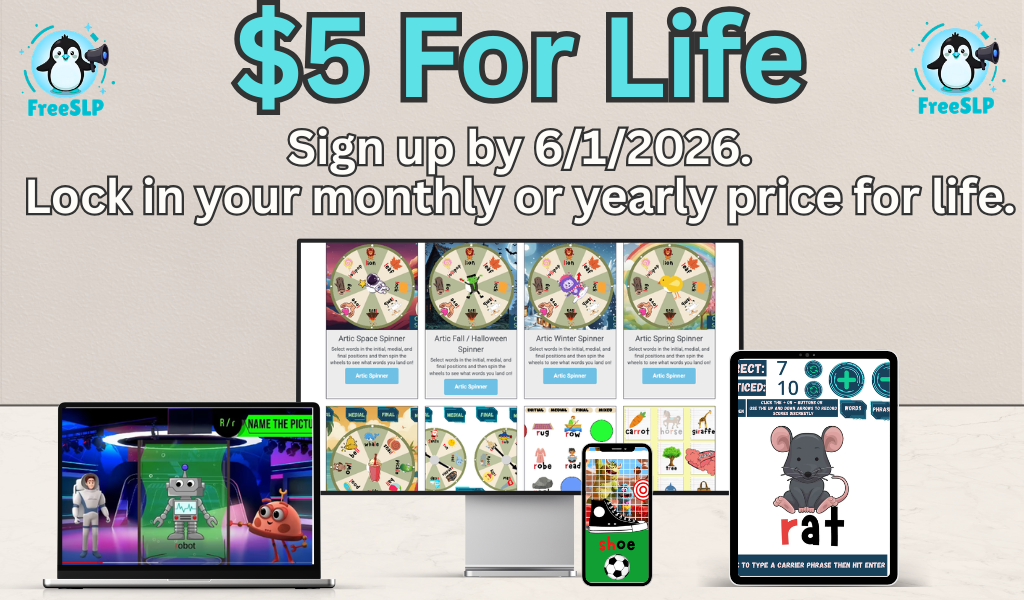
Web-based spinners help kids practice target sounds like /r/, /s/, or /ch/. Each spin reveals a word or phrase, keeping sessions interactive.
-
Great for: Articulation, phonology, carryover practice
-
Try: Free articulation spinners and printable cards at FreeSLP.com
🎨 2. Digital Board Games
Classic board games like Candy Land or Snakes and Ladders can be adapted for speech goals. Use a digital dice roller and have students say a target word before each move.
🧩 3. Matching and Memory Games
Picture matching builds attention and vocabulary while encouraging speech repetition.
💬 4. Story Builders and Sentence Games
Use simple online story generators or picture prompts to help children create silly stories.
-
Great for: Grammar, sequencing, and expressive language
-
Bonus: Let students draw or type part of the story to encourage ownership
🤖 5. Interactive Sound Games
Many free browser-based games let children identify beginning sounds or rhymes. These are wonderful for preschoolers and early readers.
Fun In-Person Speech Therapy Activities
If you’re working face-to-face — in the classroom, therapy room, or at home — hands-on activities are your best friend. You don’t need fancy materials; just imagination and interaction.
🗣️ 1. Articulation Toss Game
Write target words on index cards. Each time your child tosses a beanbag onto a card, they say the word three times before earning a point.
-
Great for: /s/, /r/, /l/, /th/, and blend practice
🧺 2. Mystery Bag
Fill a bag with small toys or household objects. Have your child reach in, describe what they feel, and name the object before pulling it out.
🧱 3. Block Tower Talk
Build a tower together using blocks or Jenga pieces. Each block comes with a question or word card. Say the word or answer to add your piece.
🎭 4. Role-Play Challenges
Use short scripts, puppets, or pretend play to act out everyday situations — ordering at a restaurant, asking for help, or greeting friends.
🕵️ 5. Speech Scavenger Hunt
Hide objects or picture cards around the room. Each time your child finds one, they say the target word or use it in a sentence.
How to Adapt Games for Therapy Goals
The same game can target many skills with just a few tweaks:
| Therapy Goal |
Game Adaptation Example |
| Articulation |
Say your /r/ word before each turn in a board game |
| Language |
Describe each card you pick using 3 adjectives |
| Social skills |
Practice polite phrases during gameplay (“Your turn,” “Good job!”) |
| Fluency |
Use slow, smooth speech while playing |
| Vocabulary |
Name a category or function for each picture |
By turning ordinary play into purposeful practice, every activity becomes an opportunity for communication growth.
Keeping Kids Engaged
To keep motivation high:
-
Mix short, high-energy games with calm ones
-
Let children choose between two activities
-
Add rewards like stickers, tokens, or choosing the next game
-
Celebrate effort, not perfection (“You worked hard on that sound!”)
Small wins build confidence — and confident communicators talk more, learn faster, and have more fun doing it.
Free Resources from FreeSLP.com
You’ll find hundreds of ready-to-use materials designed by real SLPs, including:
-
Free articulation word lists for every sound
-
Printable game boards and spinners
-
Digital teletherapy games
-
Language and grammar activities
-
Parent handouts for home practice
All available completely free — no sign-ups required.
FAQs
Are online games as effective as in-person activities?
Yes, when they’re interactive and guided by an SLP or parent. The key is keeping sessions active and responsive, not passive screen time.
Can I use these games without being a speech therapist?
Absolutely. Parents and teachers can use these ideas at home or in the classroom with guidance from an SLP.
How often should kids play speech therapy games?
A few short sessions (5–10 minutes) several times a week works best for maintaining progress and motivation.
Final Thoughts
Free speech therapy games make learning fun, flexible, and accessible for everyone — whether you’re meeting online or sitting at the same table. The right activity doesn’t just improve speech and language skills; it builds confidence, connection, and joy in communication.