









Why Story Comprehension Matters in Speech Therapy
Does your child struggle to answer questions about stories? Do they miss important details when reading? Story comprehension affects success in both school and social settings.
Story comprehension involves understanding and remembering what happens in stories. This skill forms the foundation for academic learning and everyday communication. Many children with language disorders find comprehension particularly challenging.
Speech therapy that focuses on story comprehension improves overall language abilities. Children learn to identify key elements, remember sequences, and understand character motivations. These skills transfer to classroom learning and social interactions.
For example, a child who can’t recall story details might miss assignment instructions or struggle to follow conversations. Building strong comprehension skills helps children succeed in many areas of life.
Essential Components of Reading Comprehension in Speech Therapy
Reading comprehension consists of several interconnected skills. Understanding these components helps speech therapists provide targeted support.
Listening comprehension serves as the foundation for reading success. Children must first understand spoken language before tackling written text. Many therapy activities begin with auditory comprehension before moving to reading.
WH-question skills (who, what, when, where, why, how) help children extract key information. These question types guide children to identify essential story elements. Mastering WH-questions helps children organize their thinking about stories.
Sequencing abilities allow children to understand the order of events. They learn that stories have beginnings, middles, and endings. This sense of story structure helps them follow and recall narratives.
Inferencing involves reading between the lines to understand implied meanings. Children learn to use context clues and background knowledge to draw conclusions. This higher-level skill develops gradually with proper support.
Vocabulary knowledge directly impacts comprehension success. Children need to understand 90-95% of words in a text for good comprehension. Building strong vocabulary through stories creates a foundation for reading success.
Common Comprehension Challenges in Speech Therapy
Understanding why comprehension causes difficulty helps speech therapists provide targeted support. Several factors contribute to these challenges.
Working memory limitations make it hard for some children to hold story information. They might understand each sentence but struggle to maintain the whole narrative. These children need strategies to manage memory demands during reading.
Attention difficulties can interfere with story processing. Children may miss important details or lose track of the plot. Structured approaches with visual supports help maintain focus during story activities.
Background knowledge gaps may limit understanding of certain stories. Children need sufficient context to make sense of new information. Stories that connect to familiar experiences often work best for building comprehension skills.
Language processing issues can slow down understanding. Some children need extra time to process what they hear or read. Pausing frequently and checking for understanding helps these children follow along successfully.
For instance, a child might correctly answer simple fact questions about a story but struggle with questions requiring inference or prediction. This pattern shows where comprehension breaks down and what skills need targeted practice.
Visual Strategies for Teaching Story Comprehension
Visual supports make abstract story concepts more concrete. These tools help children organize and remember story information.
Story maps provide visual frameworks for organizing narrative elements. These graphic organizers help children identify characters, settings, problems, and solutions. The visual format makes these elements more memorable and clear.
Example: Create a simple story map with four sections labeled “Who,” “Where,” “Problem,” and “Solution.” After reading a story, help children complete each section with words or pictures.
Sequencing cards show the order of events in visual form. Children arrange pictures showing key story moments in chronological order. This hands-on approach reinforces story structure and sequencing.
Character emotion charts help children understand feelings and motivations. Create face drawings showing different emotions that children can match to story events. This visual support helps with inferencing and social understanding.
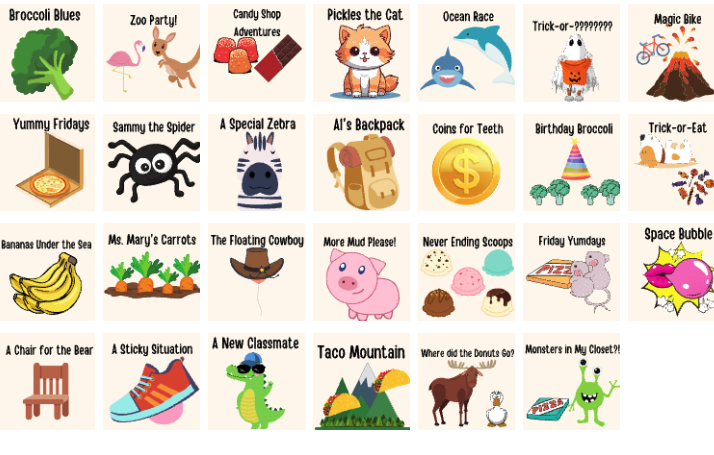
FreeSLP.com offers printable visual supports specifically designed for teaching story comprehension. Their materials include story maps, sequencing cards, and character emotion charts that make narrative concepts more accessible.
Interactive Activities for Building Reading Comprehension
Engaging activities make comprehension practice enjoyable and effective. These approaches help children actively process and respond to stories.
“Story Detective” encourages children to find answers to specific questions. Give them magnifying glasses to “search” for details in pictures or text. This playful approach increases engagement with comprehension tasks.
Story retelling with props brings narratives to life. Provide small toys, puppets, or picture cards representing story elements. Children use these props to retell stories in their own words, reinforcing sequence and important details.
“Beginning, Middle, End” activities focus on story structure. After reading, have children identify and illustrate the three main parts of the story. This simple framework helps them organize narrative information.
Question sorting builds awareness of different comprehension levels. Create cards with various question types (fact, inference, prediction). After reading, children sort questions by type and then answer them, developing metacognitive skills.
FreeSLP.com provides ready-to-use materials for all these activities, saving preparation time. Their story-based activity sets include question cards, retelling supports, and structure templates that make therapy sessions more engaging.
Targeted WH-Question Activities for Speech Therapy
WH-questions form the backbone of comprehension instruction. These question types help children focus on specific story elements.
WH-question cubes bring a game element to comprehension practice. Create or print cubes with question words on each side. Children roll the cube and answer the corresponding question about the story, making practice more engaging.
“Question Fishing” combines motor activity with language practice. Attach paperclips to question cards and use a magnetic fishing pole to “catch” questions. This multisensory approach maintains interest during challenging comprehension work.
Color-coded question sorting helps children recognize different question types. Assign colors to each WH-question word (Who = blue, What = red, etc.). This visual system helps children understand the different kinds of information each question seeks.
FreeSLP.com offers comprehensive WH-question materials for story comprehension. Their question card sets, activity pages, and visual supports make targeting these essential skills simpler and more effective.
Inference Training Techniques for Deeper Understanding
Inference skills allow children to understand implied meanings. These techniques help children “read between the lines.”
Picture inferencing provides a concrete starting point. Show photos of people in various situations and ask, “How do you think this person feels?” or “What might have happened?” This visual practice builds inferencing before applying it to text.
“What’s in My Head?” reinforces that characters have thoughts not directly stated. Draw thought bubbles near character pictures and help children fill them with likely thoughts. This activity makes the abstract concept of inferencing more concrete.
Text message inferencing uses a familiar format to practice this skill. Create mock text conversations with missing messages. Children infer what the missing messages might say based on context, making inferencing relevant and engaging.
“Clue Detective” helps children identify evidence for inferences. Provide a conclusion like “The character is sad” and have children find story clues supporting this inference. This builds awareness that good inferences come from textual evidence.
FreeSLP.com’s inference training materials include picture scenarios, thought bubble templates, and structured inferencing activities. These resources progress from simple to complex inference tasks, building this critical skill systematically.
Story Retelling Techniques for Improved Comprehension
Story retelling strengthens memory, sequencing, and comprehension. These approaches make retelling accessible for children at different language levels.
Visual retelling sequences use pictures to support narrative recall. Provide 3-6 images showing key story events for children to arrange and describe. This visual scaffold helps children organize their retelling.
Story bracelets create wearable retelling prompts. String colored beads representing story elements (green = setting, red = problem, etc.). Children touch each bead while retelling the corresponding story part, providing tactile support.
Retelling ropes visually represent story progression. Tie different colored ribbons or attach pictures to a rope to represent story events. Children hold the rope and move along it as they retell each part, reinforcing sequence.
Five-finger retelling simplifies narrative structure. Each finger represents an element: character (thumb), setting (index), beginning (middle), problem (ring), and solution (pinky). This hand-based system provides a portable retelling framework.
FreeSLP.com offers comprehensive story retelling materials including sequence cards, visual supports, and structured frameworks. Their resources adapt to different abilities while systematically building retelling skills.
Frequently Asked Questions About Story Comprehension
At what age should children develop story comprehension skills?
Story comprehension begins developing in early childhood, around ages 2-3, when children start following simple picture books. By ages 4-5, most children can answer basic questions about familiar stories. More complex comprehension skills like inferencing typically develop between ages 5-7. Children with language disorders may show delays in these developmental milestones and benefit from explicit instruction.
How can we help children with memory difficulties remember stories?
Visual supports provide external memory aids that reduce cognitive load. Break stories into smaller chunks and check understanding before moving on. Create picture sequences showing key events for reference during retelling. Use repeated readings of the same story to build familiarity and strengthen memory. FreeSLP.com offers specially designed visual supports that help children with memory challenges.
Should we focus on listening comprehension before reading comprehension?
Yes, listening comprehension typically develops before and supports reading comprehension. Start with read-aloud activities where children listen and respond to stories. As they develop listening skills, gradually introduce simple texts they can read themselves. Continue supporting both skills simultaneously, as stronger listening comprehension helps children verify their understanding while reading independently.
How many times should we read the same story for comprehension practice?
Multiple readings of the same story significantly improve comprehension. Aim for 3-4 readings, each with a different focus. First reading: enjoy the story and discuss general reactions. Second reading: focus on vocabulary and key details. Third reading: work on higher-level skills like inferencing and connections. This repeated exposure allows children to process different aspects of the story without overwhelming them.
How do we help children move from literal to inferential comprehension?
Start with very clear, almost obvious inferences where the gap between stated and implied information is small. Use visual supports like facial expressions to reinforce emotional inferences. Explicitly model your thinking process: “The story doesn’t say she’s sad, but I can tell because she’s crying and ran to her room.” Gradually increase the complexity of inferences as children develop this skill. FreeSLP.com’s inferencing materials follow this developmental progression.
Can technology support story comprehension development?
Digital resources can effectively support comprehension when used thoughtfully. FreeSLP.com offers digital materials that include interactive elements while maintaining strong educational value. Their digital story resources feature built-in visual supports, question prompts, and structured activities that enhance engagement while building critical comprehension skills.