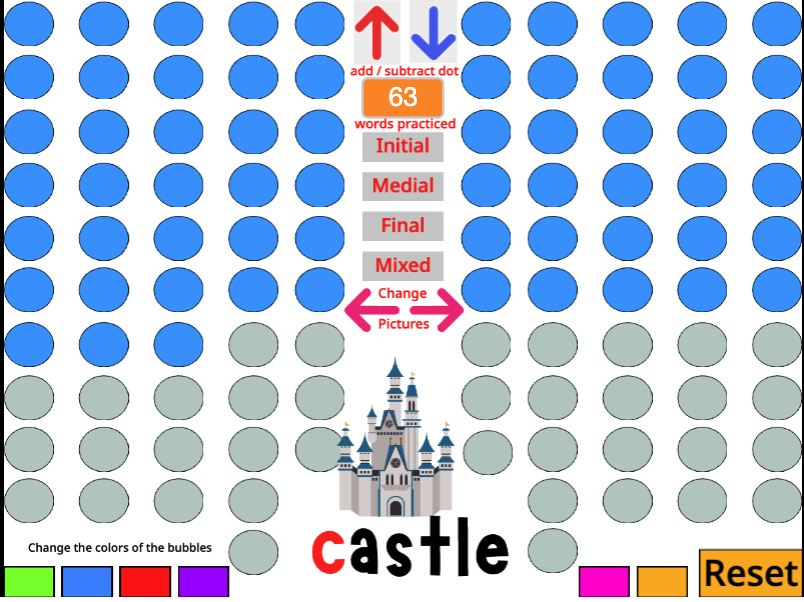
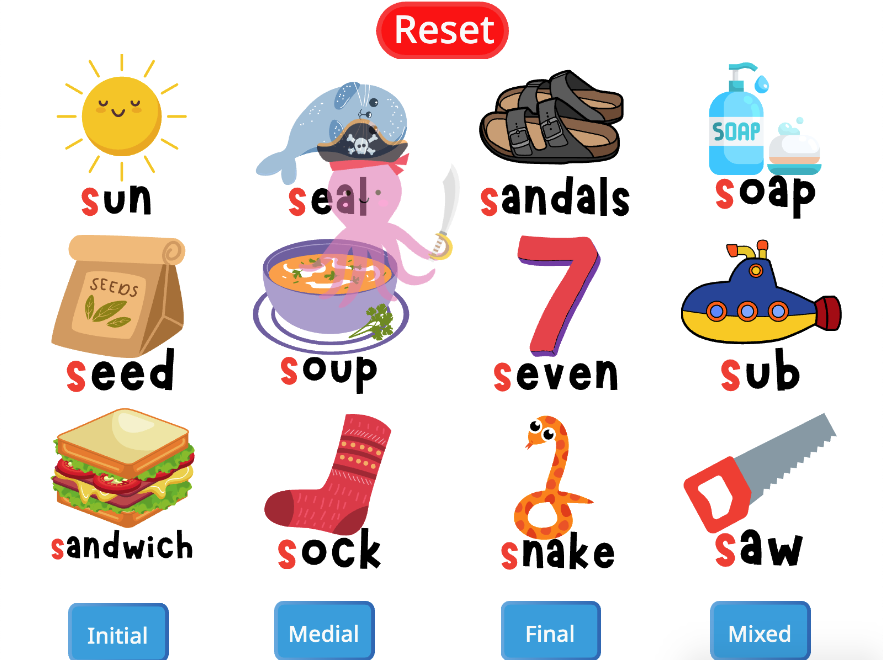
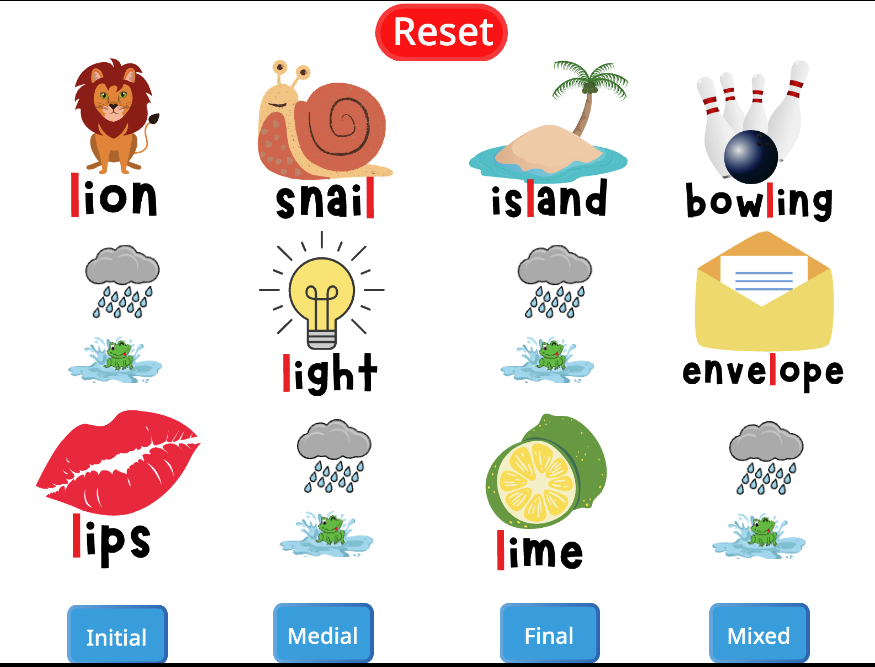
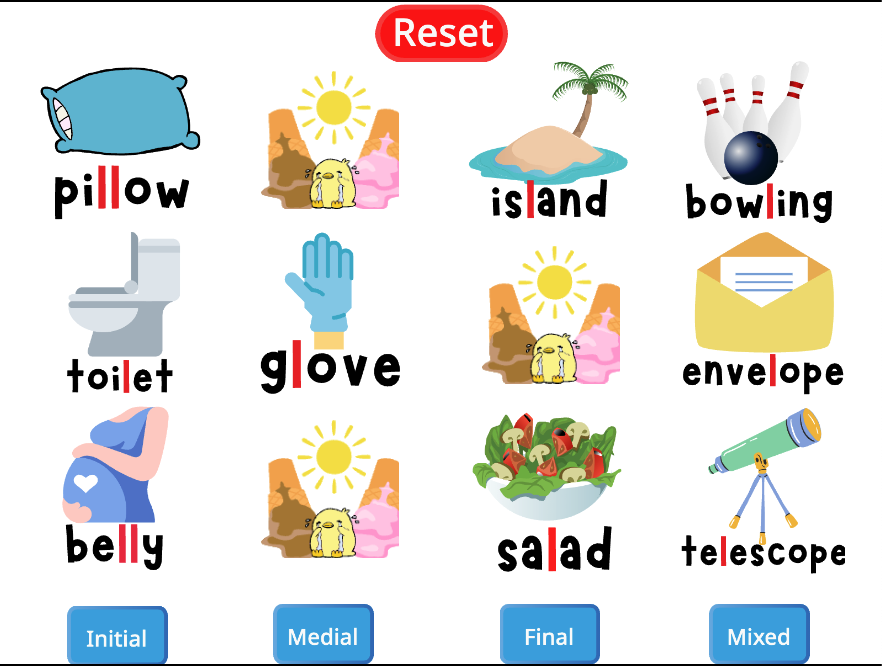
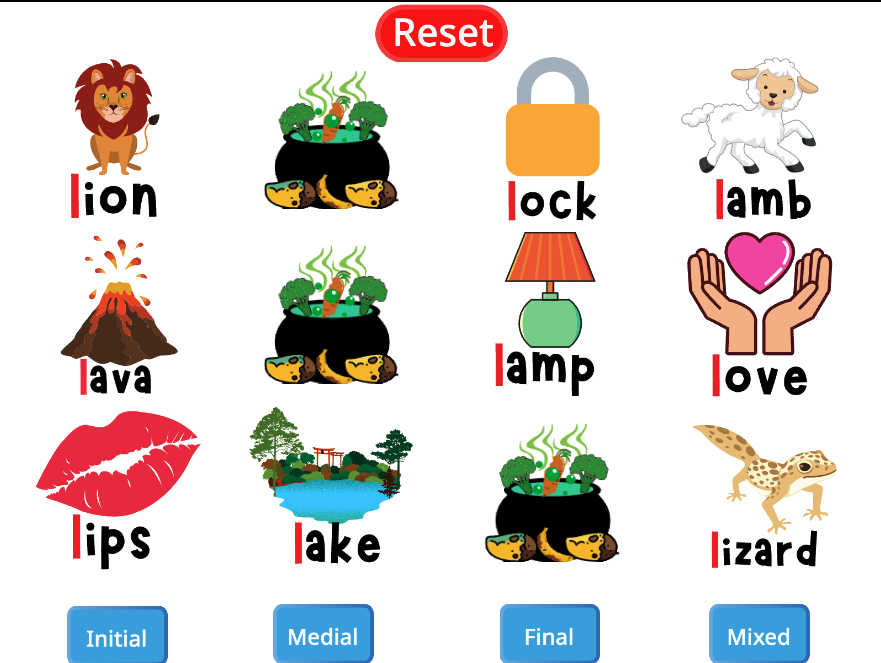
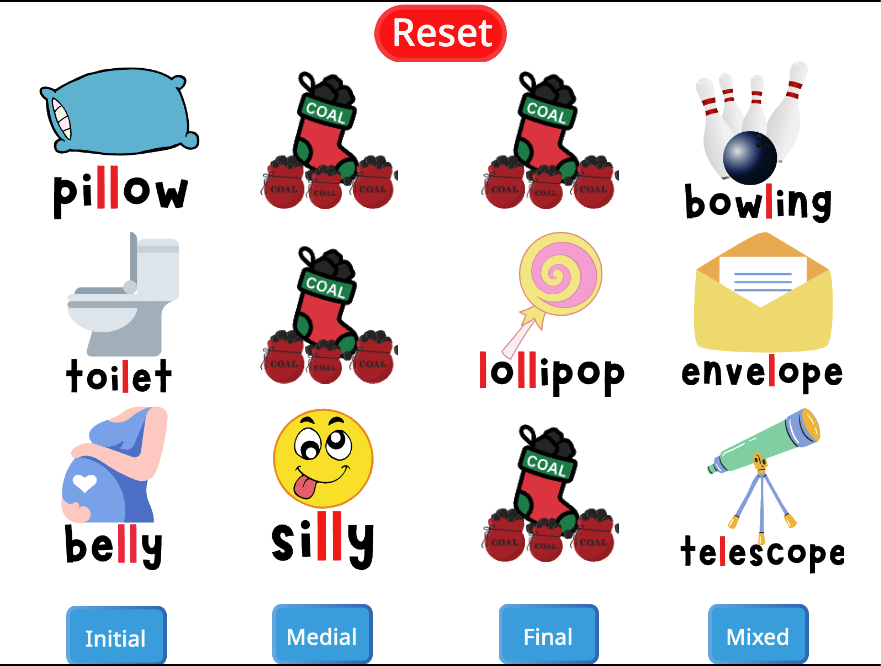
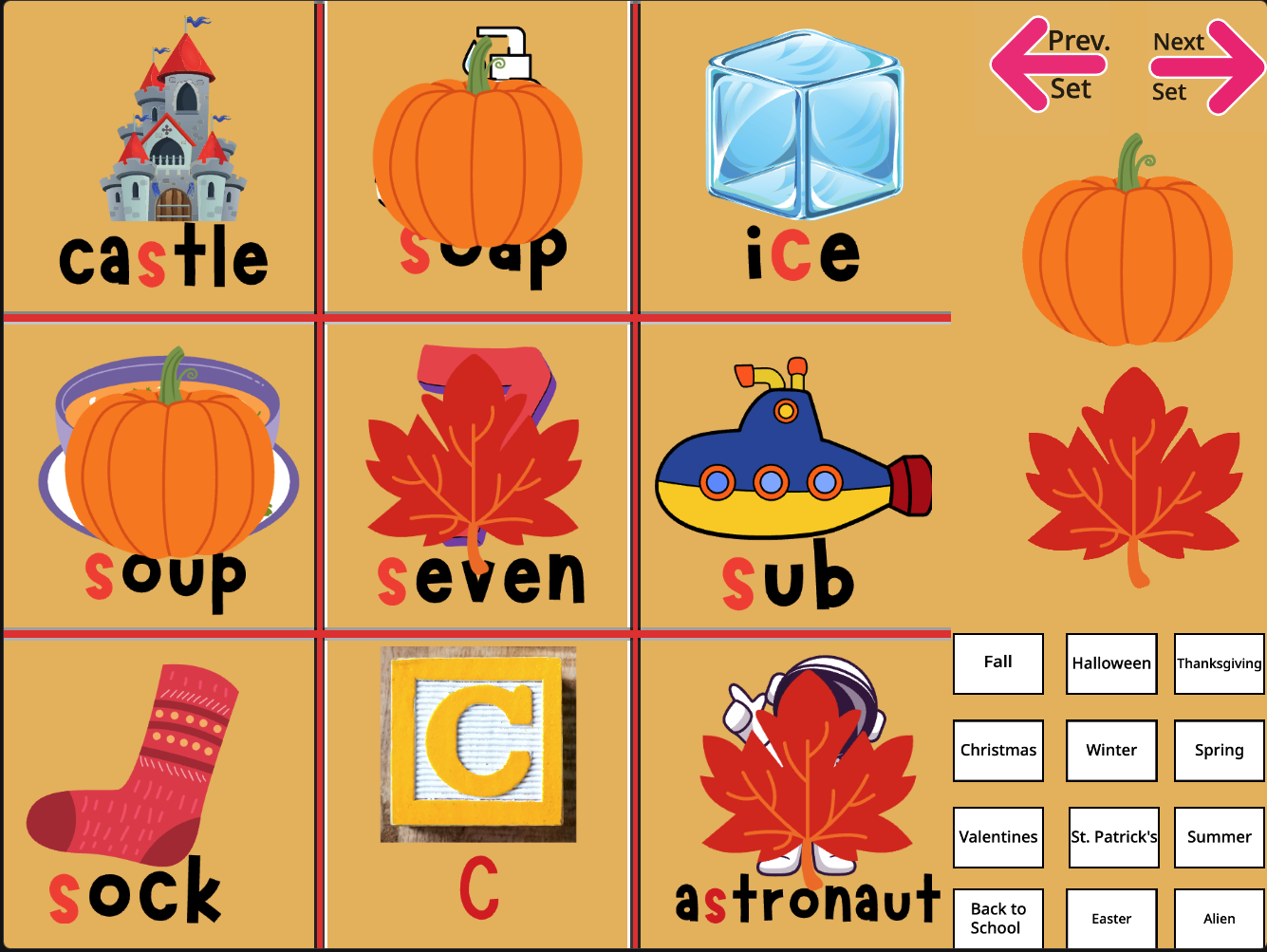
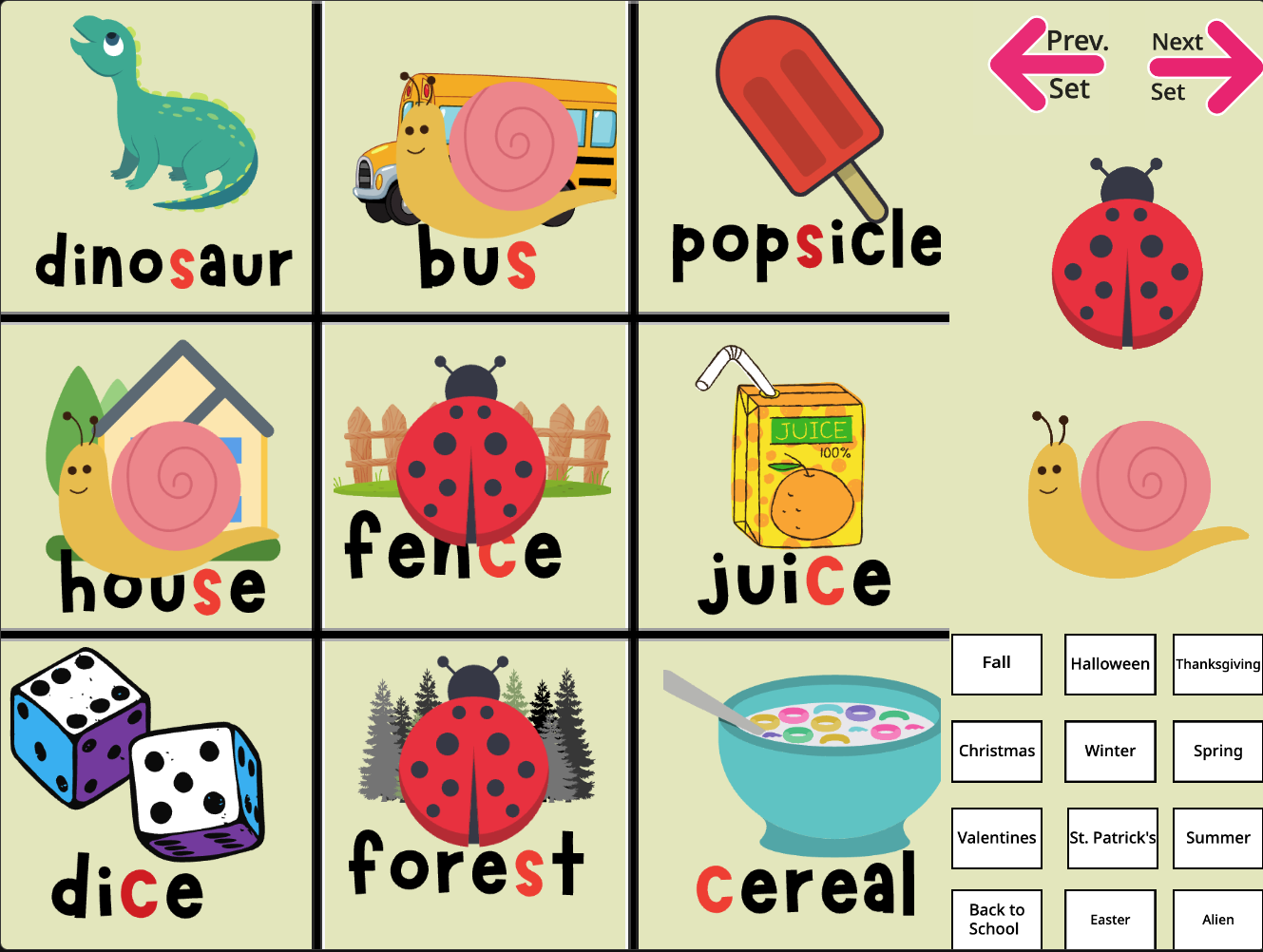
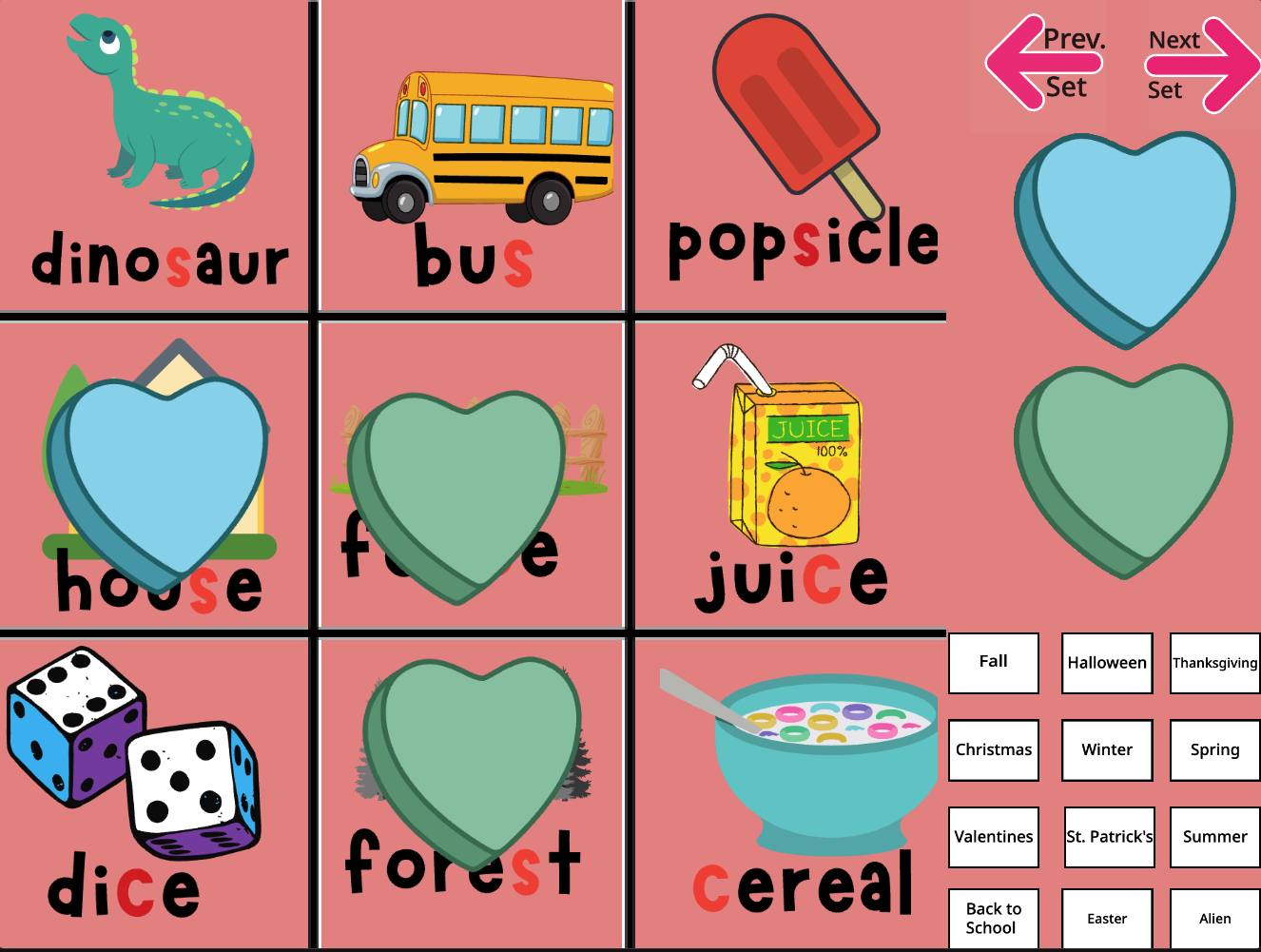
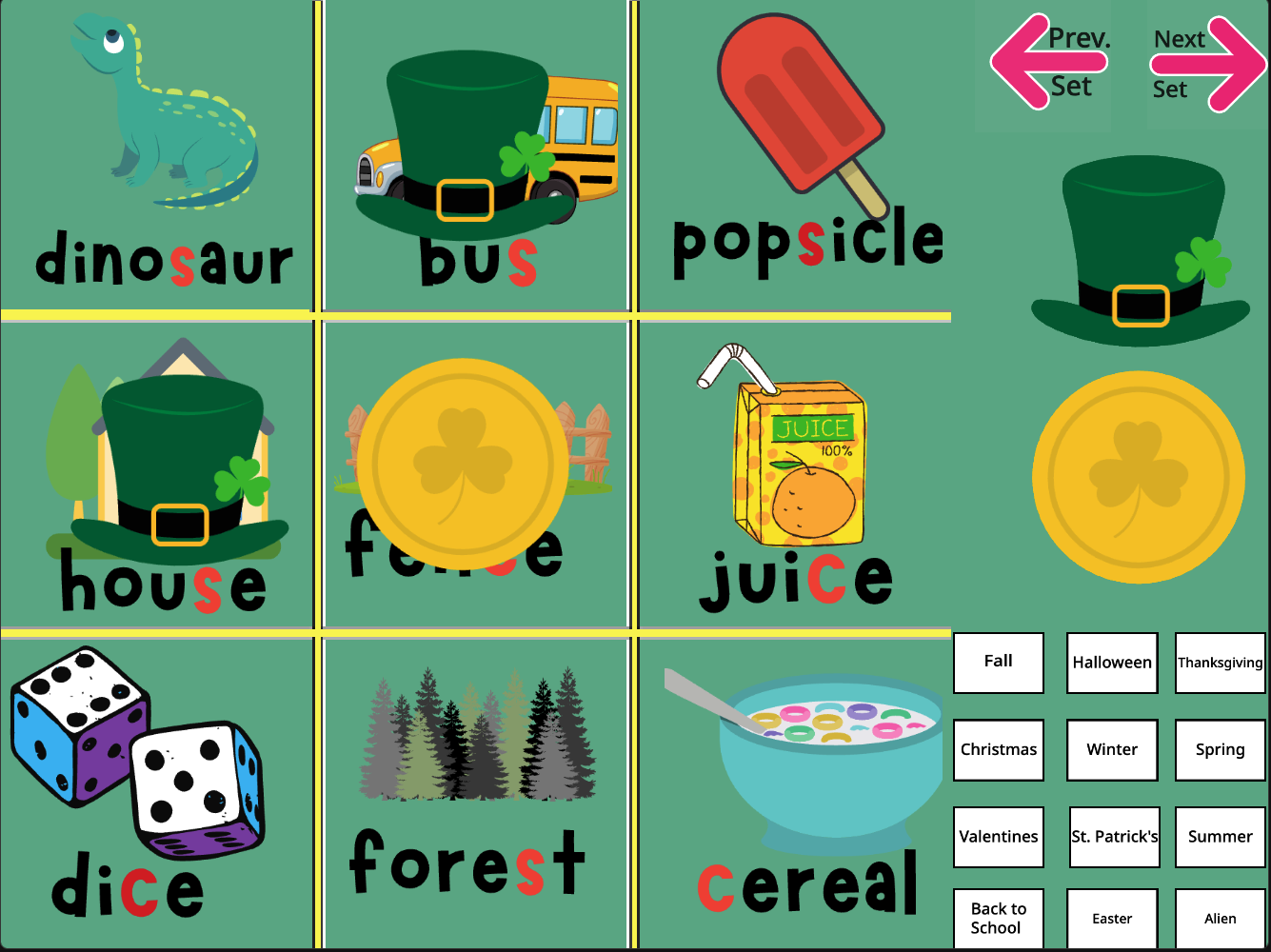
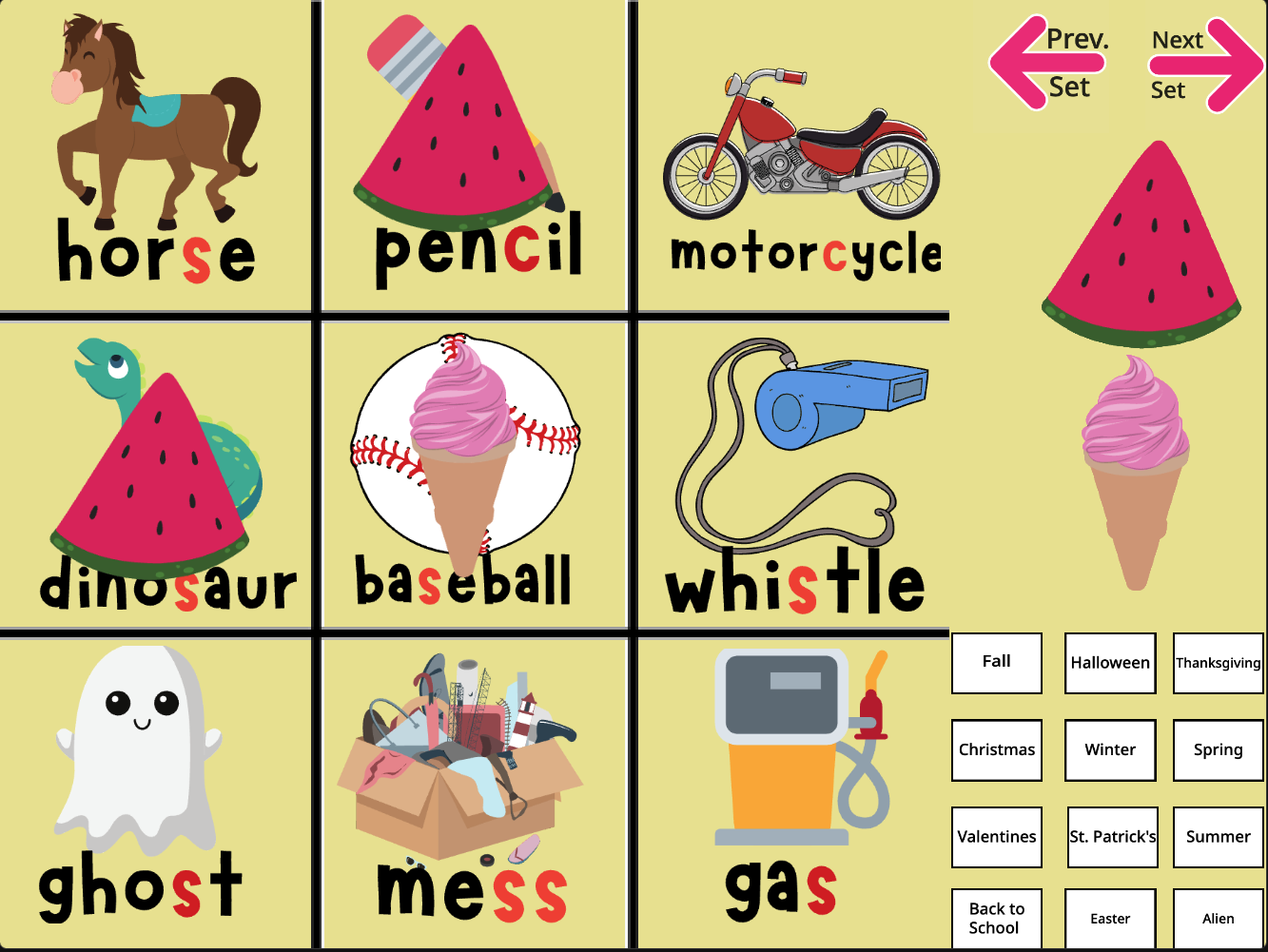
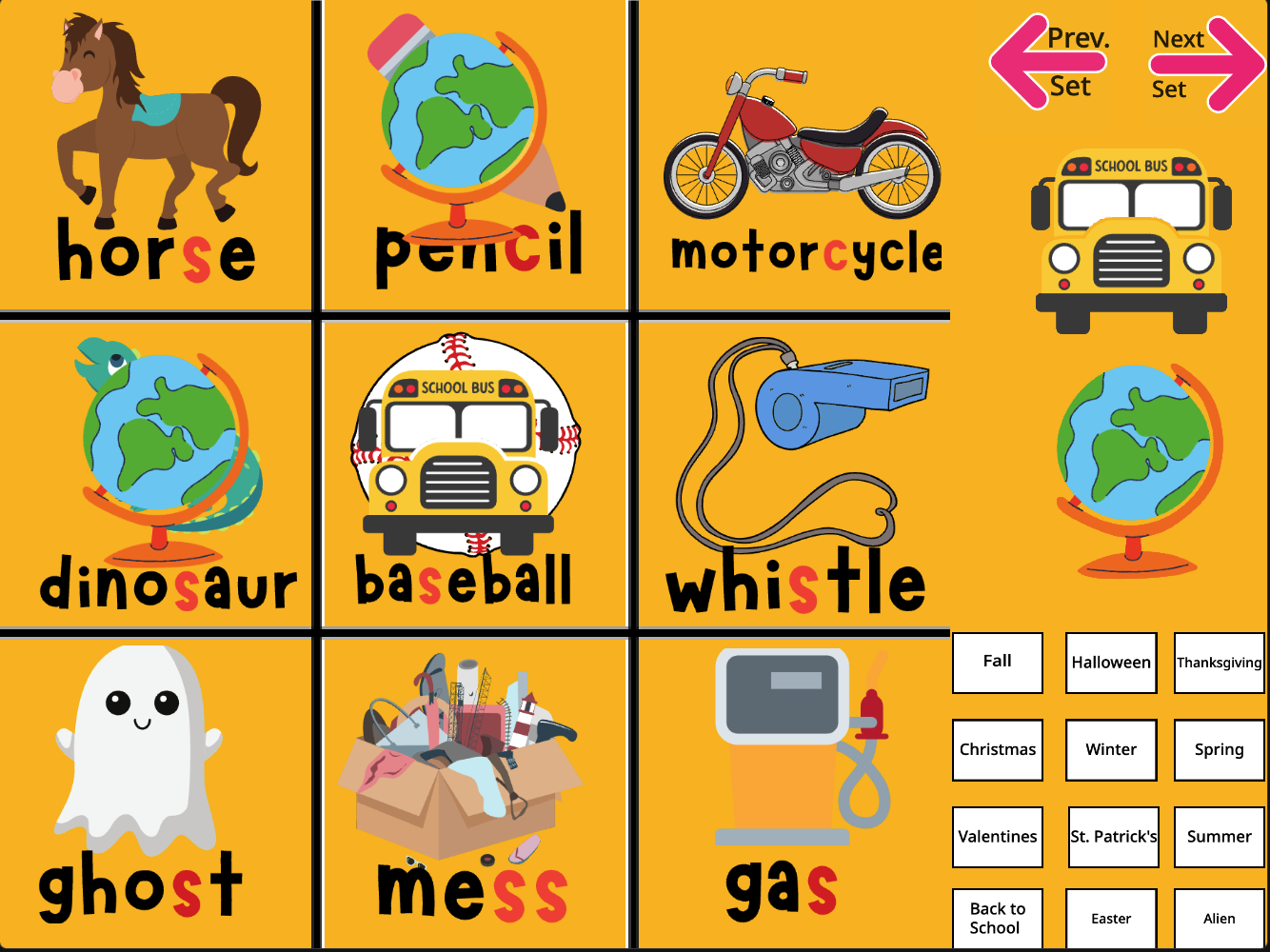
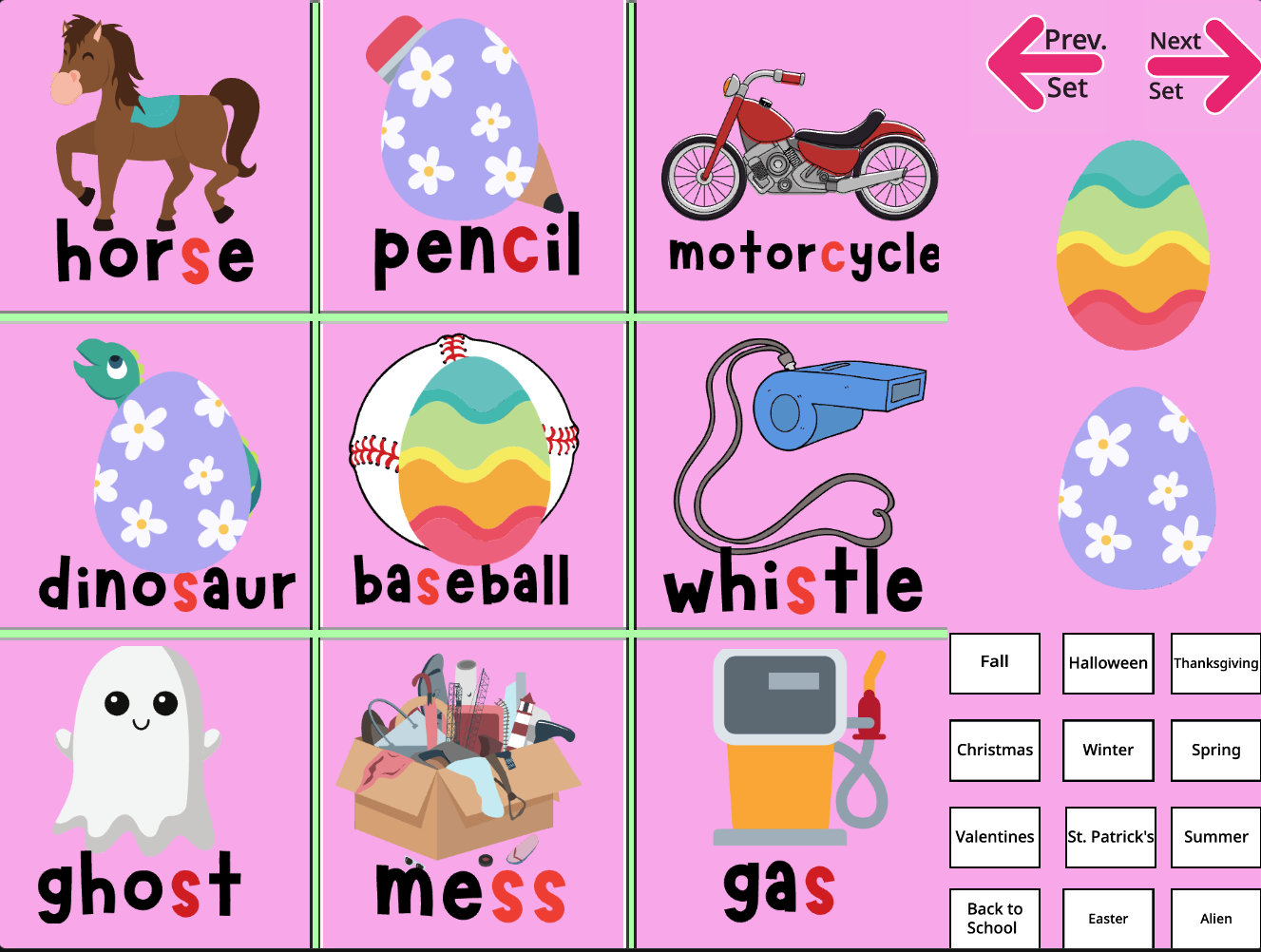
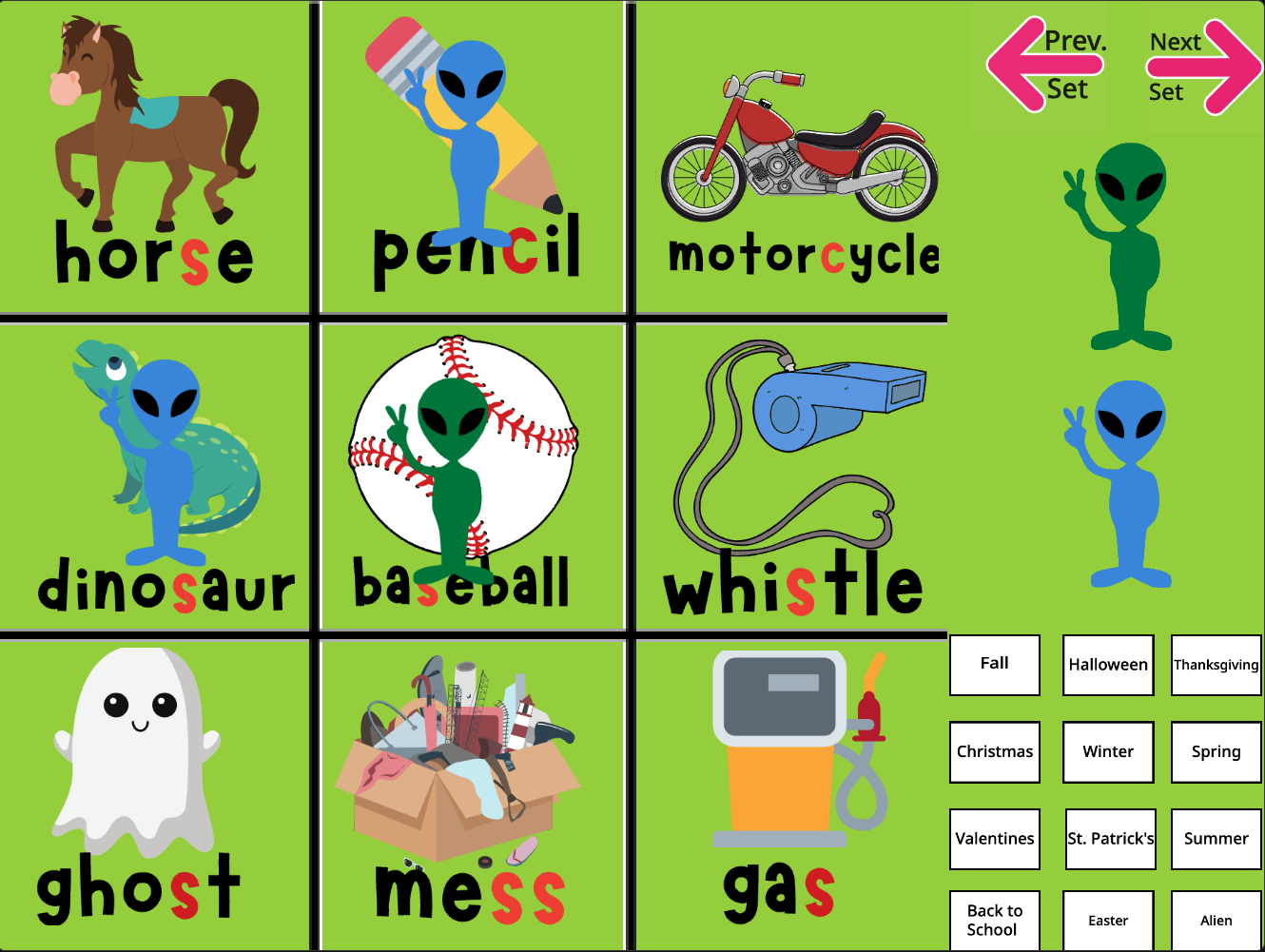
Flashcards
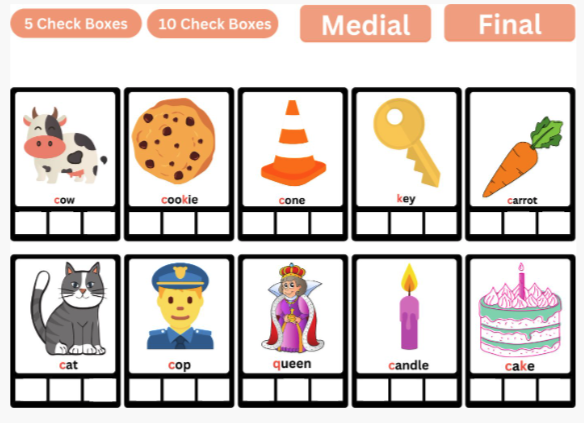
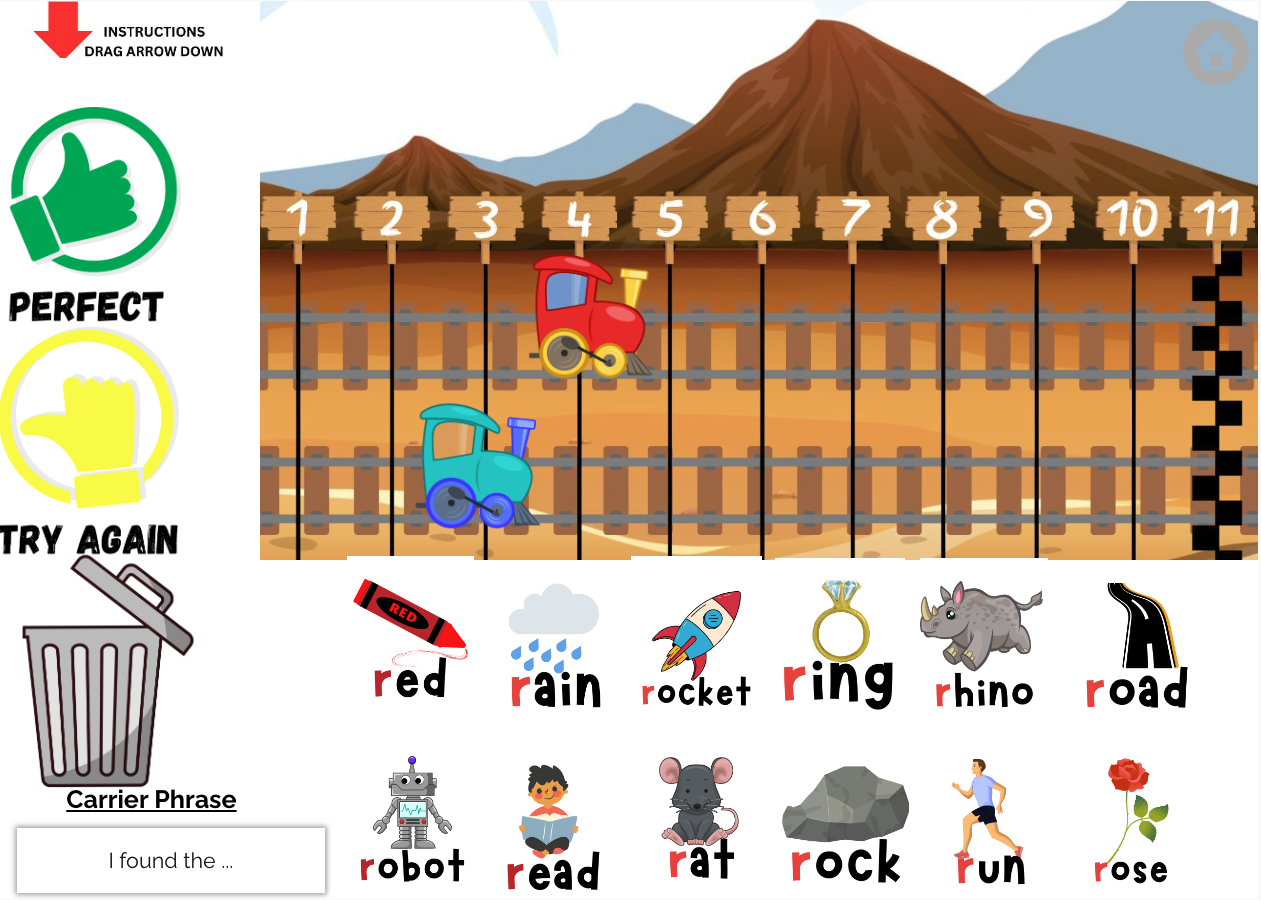
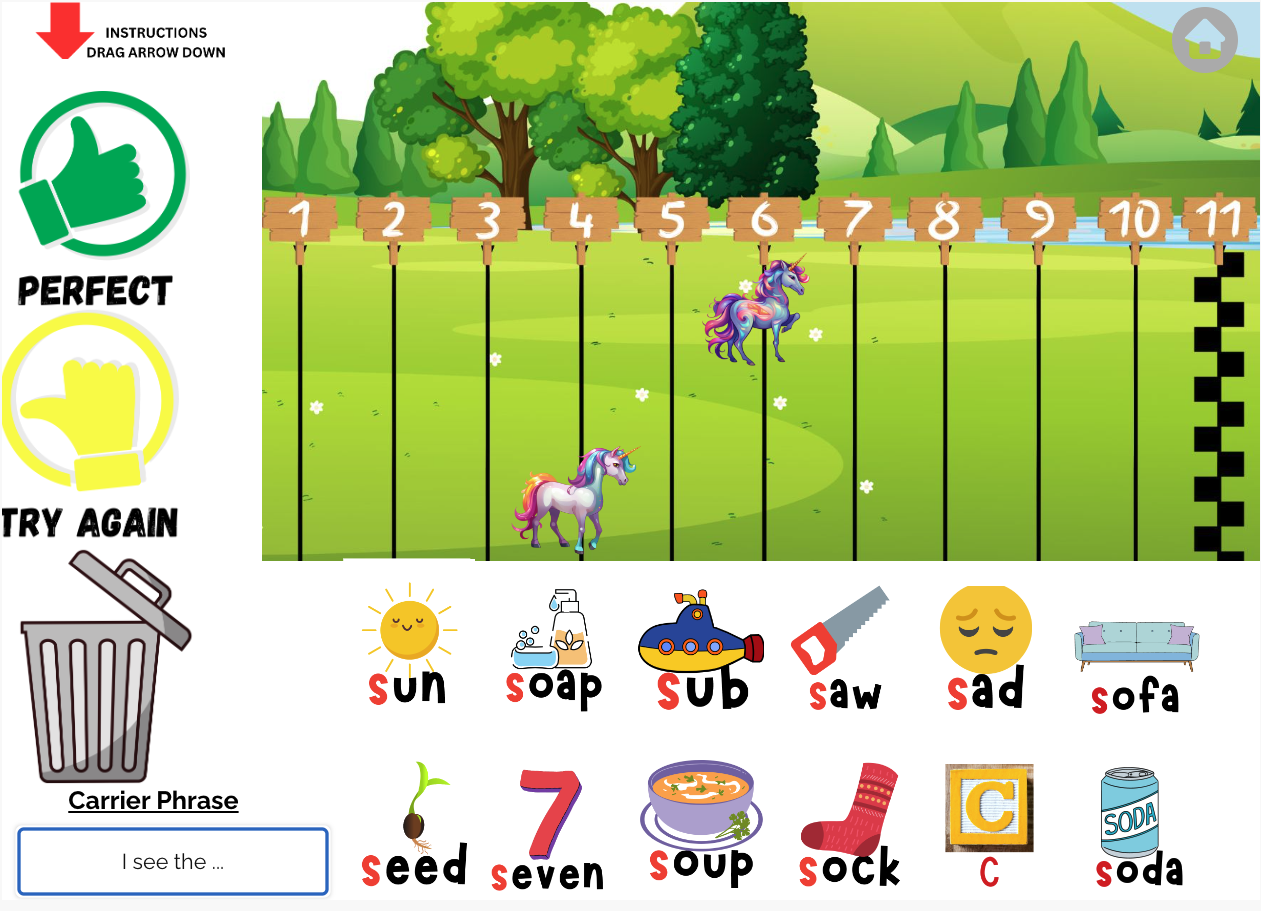
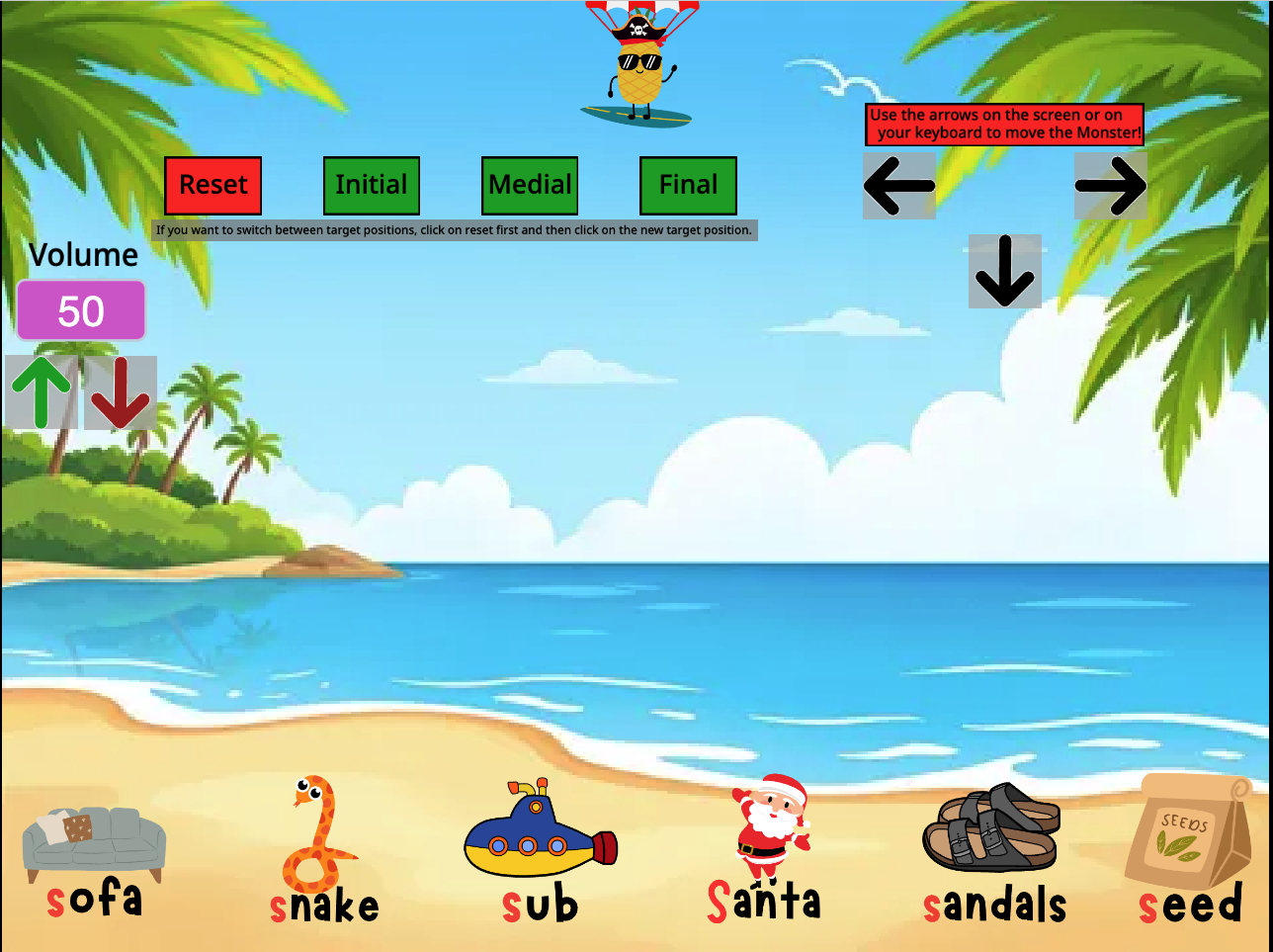
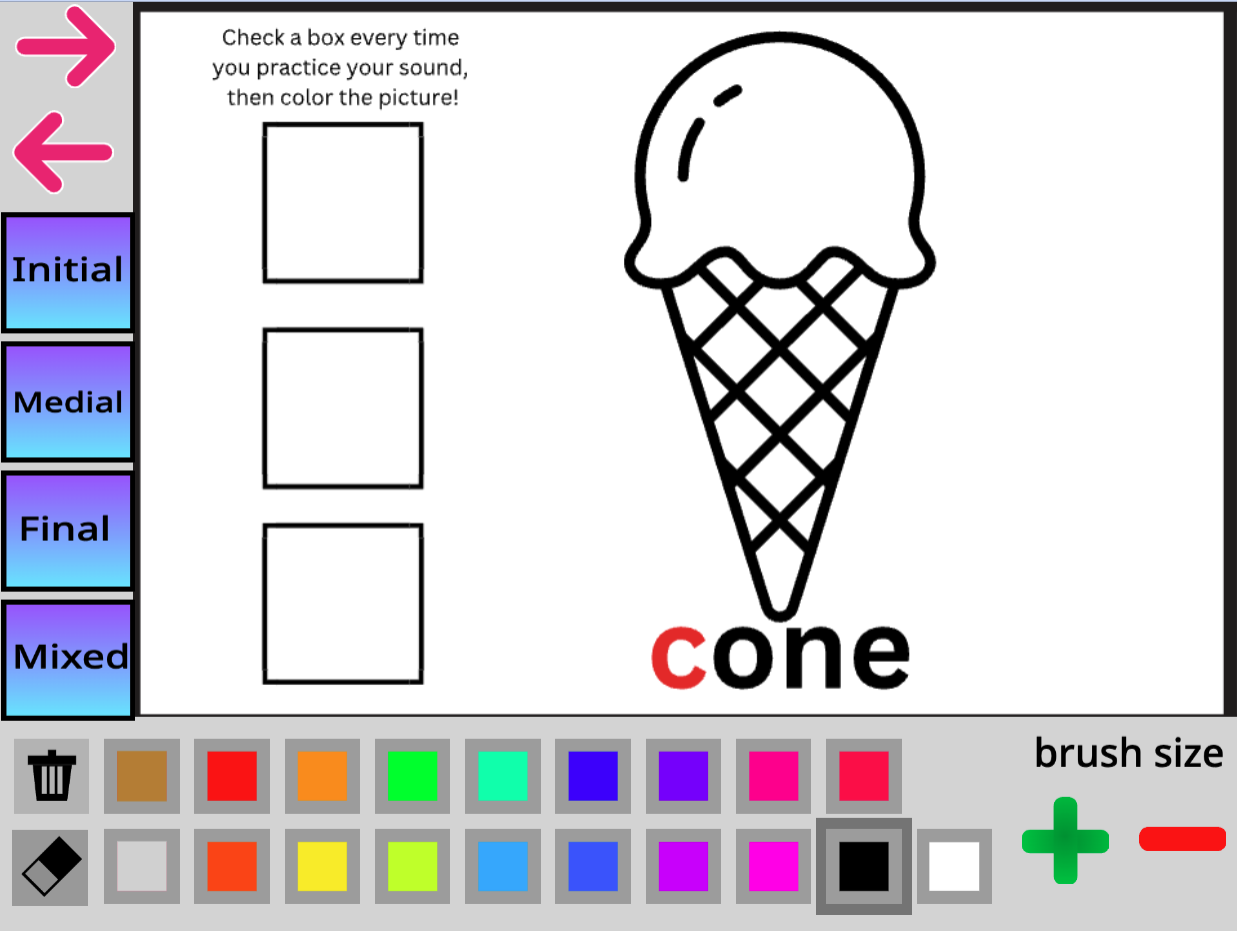
Target initial, medial, and final positions. Practice words multiple times with our 3, 5, and 10 check box options!
Flashcards
Artic Database
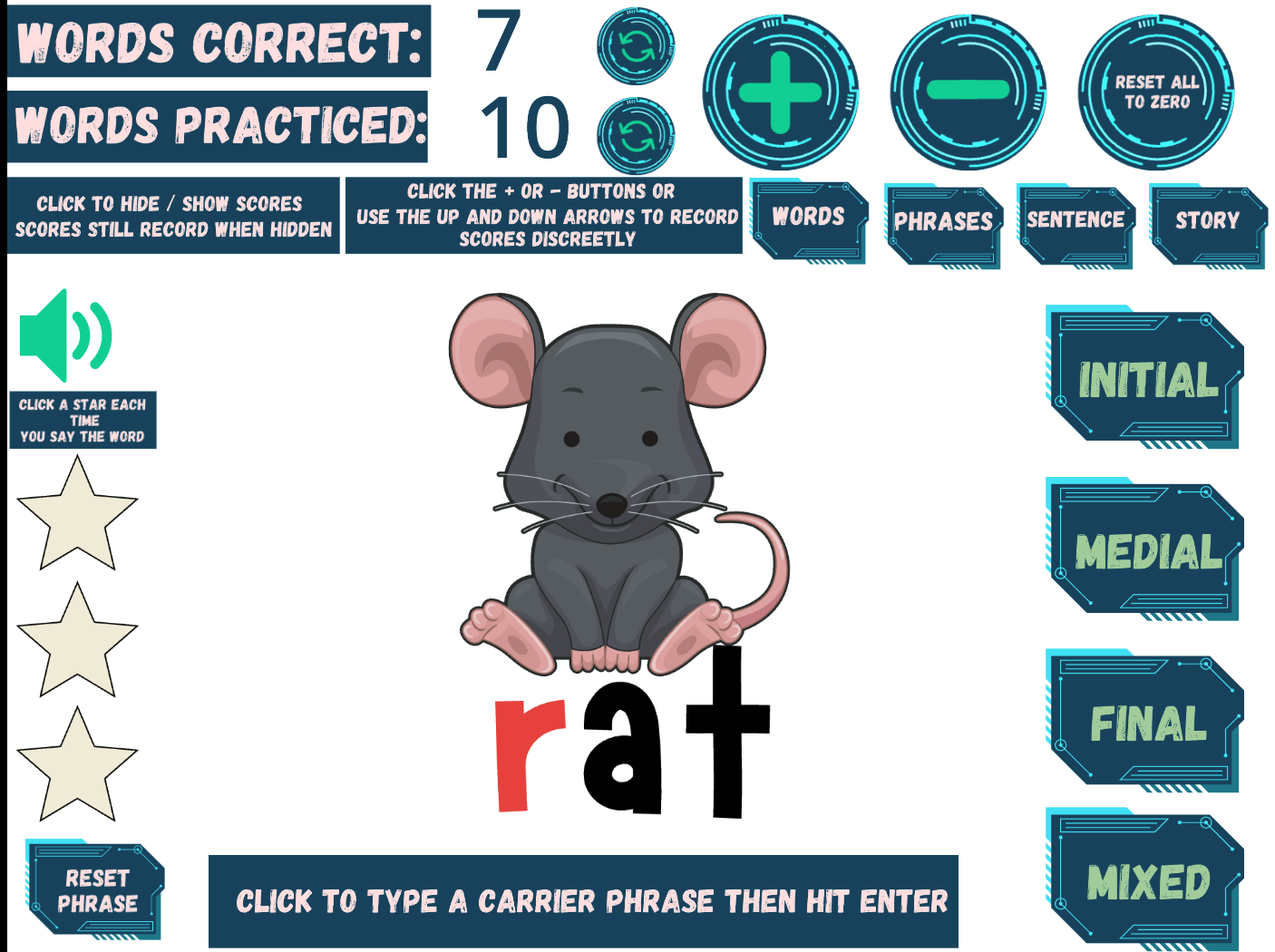
Practice target sounds at the word, phrase, sentence, and story levels. Select words in the initial, medial, and final positions!
Artic Database
Artic Timer
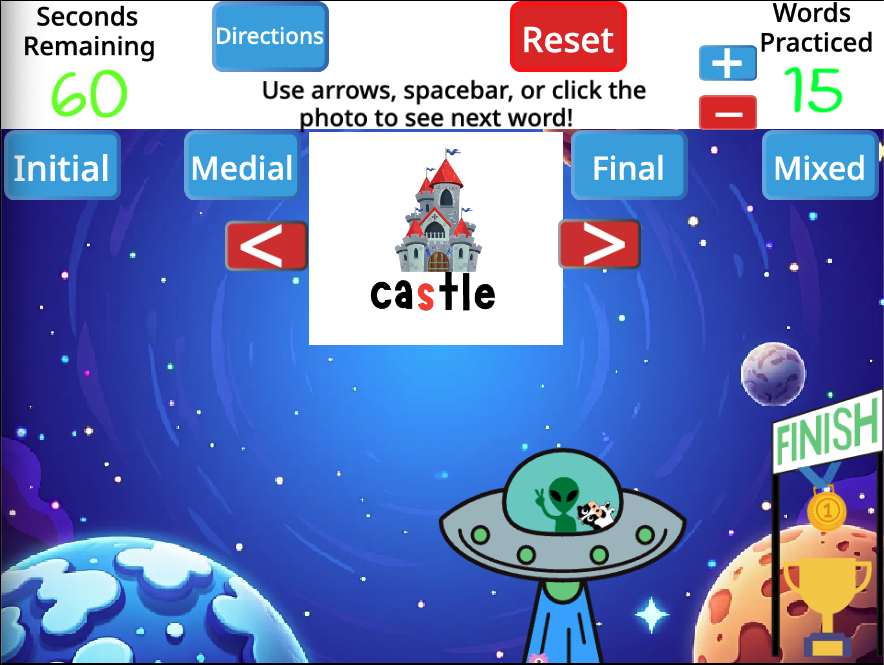
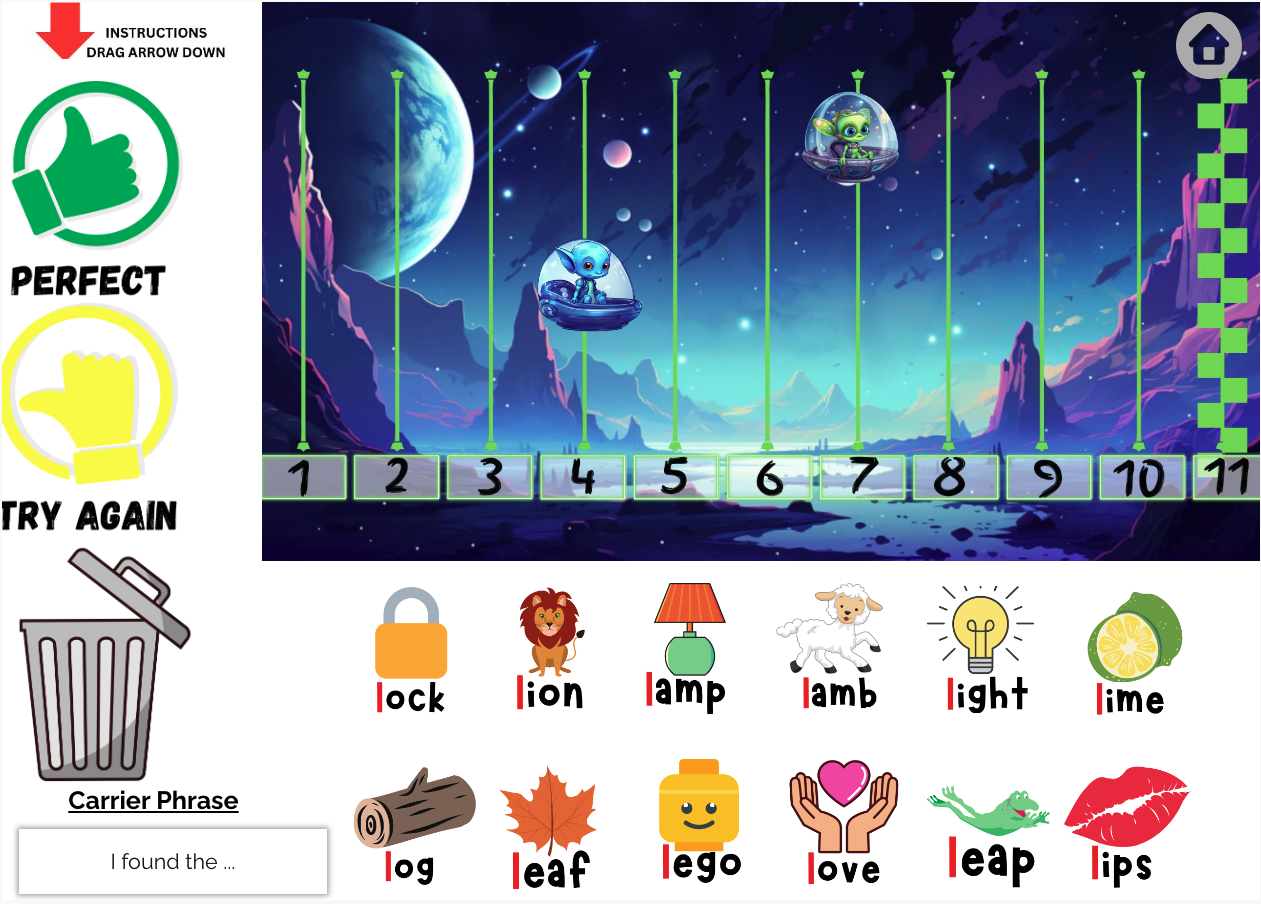
Set the amount of time you want to practice your artic words, and then see how many practice words you can say before spaceship reaches the finish!
Artic Timer
Progression Cards
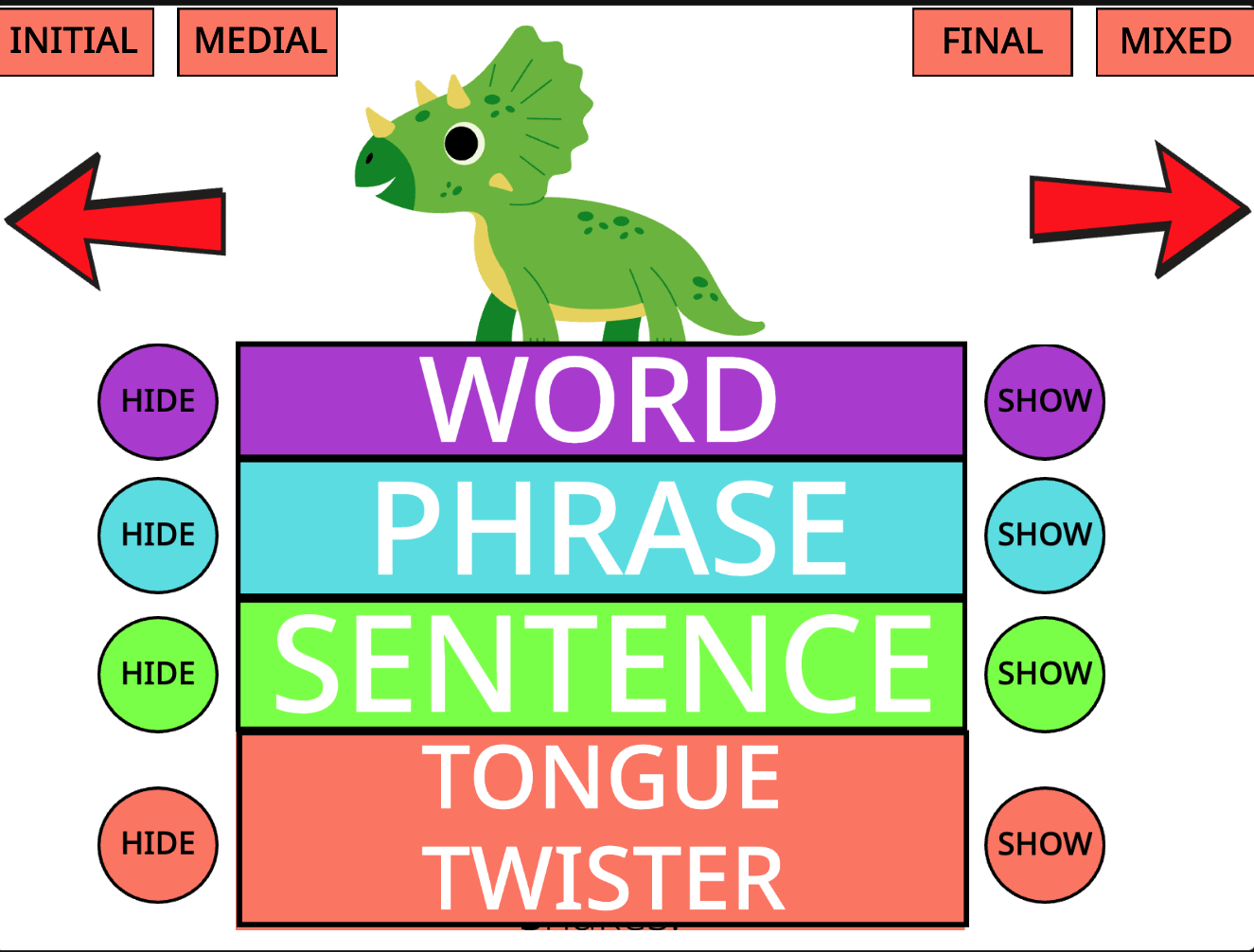
Target each sound at the word, phrase, sentence, and tongue twister levels!
Progression Cards
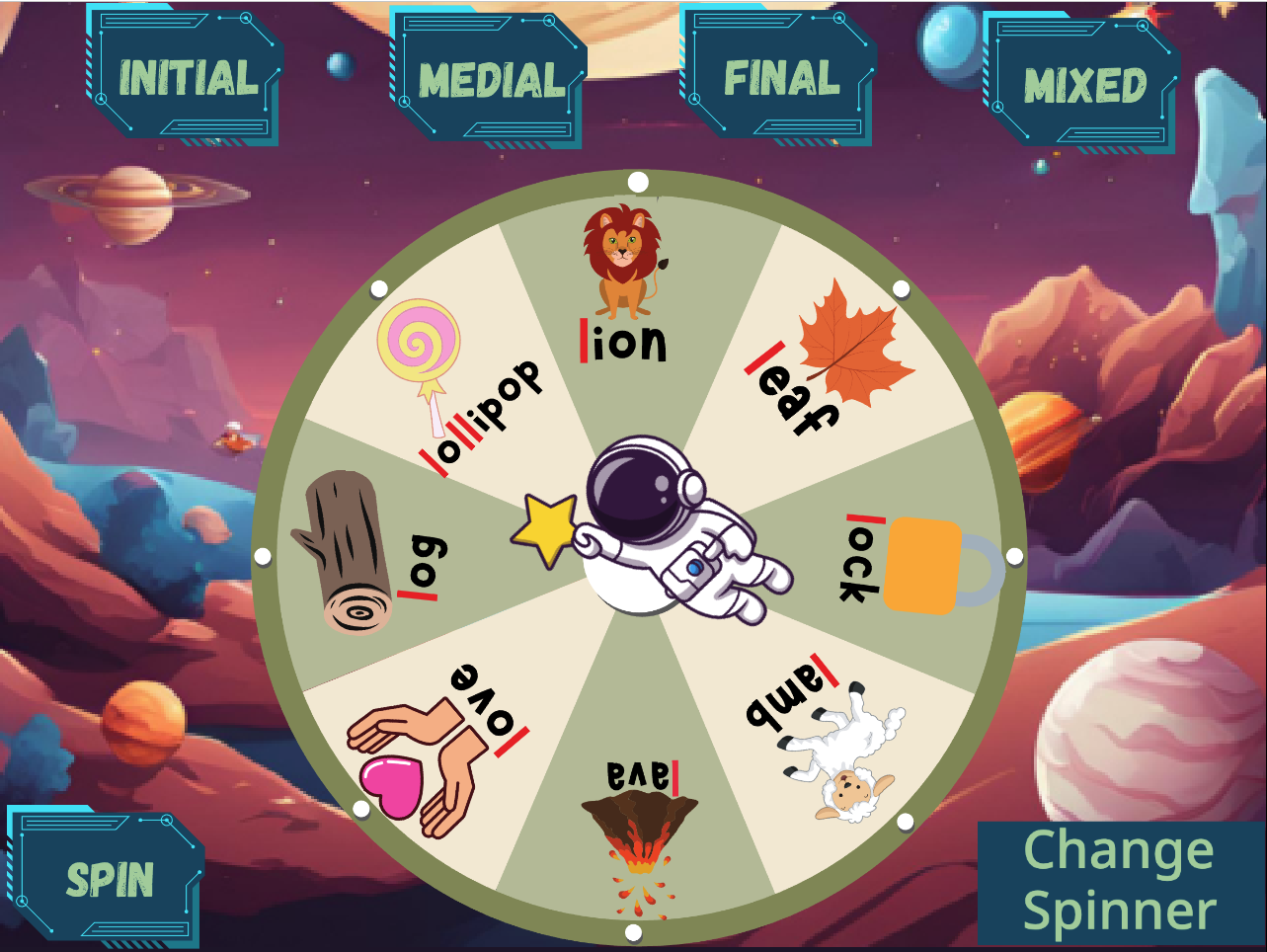
Artic Space Spinner
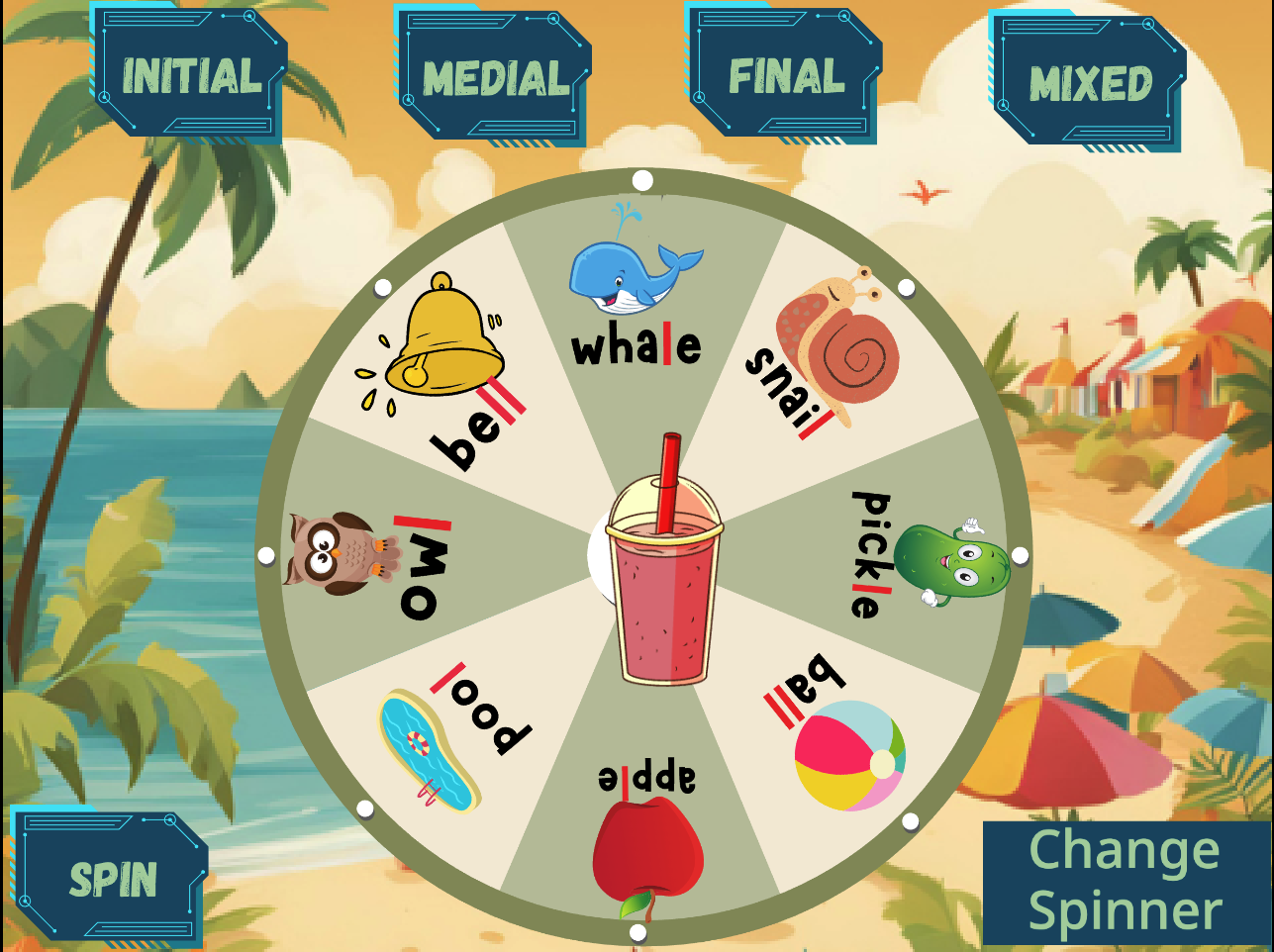
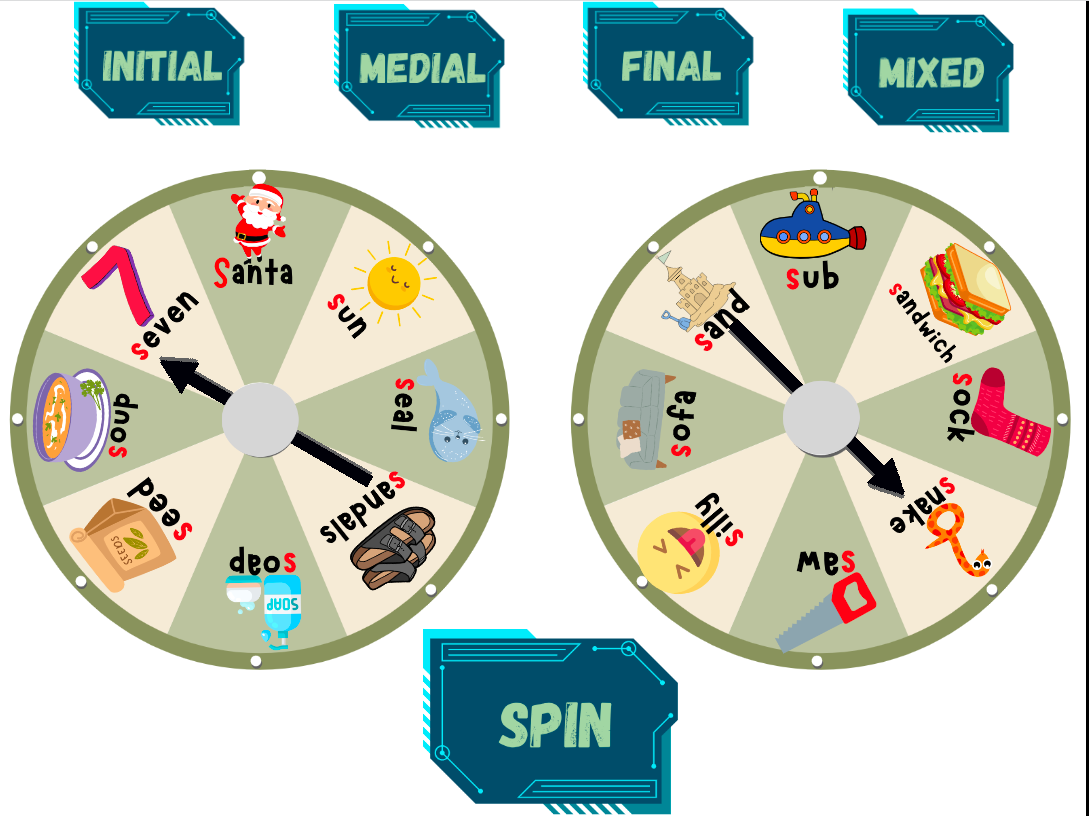
Select words in the initial, medial, and final positions and then spin the wheels to see what words you land on!
Artic Spinner
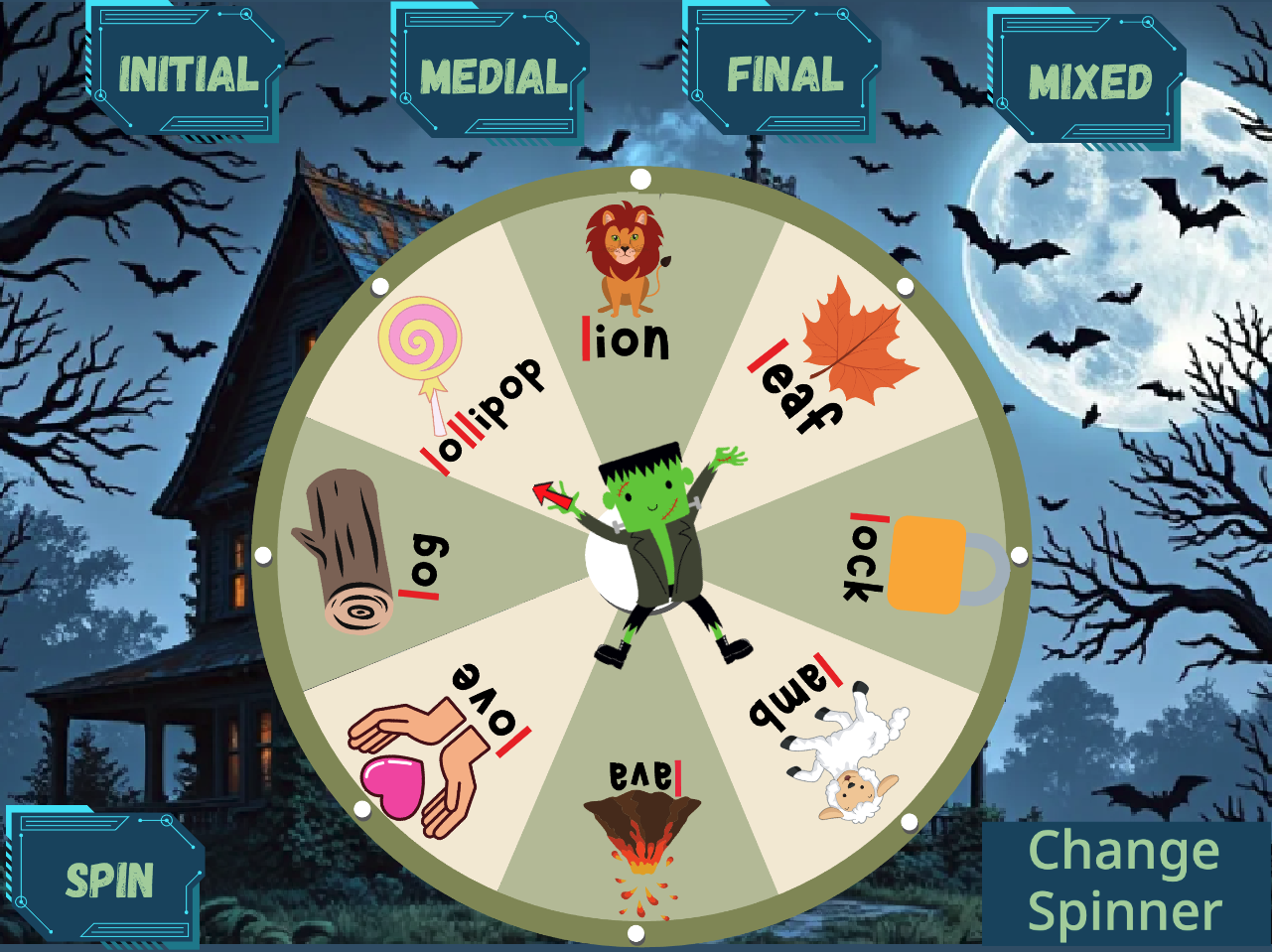
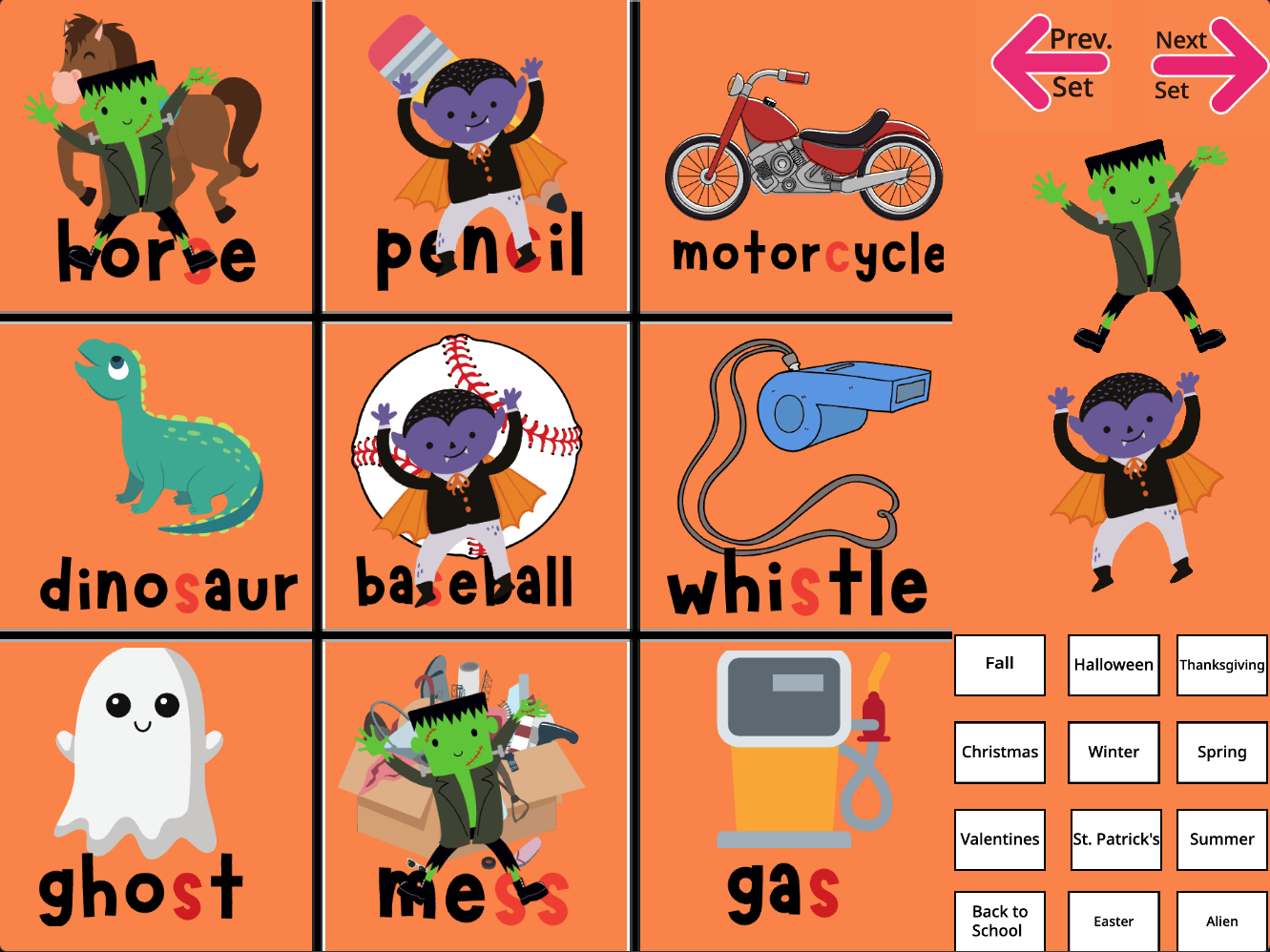
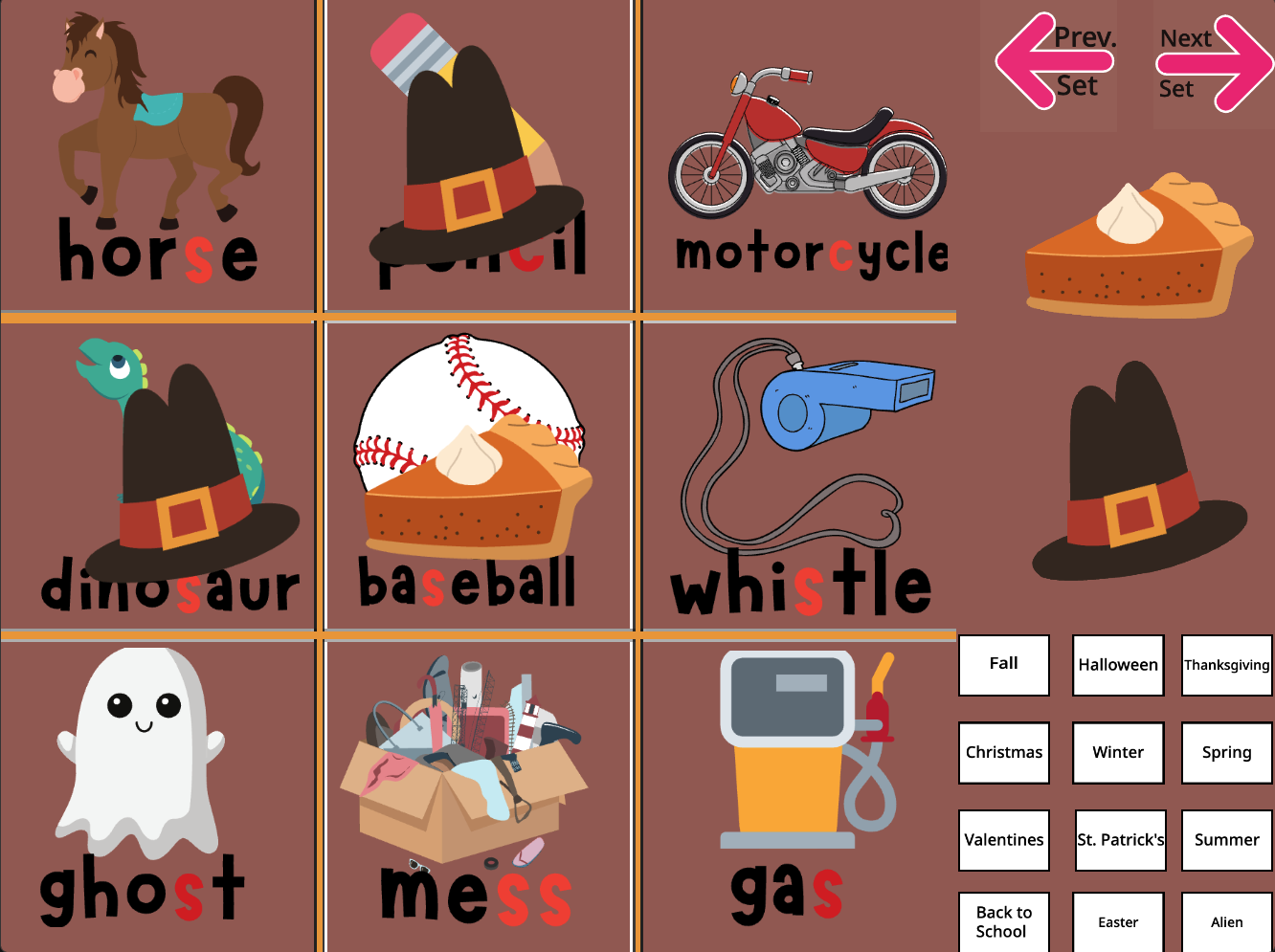
Artic Fall / Halloween Spinner
Select words in the initial, medial, and final positions and then spin the wheels to see what words you land on!
Artic Spinner
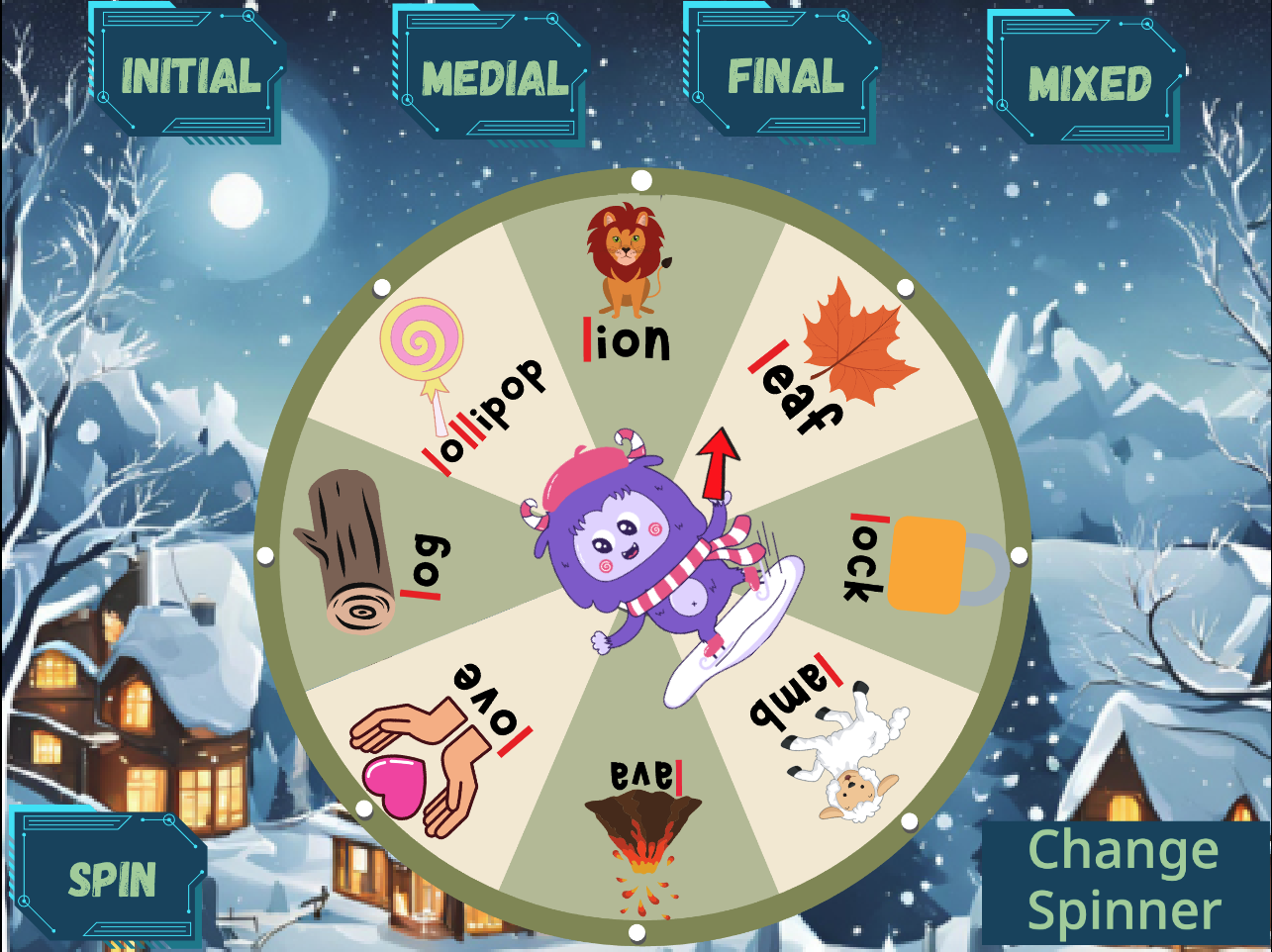
Artic Winter Spinner
Select words in the initial, medial, and final positions and then spin the wheels to see what words you land on!
Artic Spinner
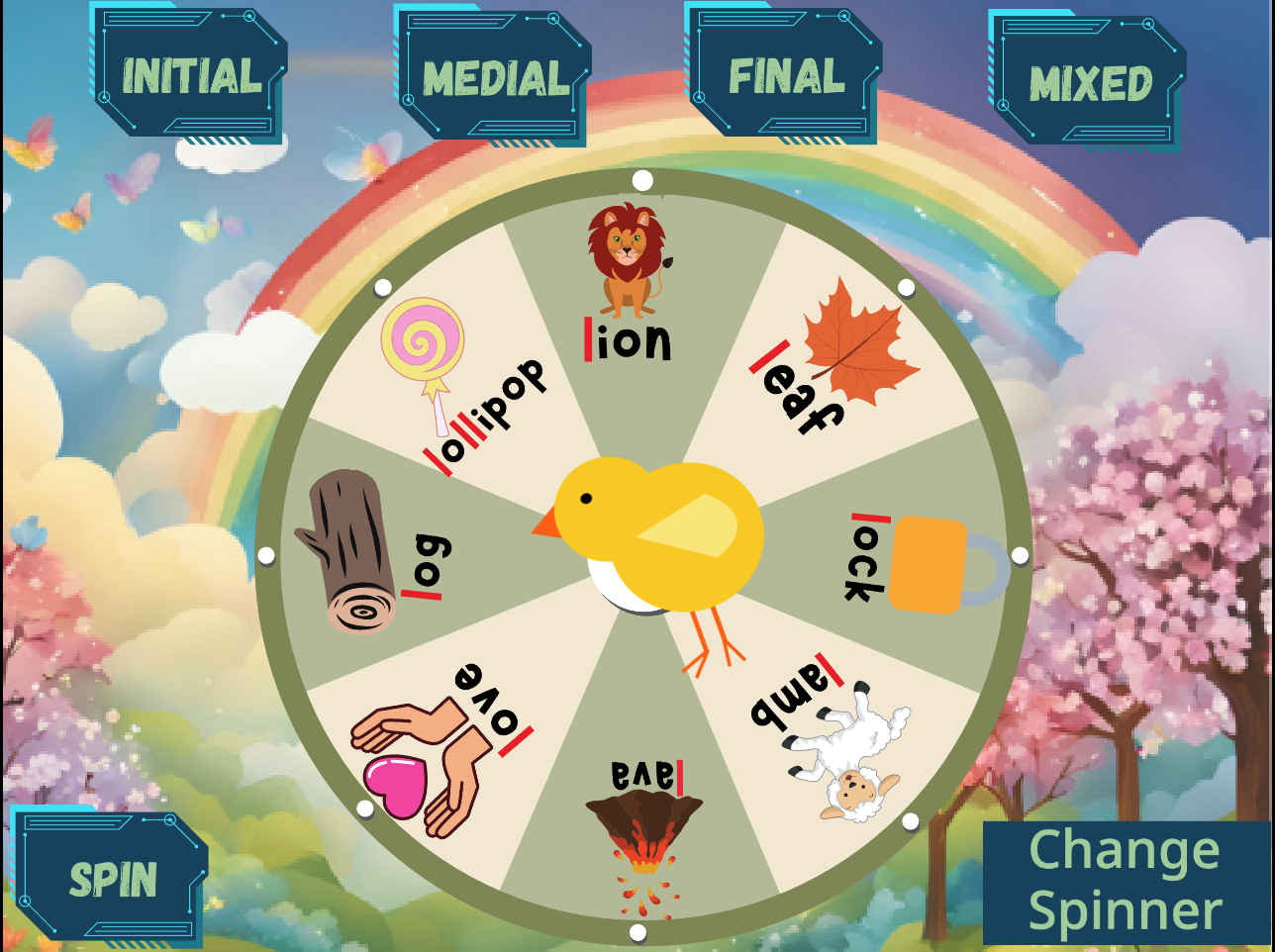
Artic Spring Spinner
Select words in the initial, medial, and final positions and then spin the wheels to see what words you land on!
Artic Spinner
Artic Summer Spinner
Select words in the initial, medial, and final positions and then spin the wheels to see what words you land on!
Artic Spinner
Artic Spinner
Target sounds at the word, phrase, sentence, and story levels with Artic Spinner! Select words in the initial, medial, and final positions and then spin the wheels to see what words you land on!
Artic Spinner
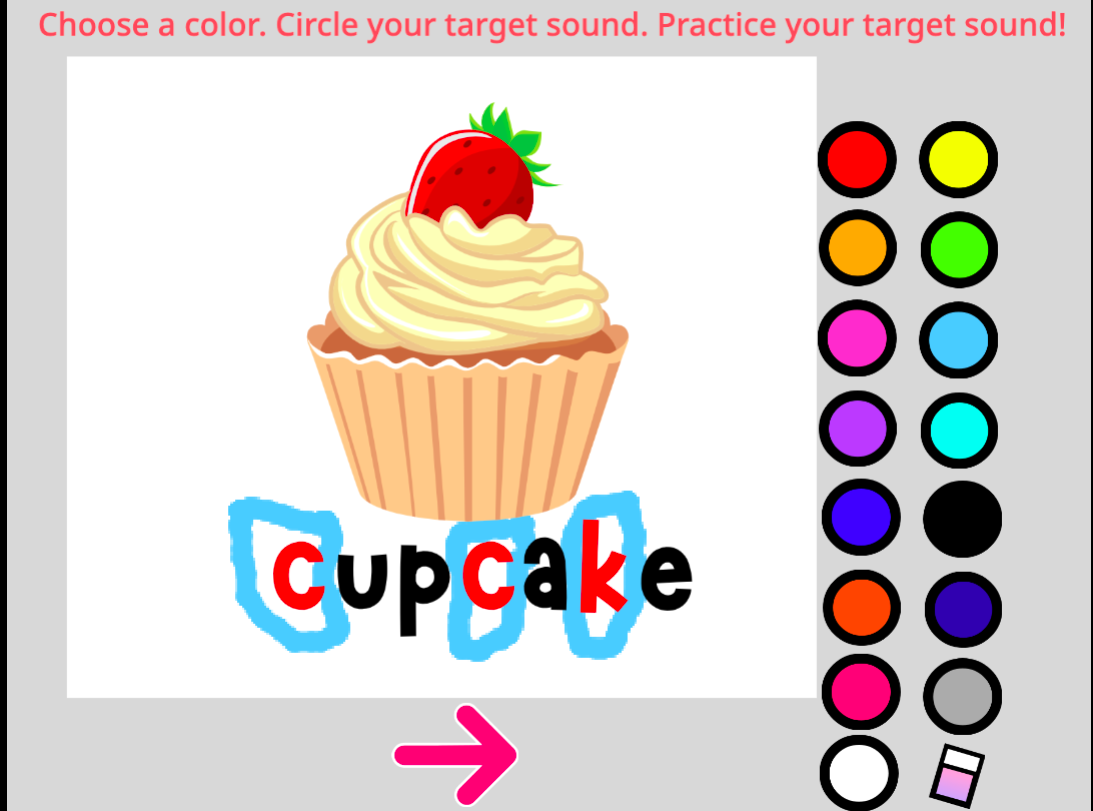
Artic Marker Activity
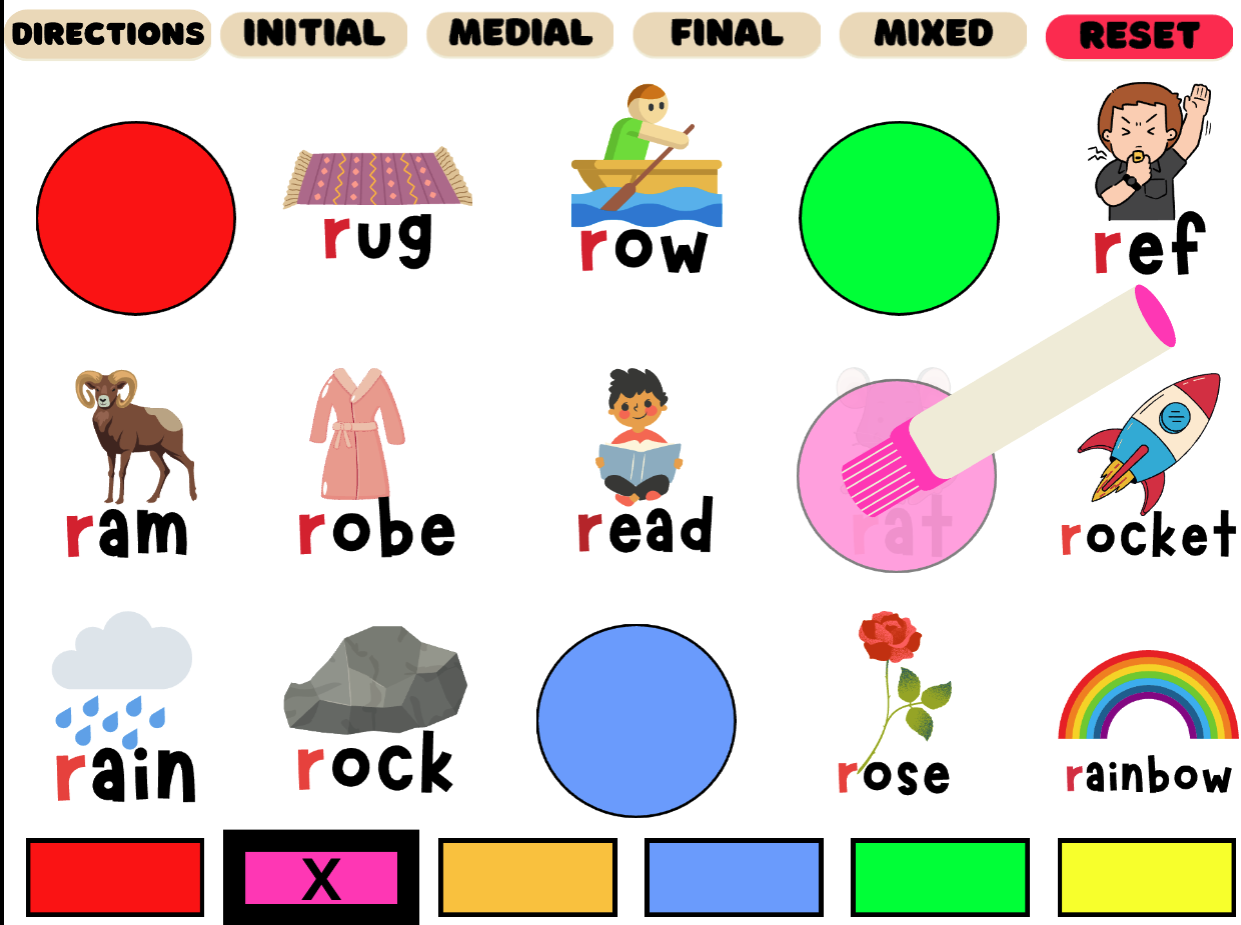
Select the color you want to use, and then say one of the artic words. After you have said the word, click on the word, and a marker will float down and color the picture.
Artic Marker Activity
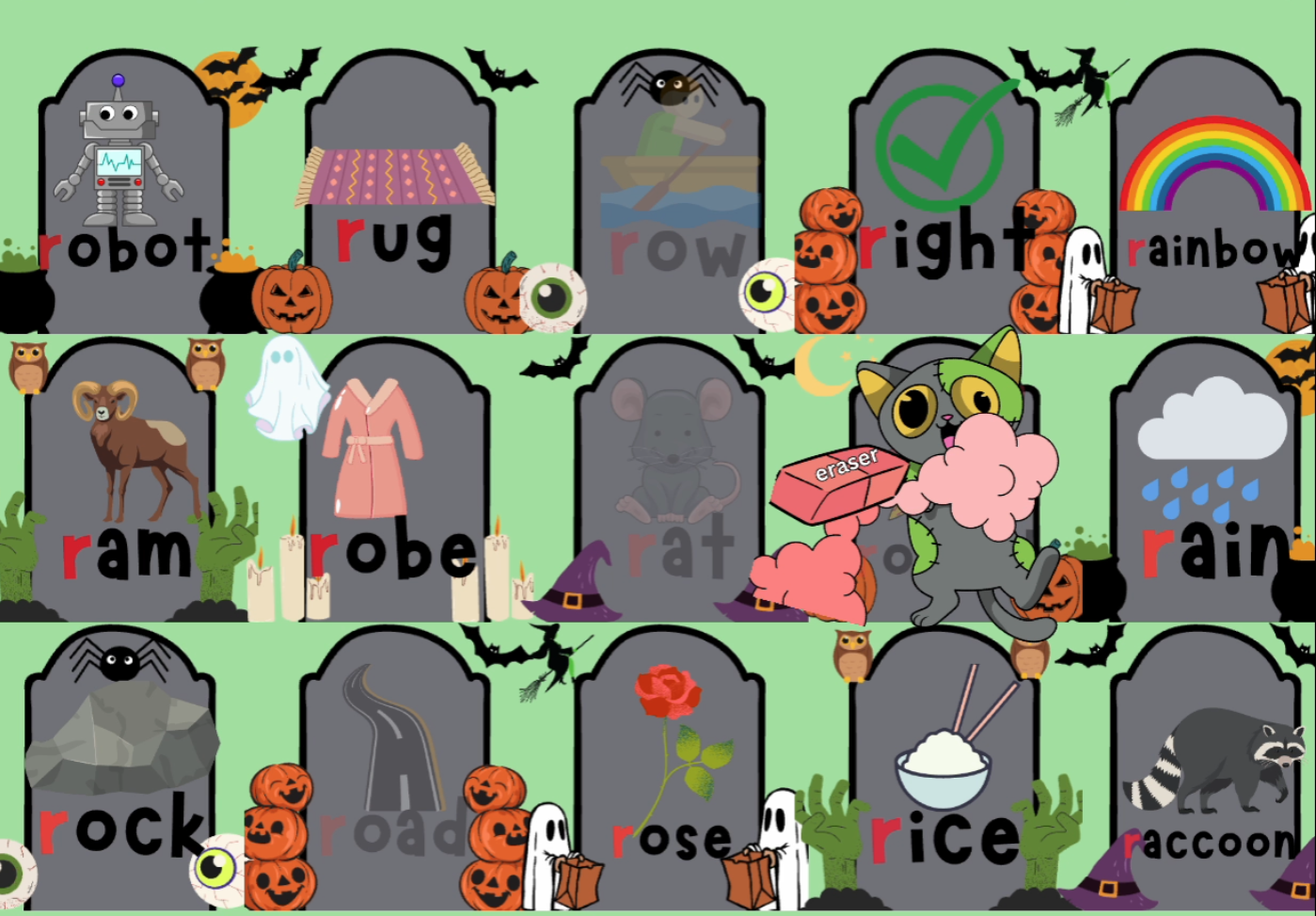
Artic Eraser Activity
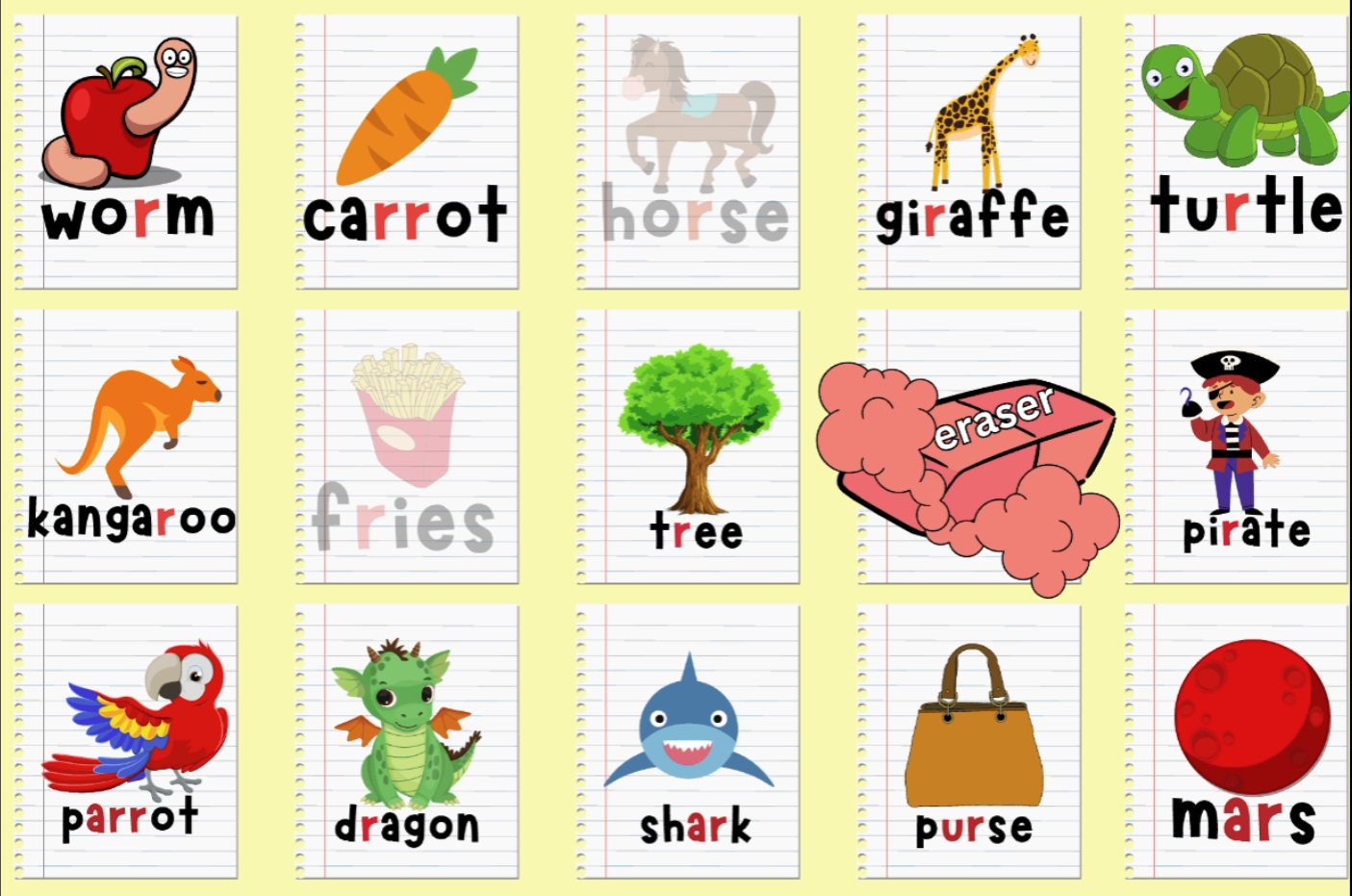
Say one of the artic words, and then click on that word. An eraser will float down and try to erase that word. Say the word twice to completely erase the artic picture.
Artic Eraser Activity
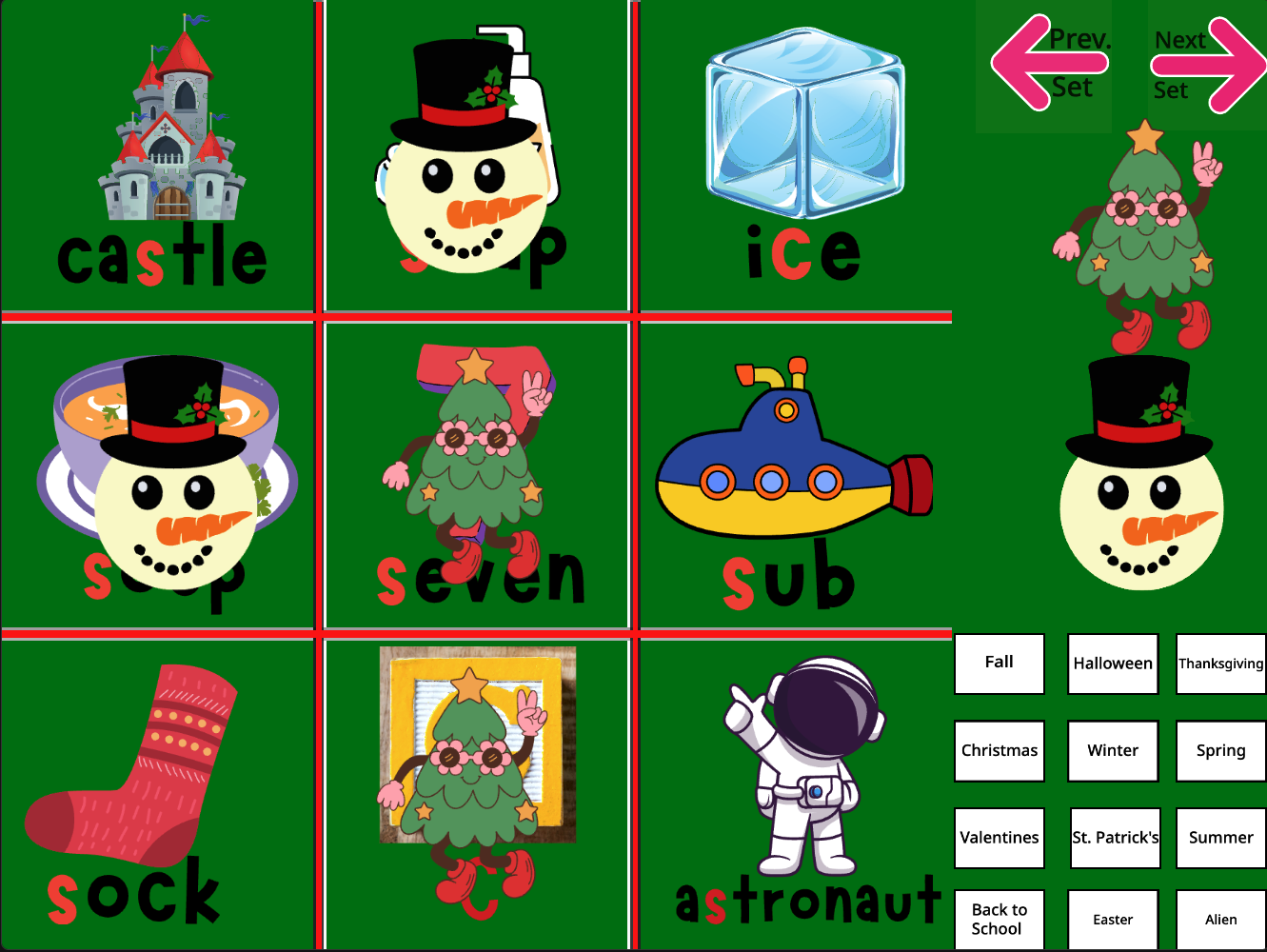
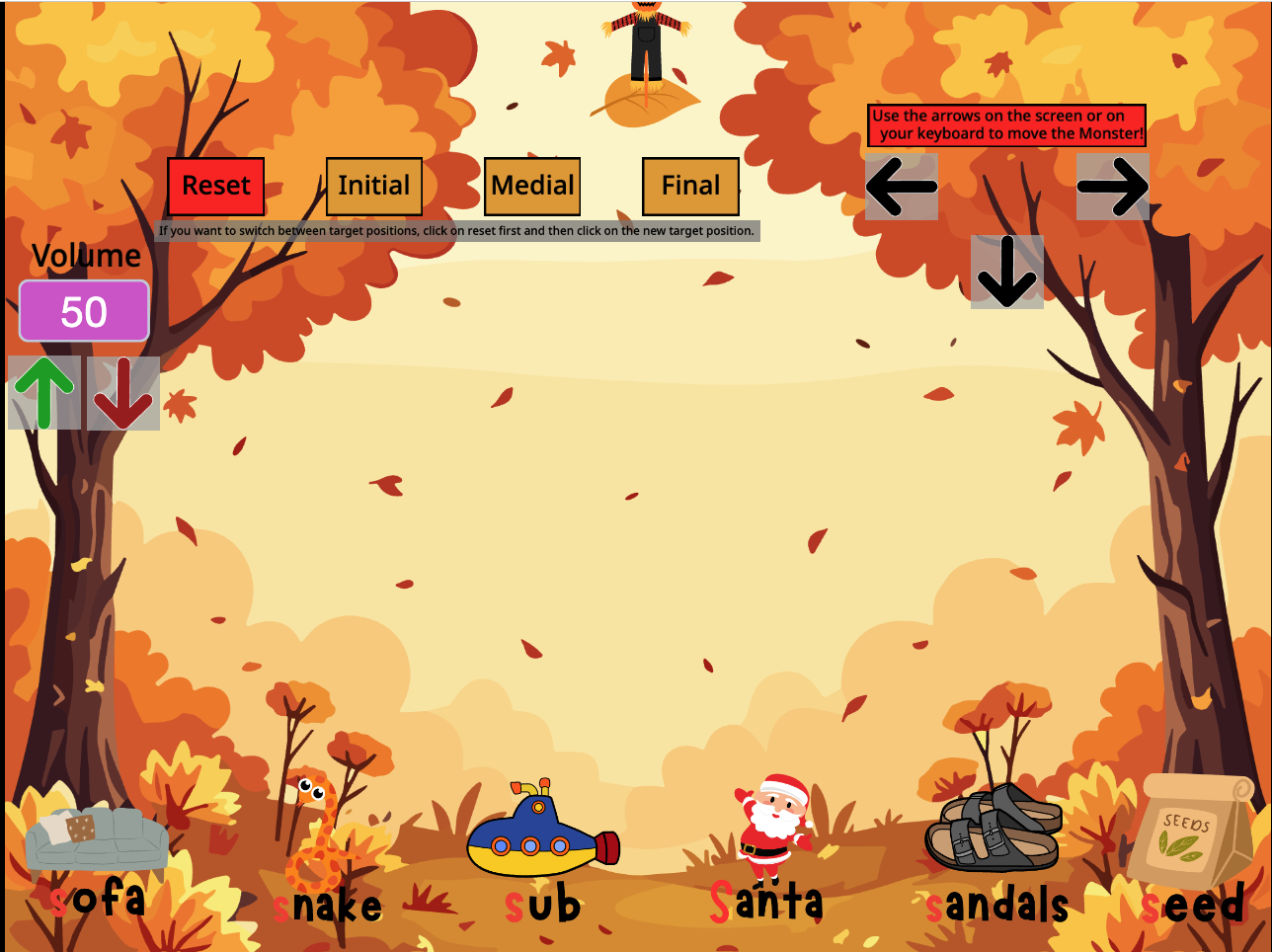
Fall Artic Cards
Fall Artic Cards
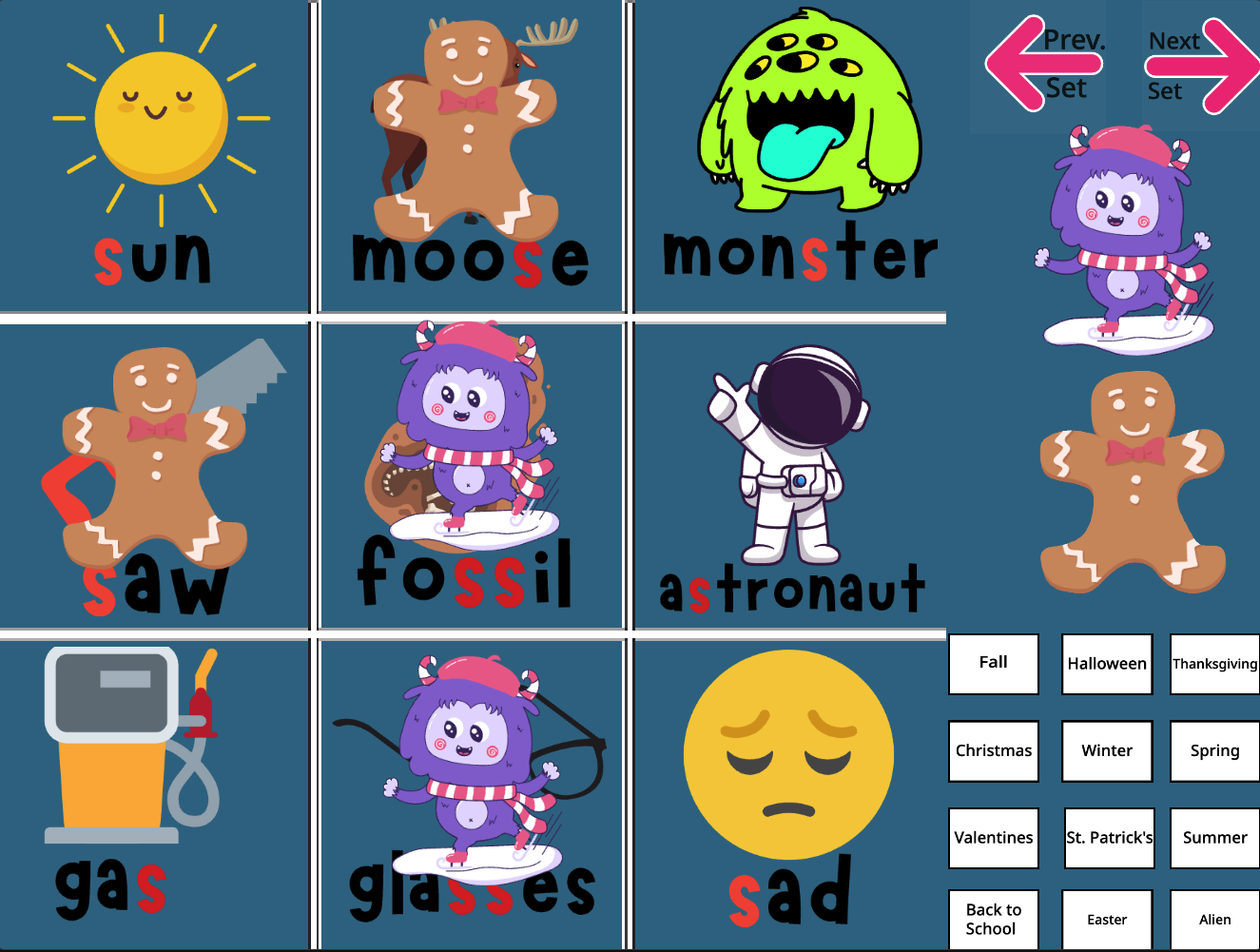
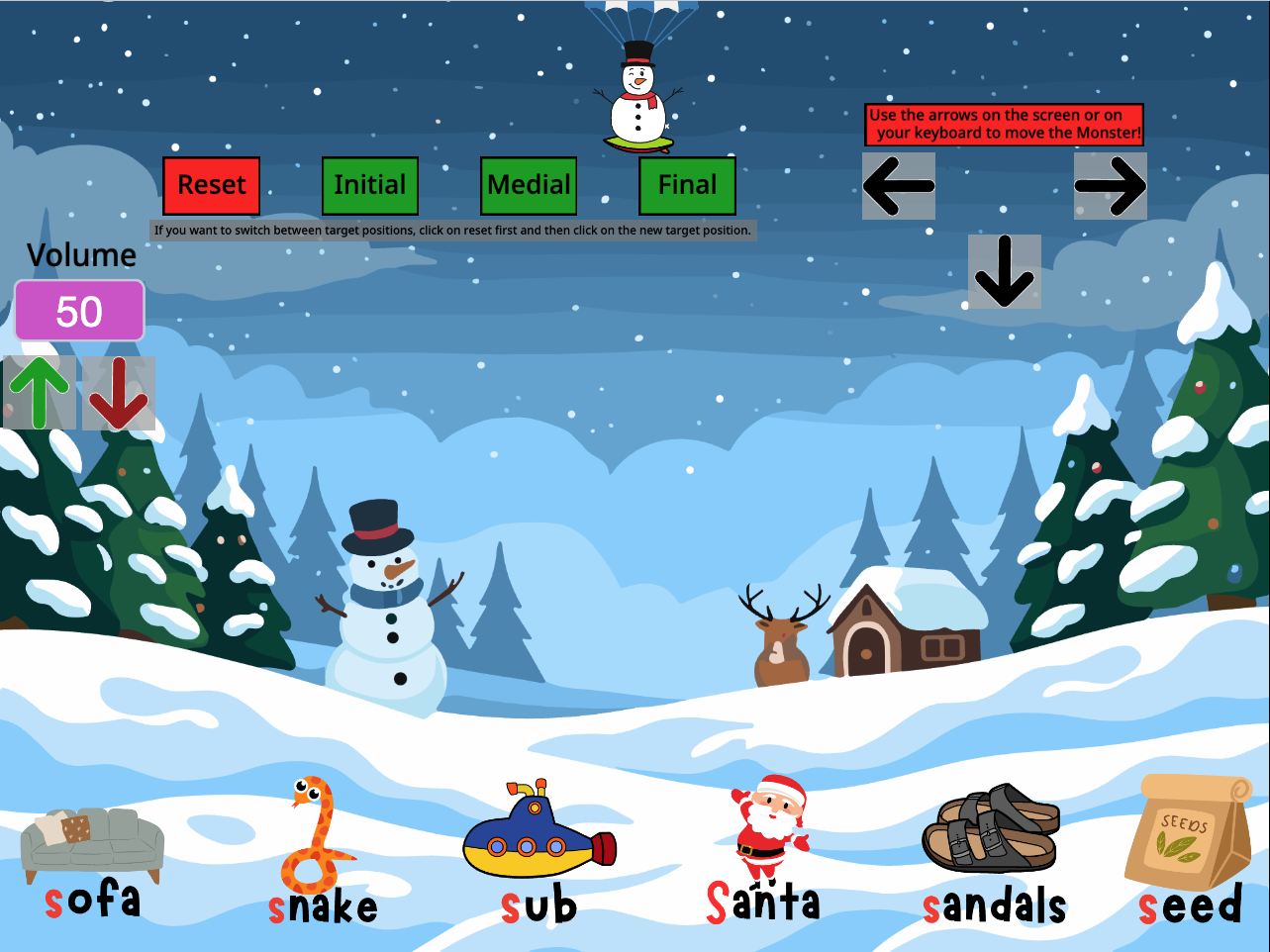
Winter Artic Cards
Winter Artic Cards
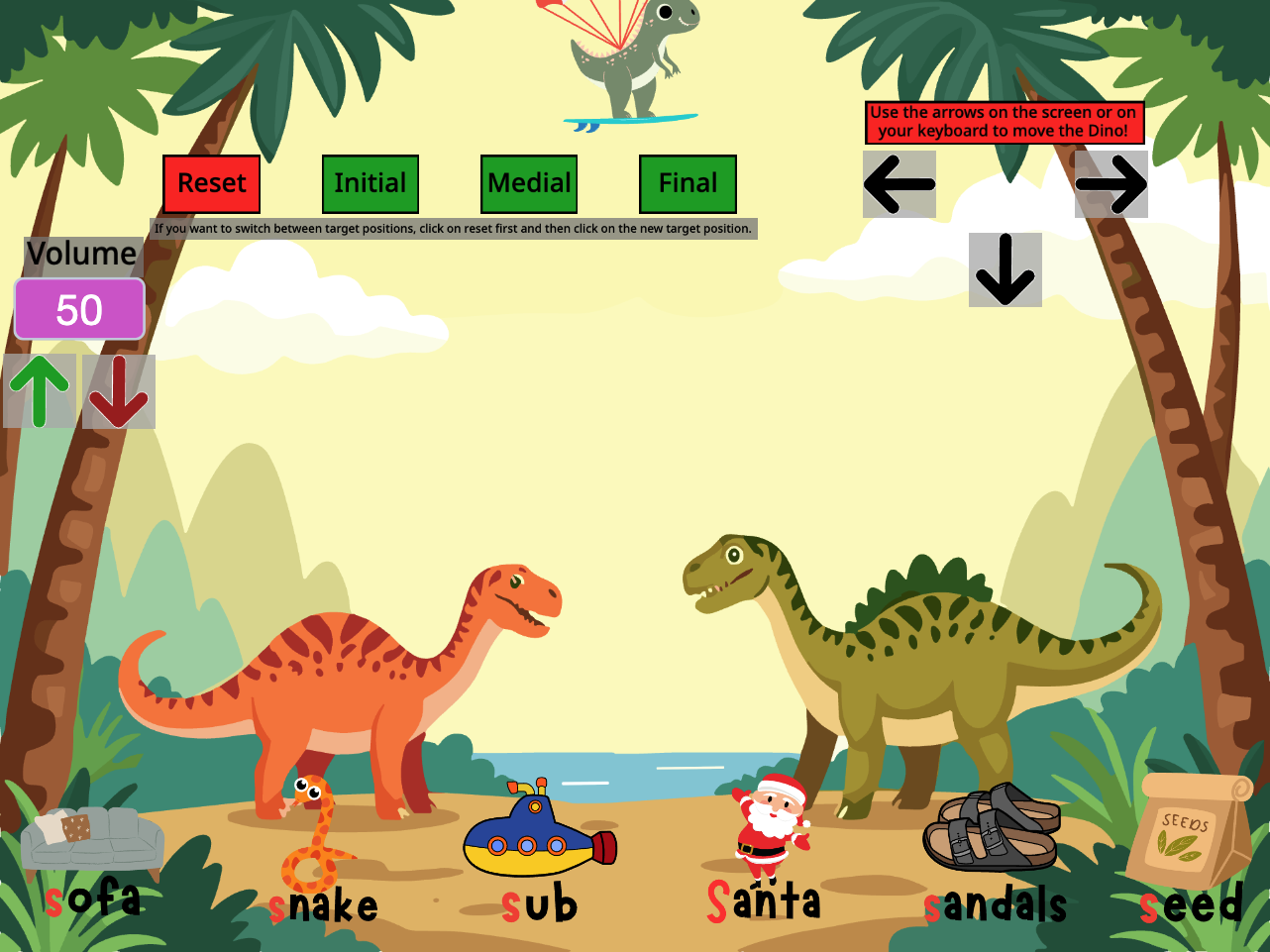
Dinosaur Artic Cards
100 Trials Artic Activity
Target your articulation sounds 100 times! Choose a color and keep track of how many times you have practiced you speech sound!
100 Trials Artic Activity
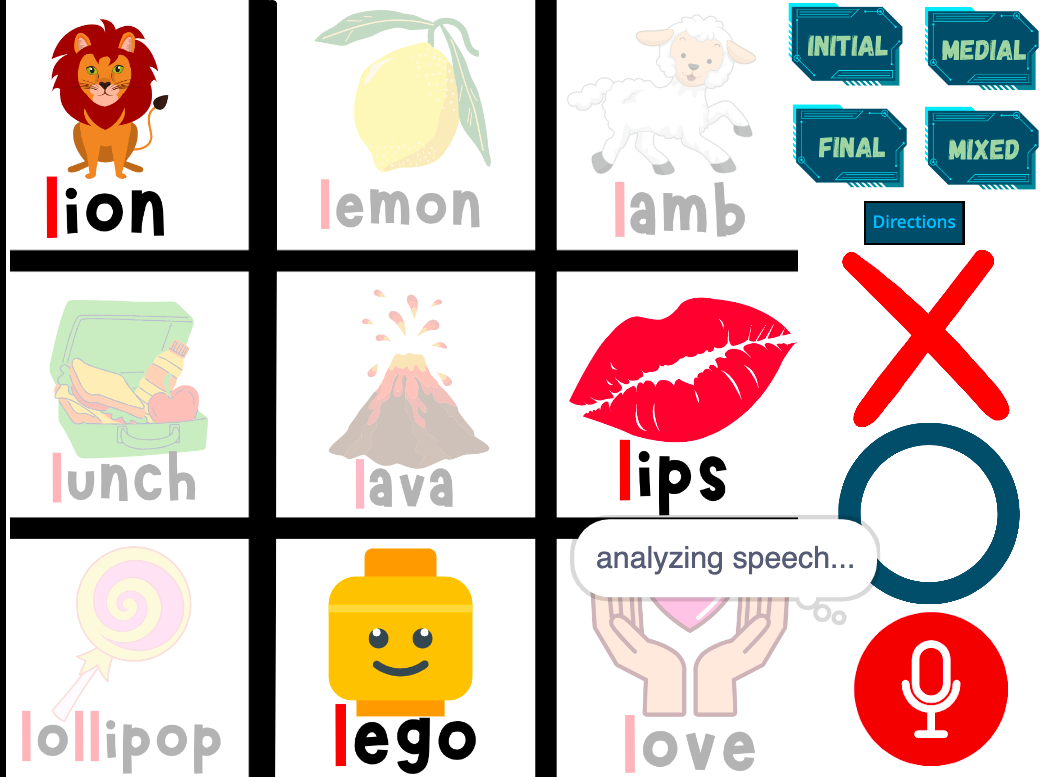
Speech Activated Tic-Tac-Toe
Use speech recognition to play tic-tac-toe! Pick the space you want to move your X or O to, and then say the artic word in that square. The picture will light up when it hears you correctly say your speech sound word! For best results, say the artic word in a short carrier phrase or sentence!
Tic-Tac-Toe
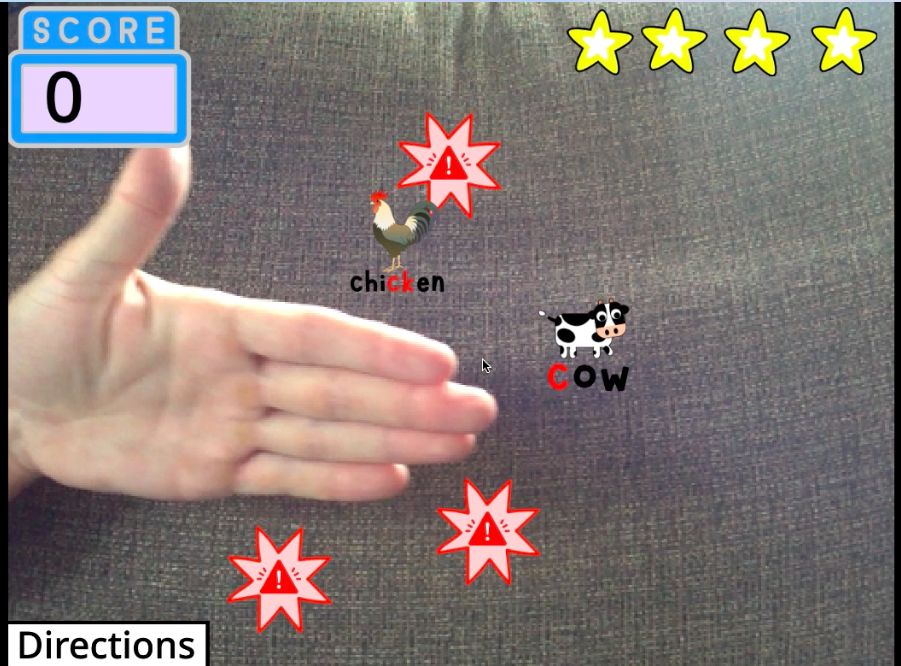
Pop the Artic Words
Using your computer or tablet's camera, pop the artic words as they appear! Be careful not to touch the red spikes as you will lose a star! Can you set a high score?!
Pop the Artic Words
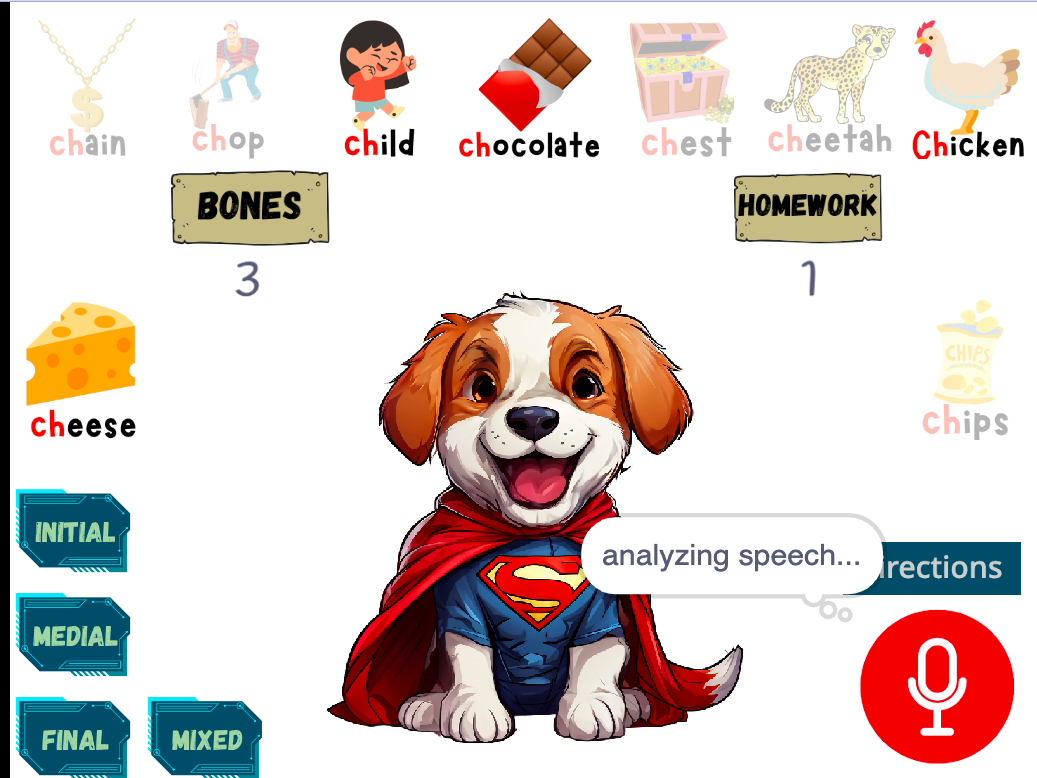
Feed the Dog w/ Speech Recognition
Using speech recognition, feed the dog! Some artic words will feed the dog bones, but some will feed the dog homework! Try to see if you can feed the dog 6 bones before he eats 3 homework assignments! For best results, say the artic word in a short carrier phrase or sentence!
Speech Recognition Alien Minimal Pairs
Say one of the minimal pair words that you see on the screen. Our alien friend with listen to you, and then he will point to to the word that he heard! For best results, say the artic word in a short carrier phrase or sentence!
Speech Recognition Alien Minimal Pairs
Speech Recognition Unicorn Minimal Pairs
Say one of the minimal pair words that you see on the screen. Our unicorn friend with listen to you, and then he will point to to the word that he heard! For best results, say the artic word in a short carrier phrase or sentence!
Speech Recognition Unicorn Minimal Pairs
Speech Recognition Dinosaur Minimal Pairs
Say one of the minimal pair words that you see on the screen. Our dinosaur friend with listen to you, and then he will point to to the word that he heard! For best results, say the artic word in a short carrier phrase or sentence!
Speech Recognition Dinosaur Minimal Pairs
Speech Recognition Zombie Minimal Pairs
Say one of the minimal pair words that you see on the screen. Our zombie friend with listen to you, and then he will point to to the word that he heard! For best results, say the artic word in a short carrier phrase or sentence!
Speech Recognition Zombie Minimal PairsWarning: Trying to access array offset on false in /home/slpdegre/public_html/wp-content/plugins/jet-elements/includes/addons/jet-elements-portfolio.php on line 2097
Warning: Trying to access array offset on false in /home/slpdegre/public_html/wp-content/plugins/jet-elements/includes/addons/jet-elements-portfolio.php on line 2098
Warning: Trying to access array offset on false in /home/slpdegre/public_html/wp-content/plugins/jet-elements/includes/addons/jet-elements-portfolio.php on line 2099
Find The Match
Can you find the matching picture, that has your speech sound in it, before the other players?!
Find The Match
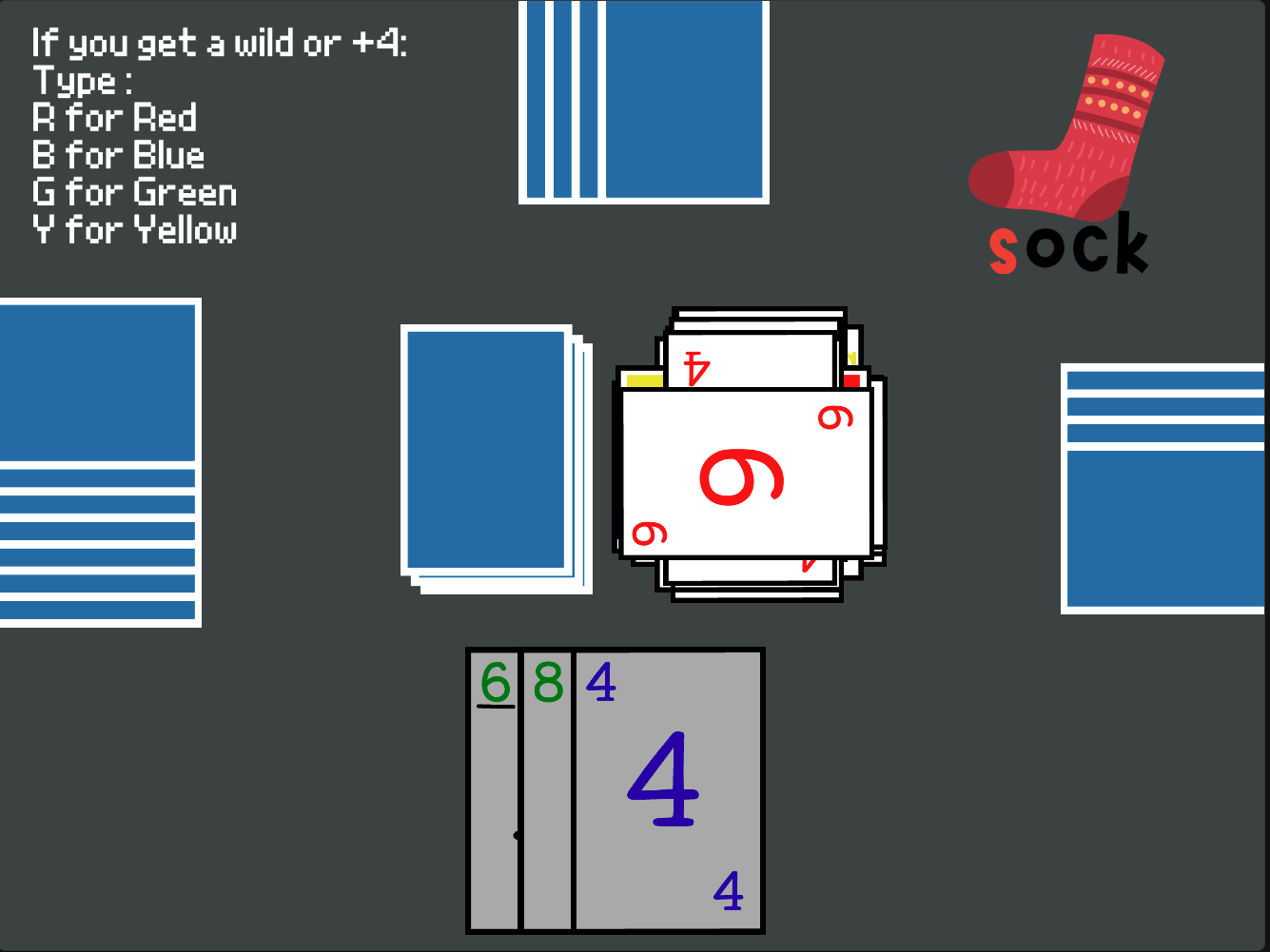
Artic Crazy 8s
Challenge 3 computer players to a game of an Articulation version of Crazy 8s while practicing your speech sounds before every turn!
Artic Crazy 8s
Artic Marshmallow Blast
Use the marshmallow cannon to hit the articulation words with your target sound in them before they reach the bottom of the screen!
Marshmallow Blast
Seasonal Articulation Memory Game
No matter the season, practice your articulation sounds at the initial, medial, final, and mixed positions!
Memory Game
Jeopardy
Have up to 4 players in a game of Jeopardy! Every answer has the target sound in it!
Jeopardy
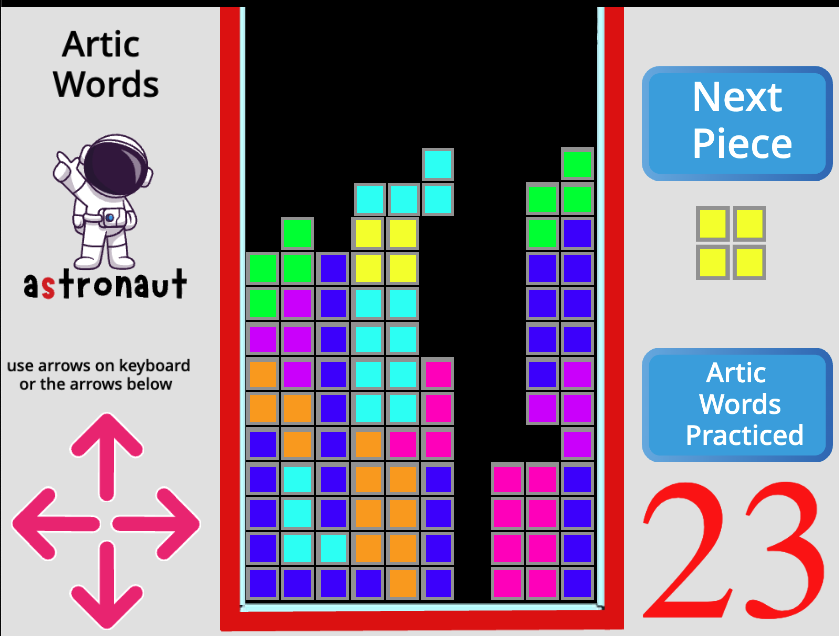
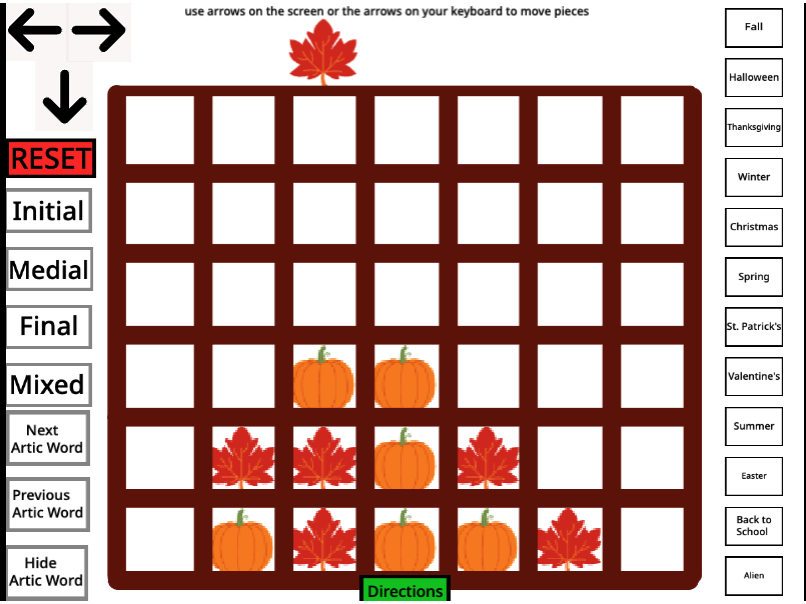
Artic Block Builder
Each time a new piece begins to fall, a new artic word will appear!
Artic Block Builder
Artic 4-In-A-Row
Say your speech sound words, and be the first player to have 4 straight chips to be the winner!
Artic 4-In-A-Row
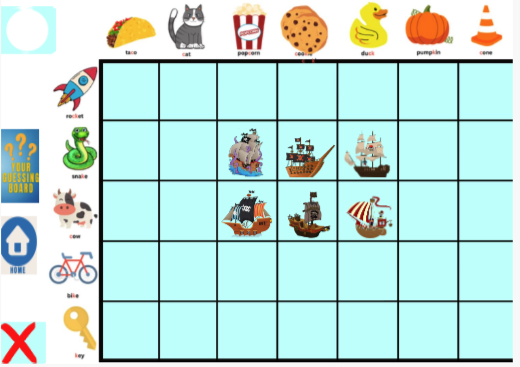
Pirate Find the Treasure
Can you find the treasure hiding under one of your artic-sound words?
Treasure Find
Spring Find the Treasure
Can you find the treasure hiding under one of your artic-sound words ?
Treasure Find
Summer Find the Treasure
Can you find the treasure hiding under one of your artic-sound words?
Treasure Find
Fall / Halloween Find the Treasure
Can you find the treasure hiding under one of your artic-sound words?
Treasure Find
Winter Find the Treasure
Can you find the treasure hiding under one of your artic-sound words?
Treasure Find
Draw & Guess
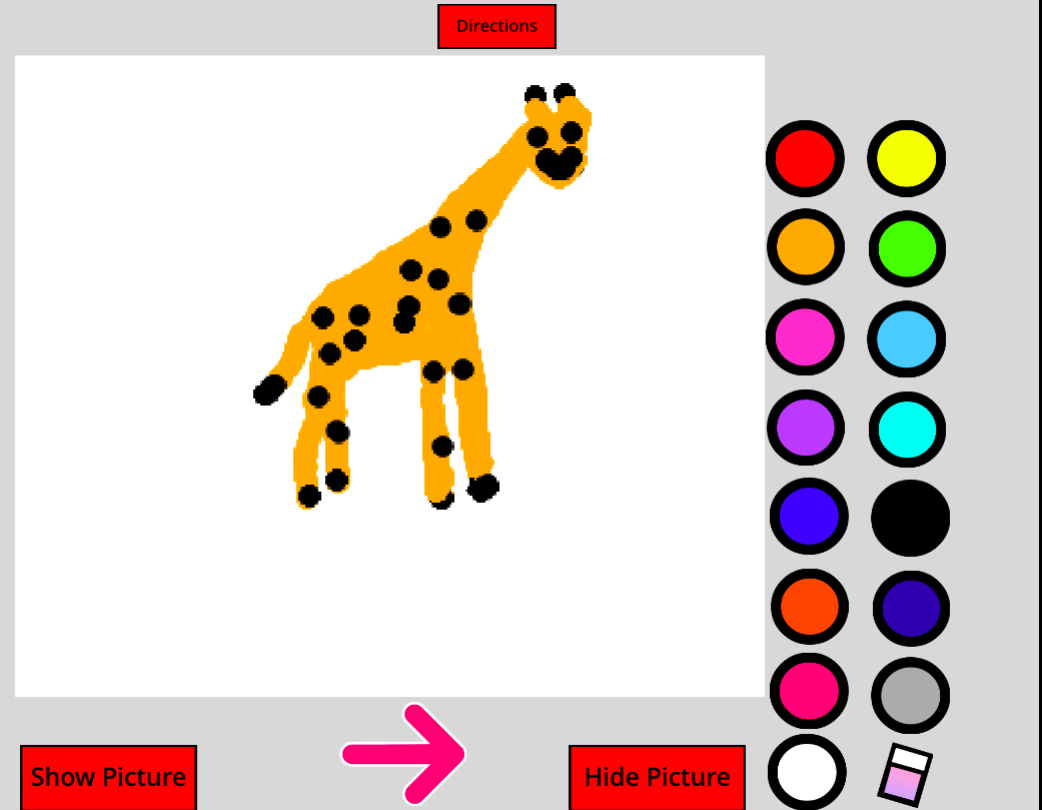
Look thru the collection of target artic words, and then hide pictures. Draw one of the pictures you saw and see if your friends can guess what it is!
Draw & Guess
Escape From Dragon's Dungeon
Each game has 12 picture cards that are hiding keys, torches, are water drops. Can you save the Royal Penguins before all the dragon guards are alerted?
Dragon's Dungeon
Fish's Flight to Freedom
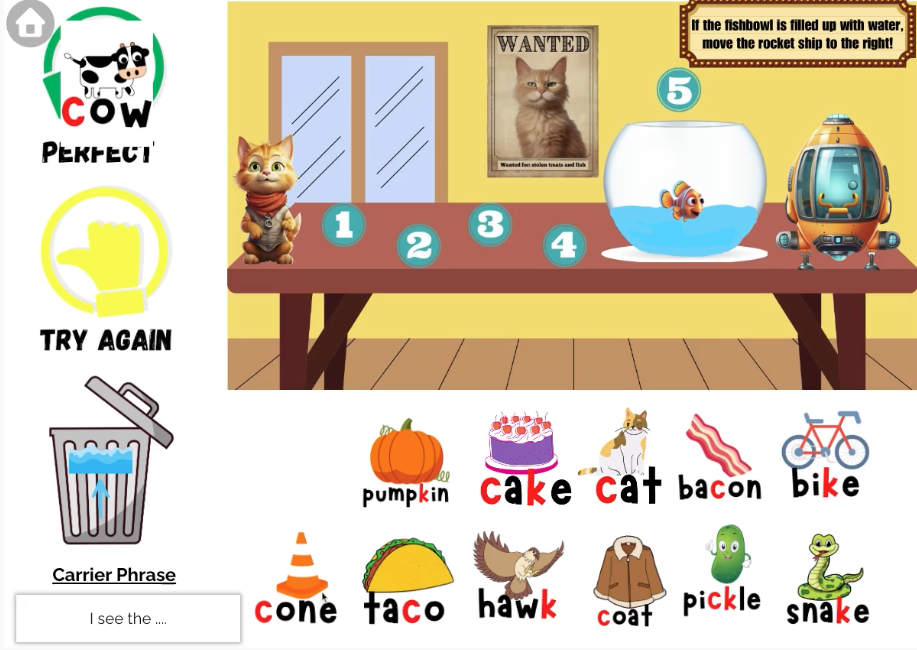
Help Fishy escape in a rocket ship before Mr. Cat makes it to his fish bowl!
Fish's Flight to Freedom
Witch's Brew
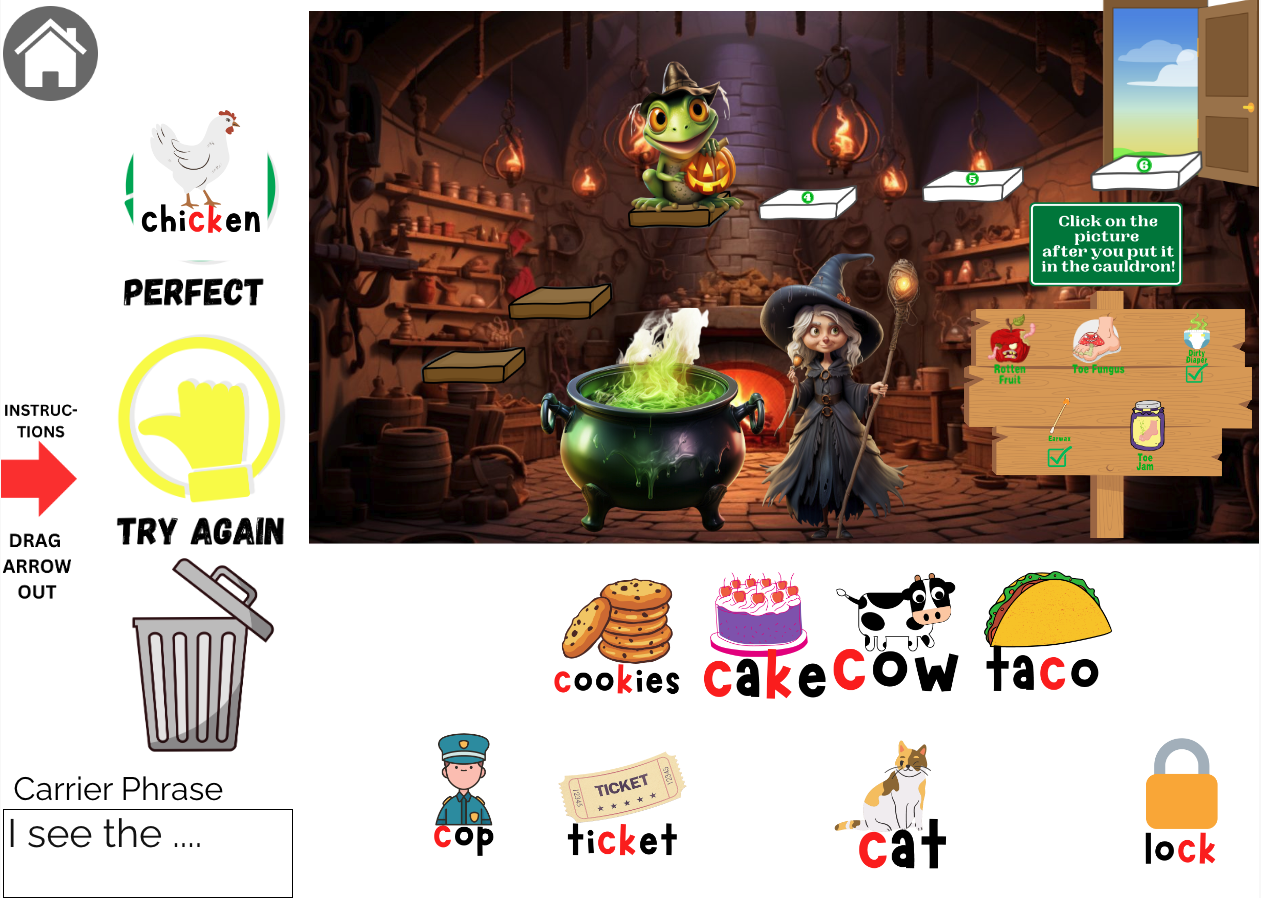
The witch is trying to brew her special Halloween potion. She needs 5 secret ingredients plus one green frog! Help Froggy escape before the witch finds all five special ingredients!
Witch's Brew
Summer Sundae Dash
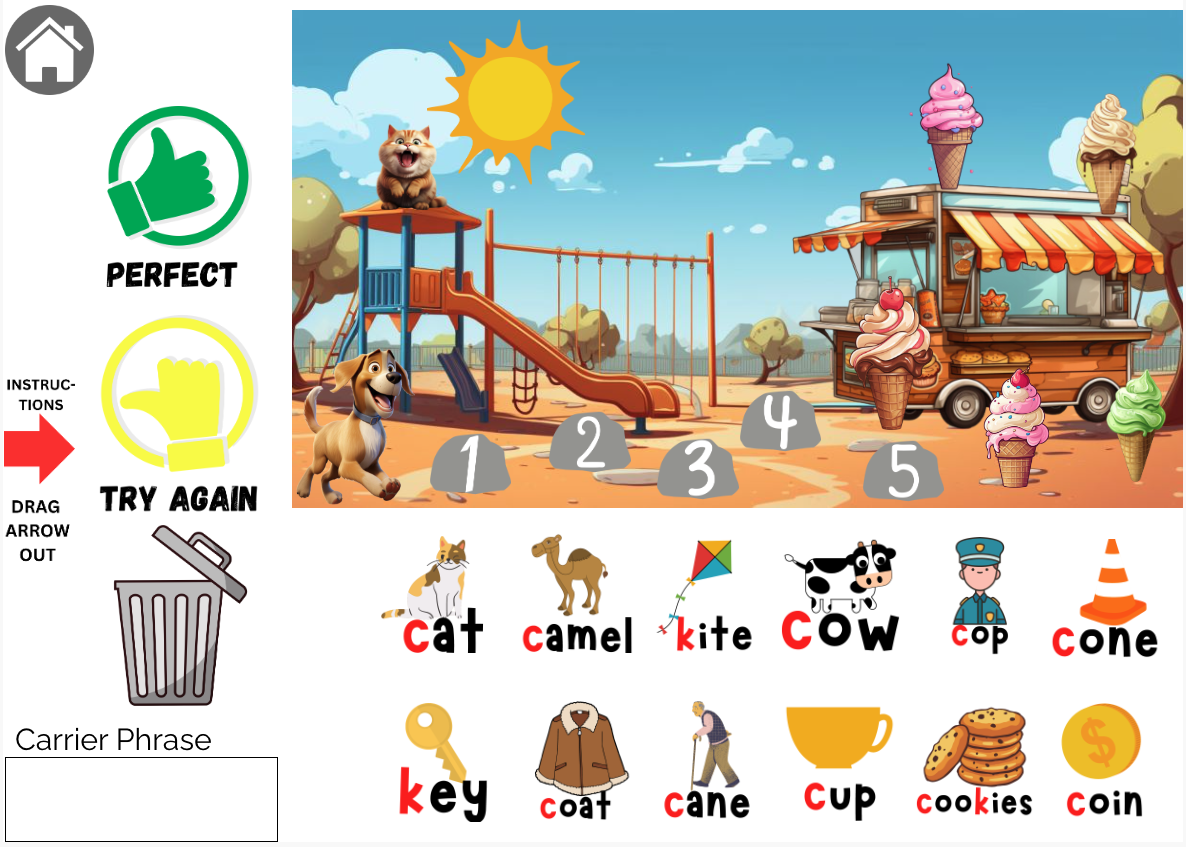
Help the dog get to the ice cream truck before the hot summer sun melts them all and a pesky cat tries to eat one!
Summer Sundae Dash
Marshmallows' Mad Dash
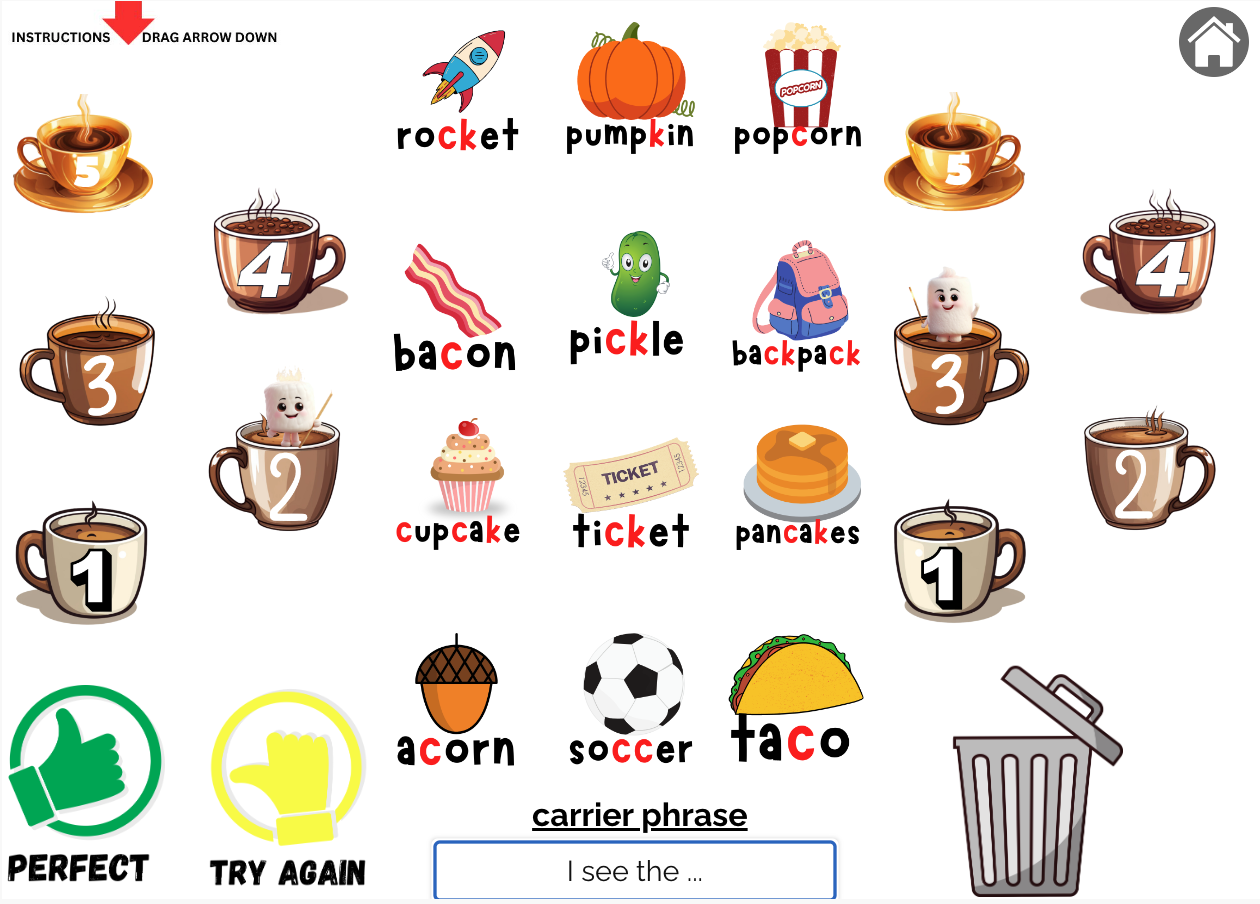
The marshmallows' are having a race to the golden cup of Hot Cocoa. Will you be the winner?!
Marshmallows' Mad Dash
Unicorn Artic Derby
Say your artic sound words to reveal how many spaces your unicorn gets to move. The first one to the finish line is the winner!
Unicorn Artic Derby
Guess the Artic Word
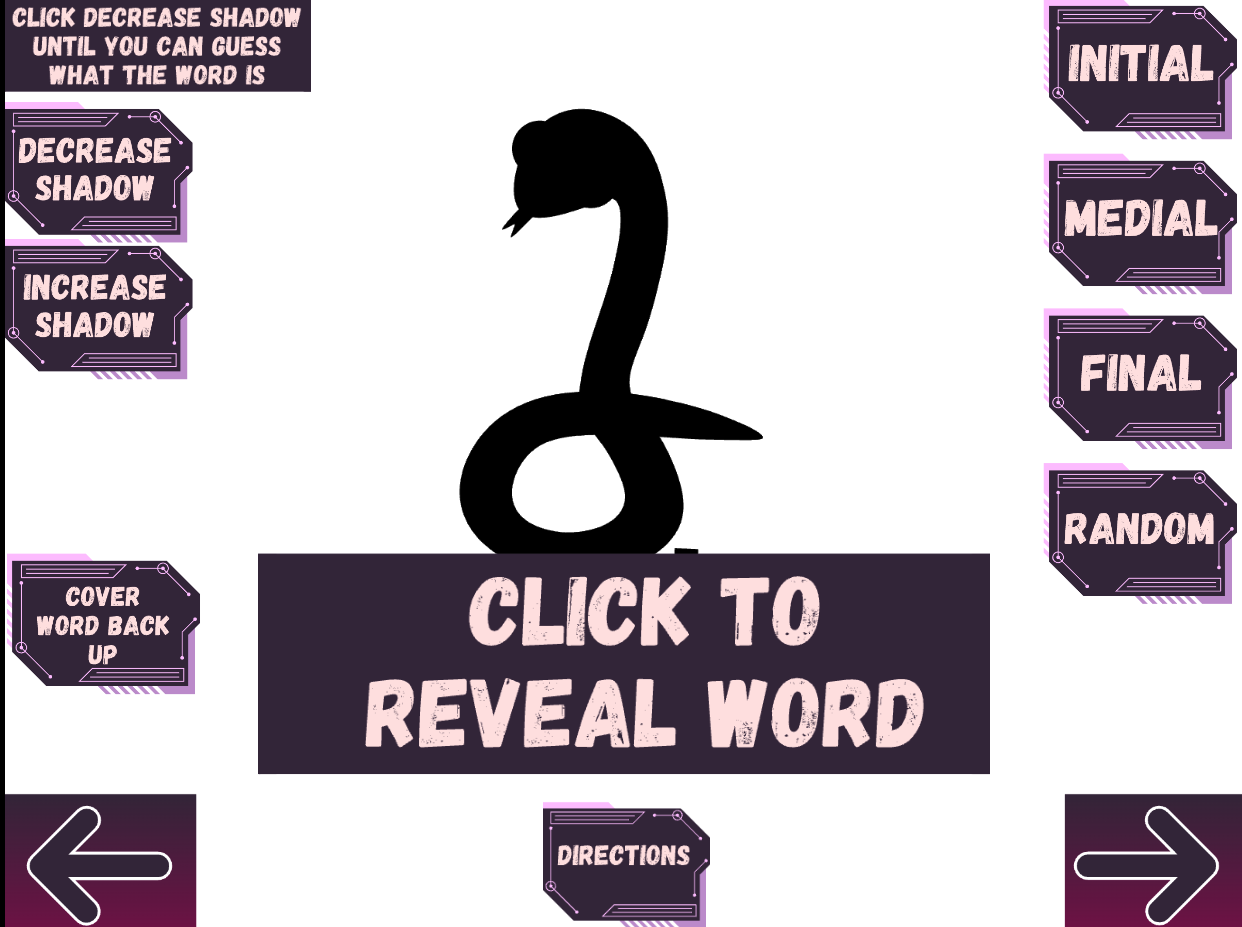
Guess what picture is behind the shadows! Each word has your target sound in them!
Guess the Artic Word
Summer Artic Race
See who can race across the beach first while practicing your artic sounds!
2, 3, and 4 player games available!
Back to School Artic Race
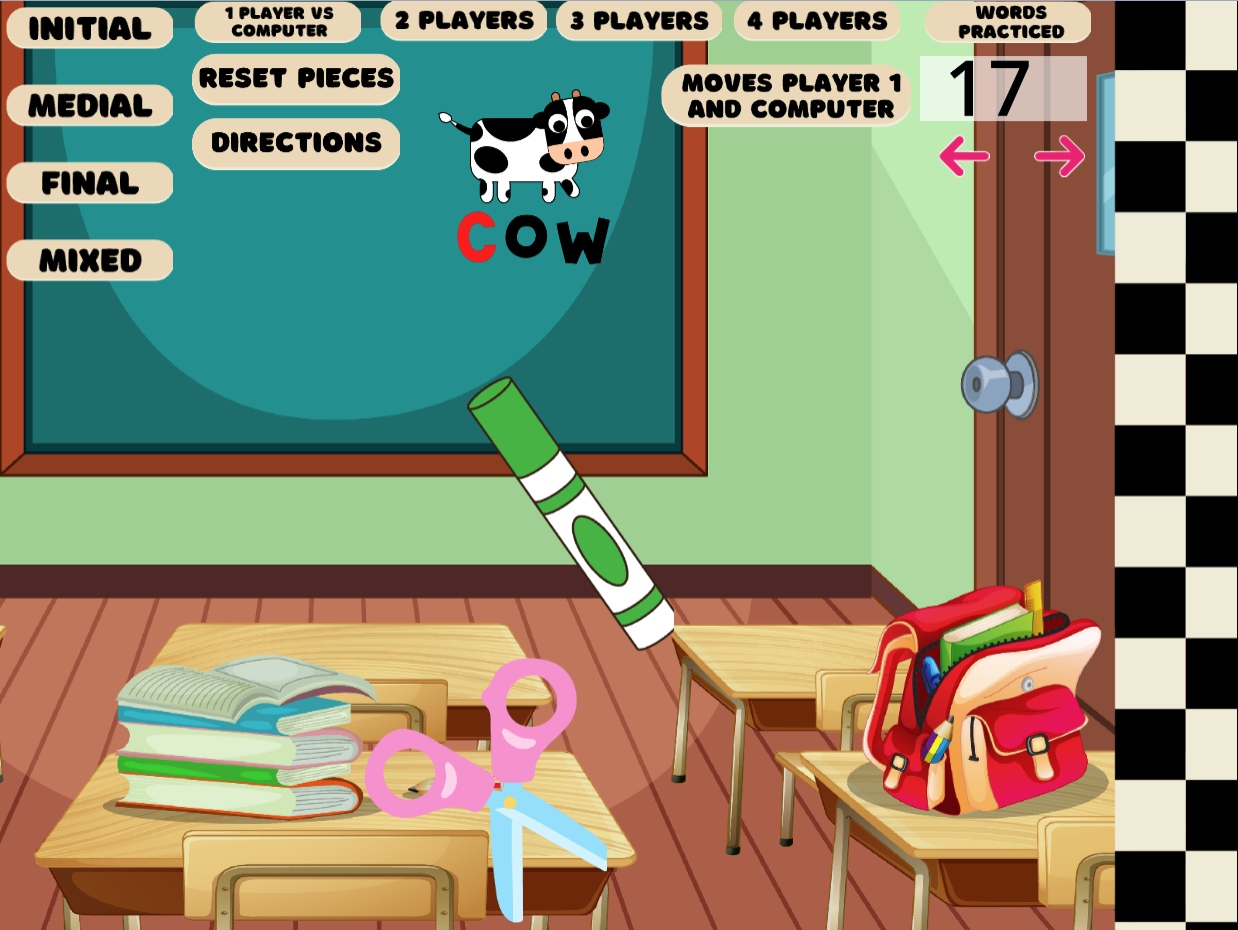
Select a classroom item and see who can race to the finish line first while practicing your artic sounds!
2, 3, and 4 player games available!
Fall Artic Race
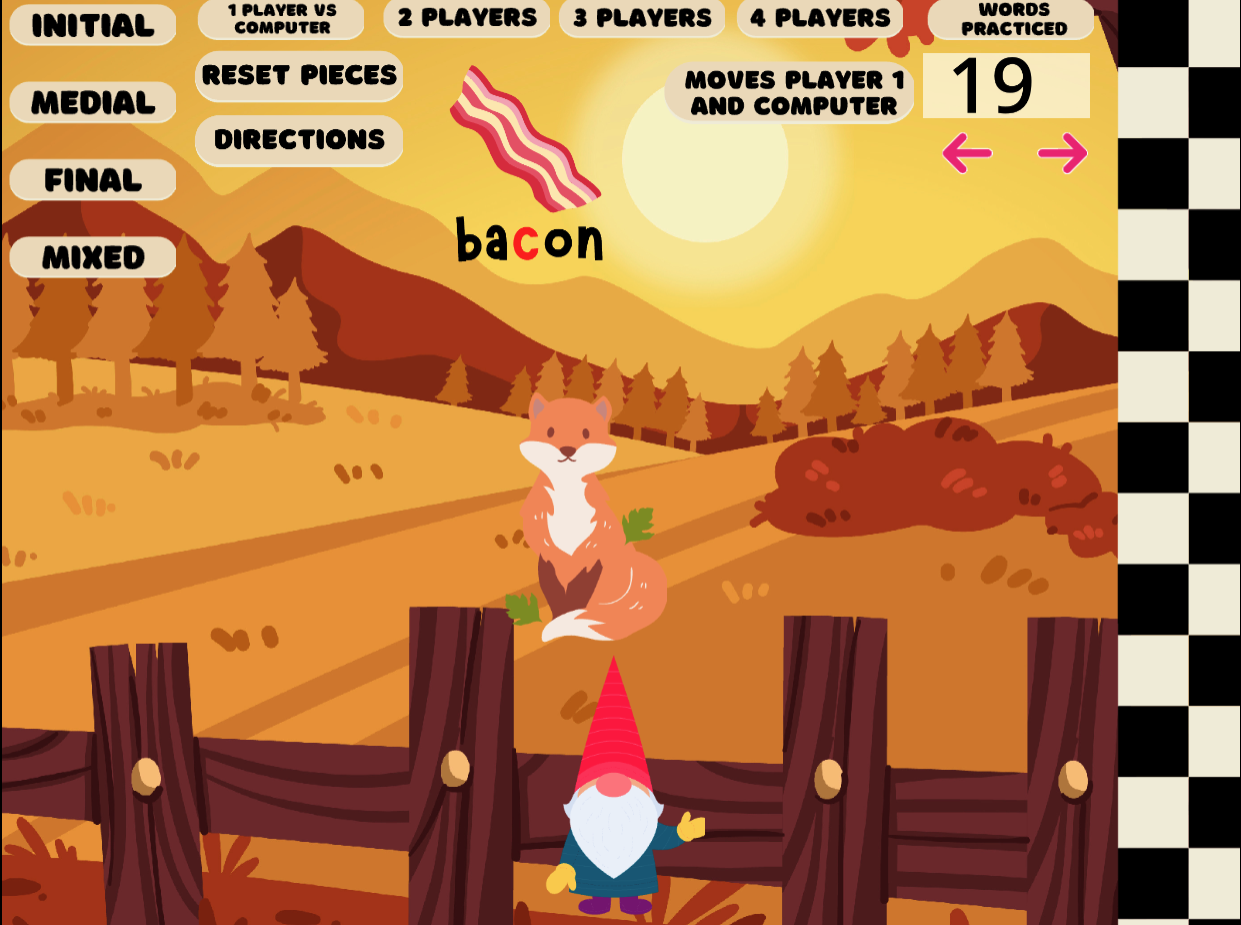
Select your character and see who can race to the finish line first while practicing your artic sounds!
2, 3, and 4 player games available!
Halloween Artic Race
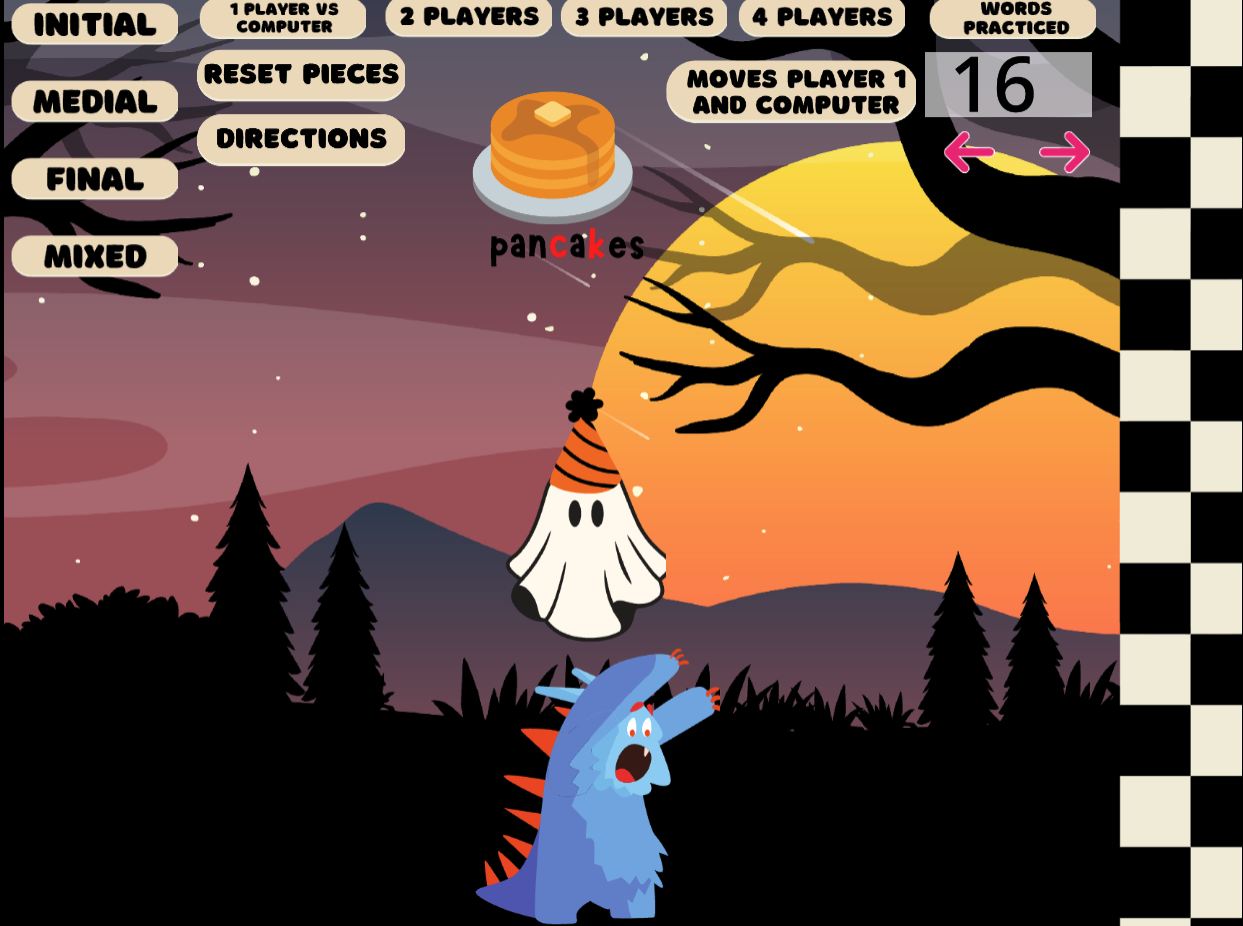
See who can race across the haunted grounds first while practicing your artic sounds!
2, 3, and 4 player games available!
Winter Artic Race
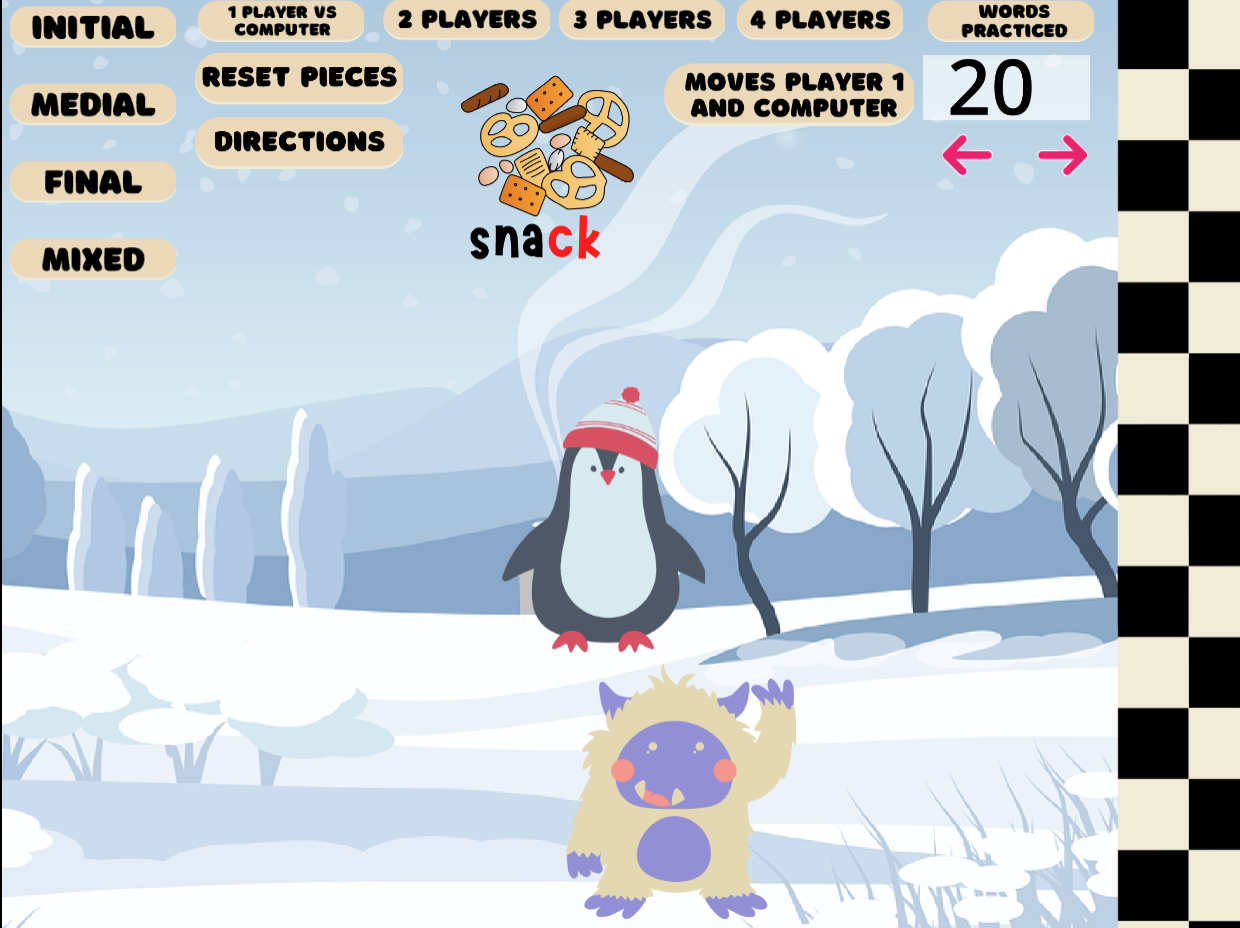
See who can race across the frozen tundra first while practicing your artic sounds!
2, 3, and 4 player games available!
Christmas Artic Race
See who can race across the winter wonderland first while practicing your artic sounds!
2, 3, and 4 player games available!
Valentines Day Artic Race
See who can make it to the finish line first while practicing your artic sounds!
2, 3, and 4 player games available!
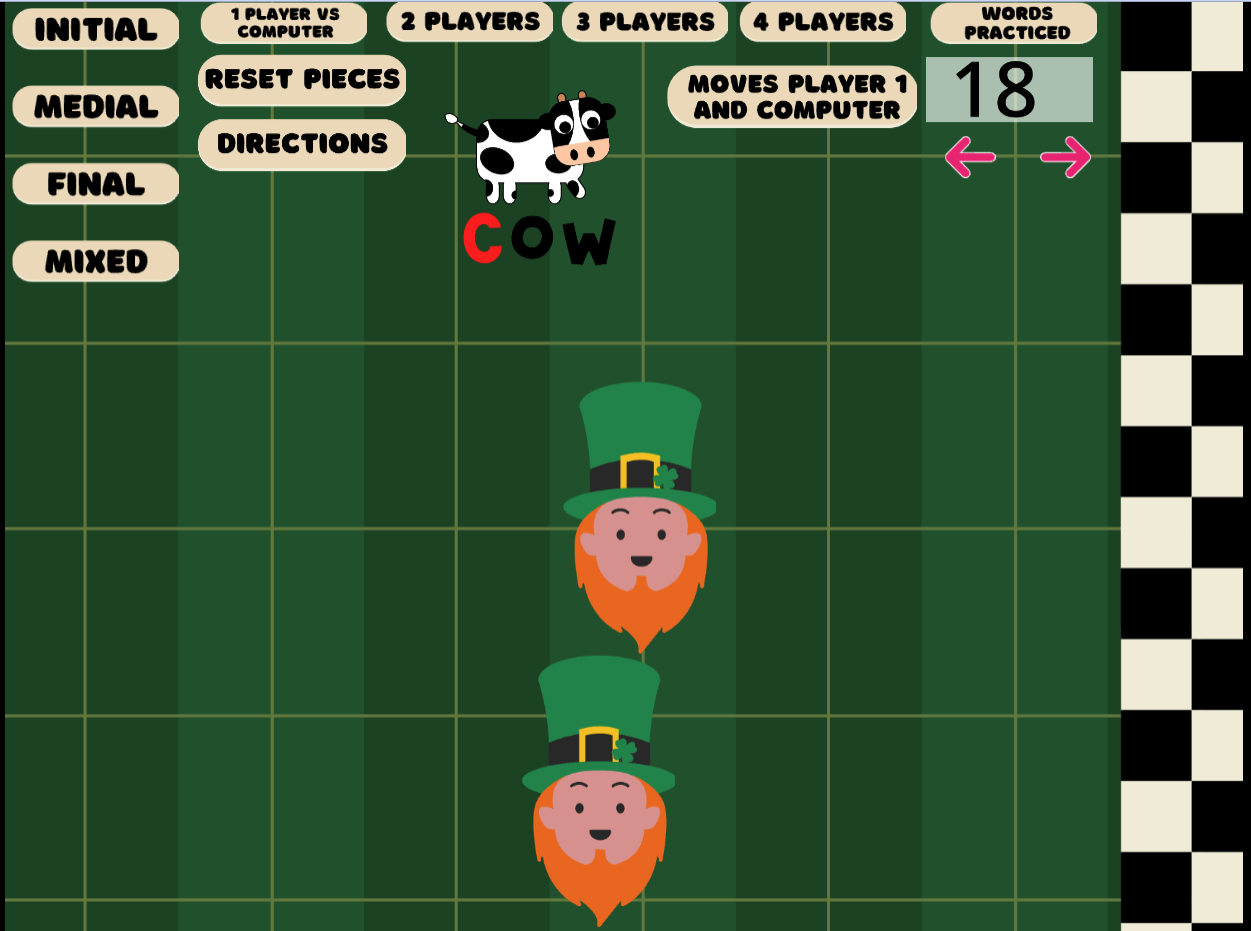
Saint Patrick's Artic Race
See who can make it to the finish line first while practicing your artic sounds!
2, 3, and 4 player games available!
Easter Artic Race
See who can make it to the finish line first while practicing your artic sounds!
2, 3, and 4 player games available!
Spring Artic Race
See who can make it to the finish line first while practicing your artic sounds!
2, 3, and 4 player games available!
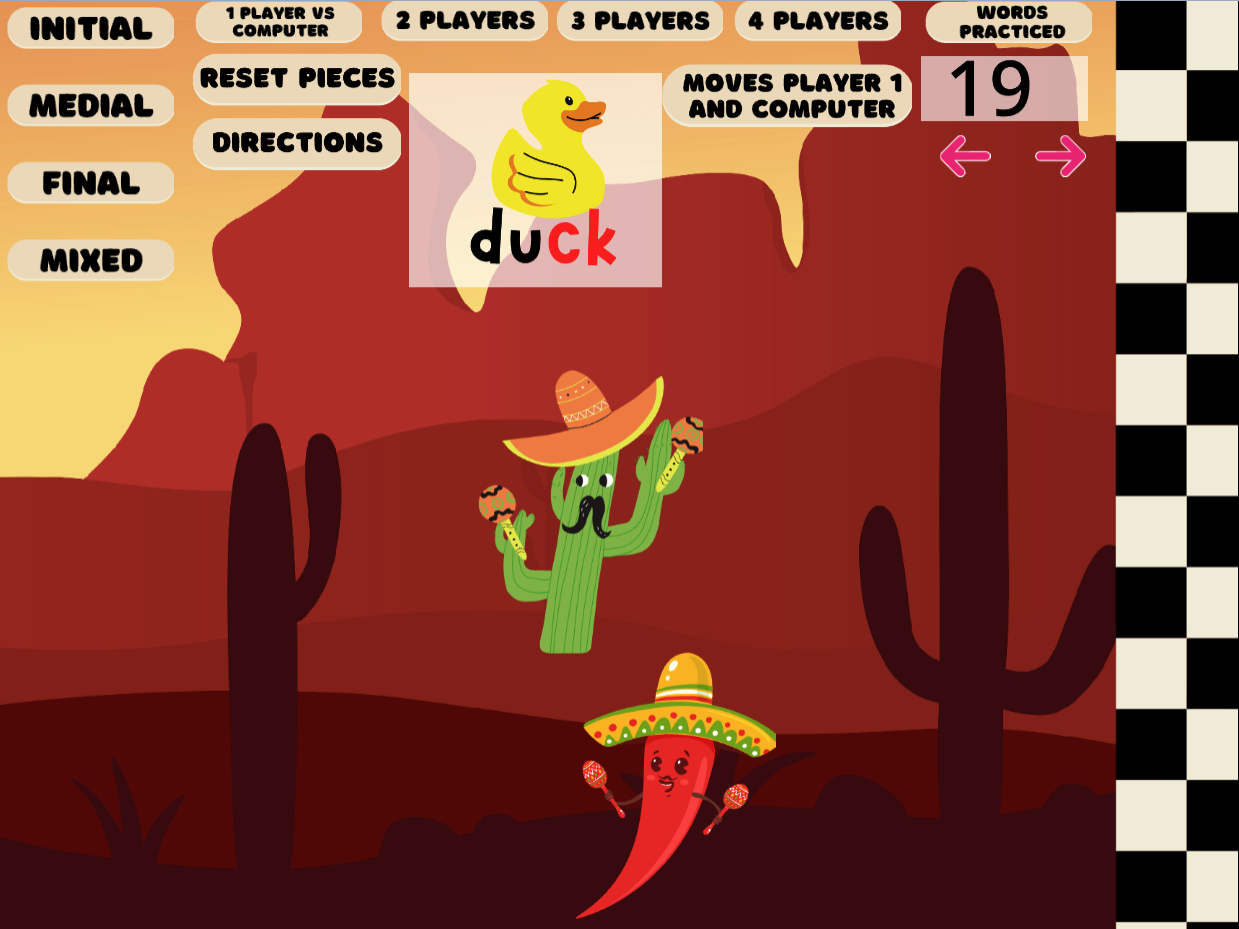
Cinco De Mayo Artic Race
See who can make it to the finish line first while practicing your artic sounds!
2, 3, and 4 player games available!
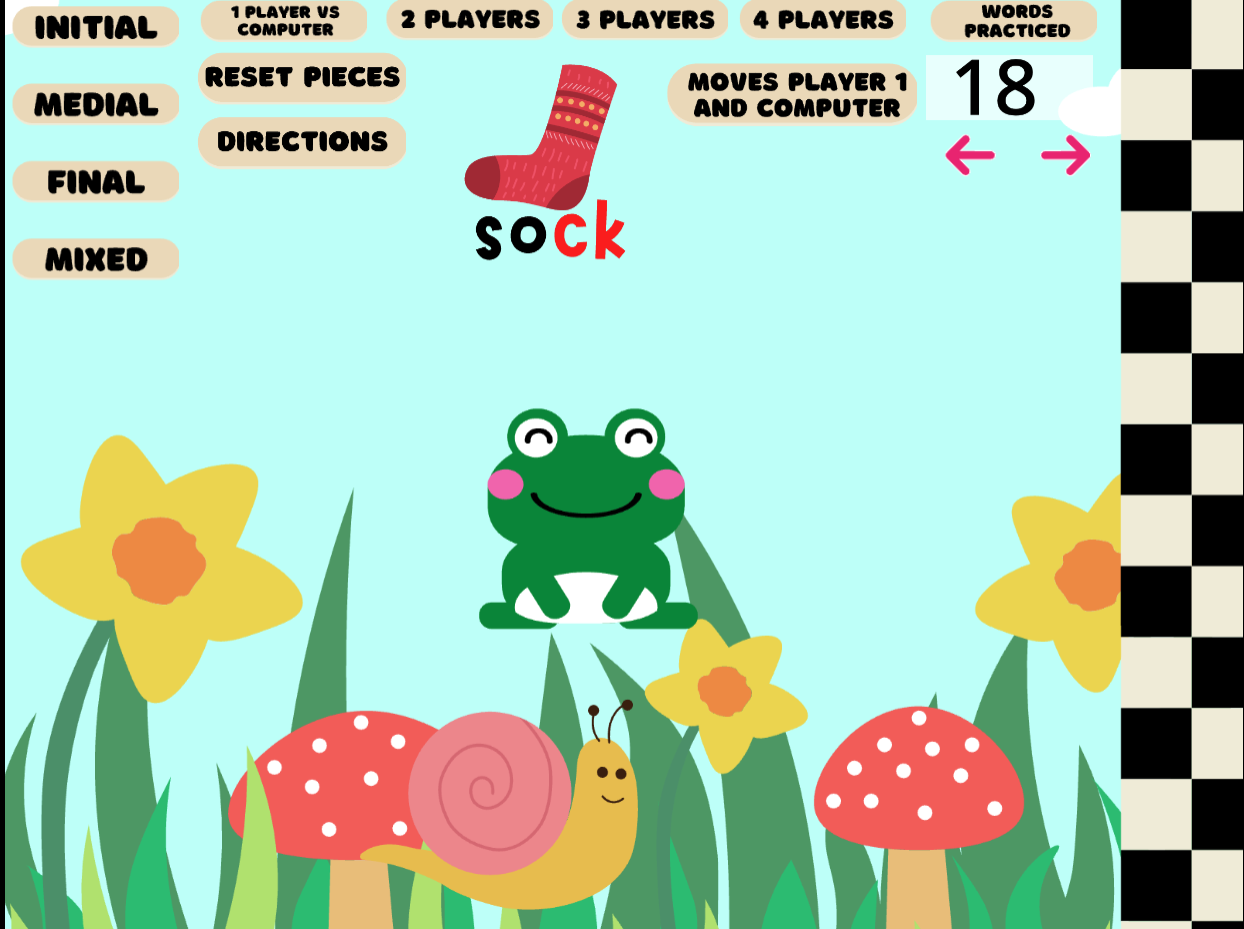
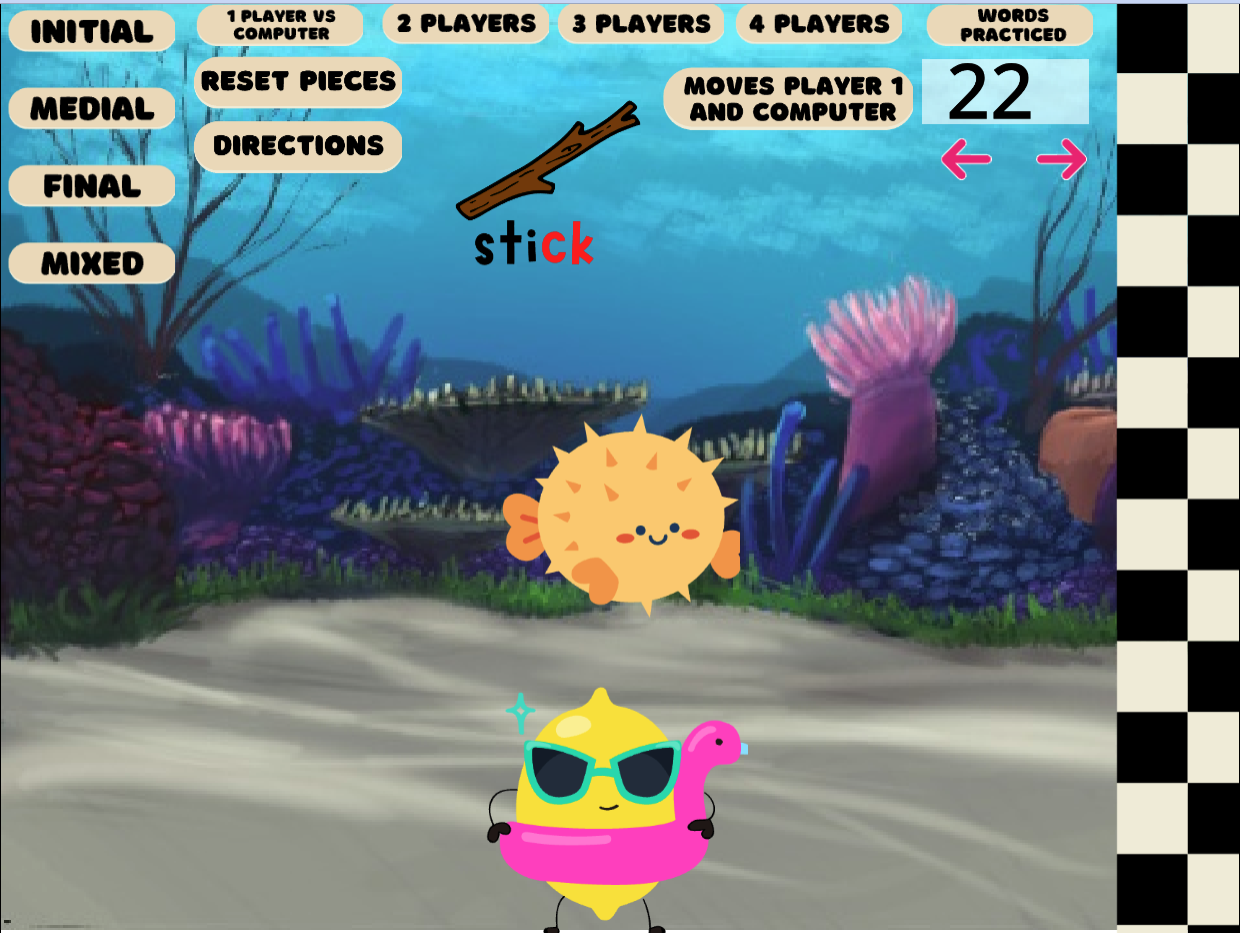
Underwater Artic Race
See who can make it to the finish line first while practicing your artic sounds!
2, 3, and 4 player games available!
Space Artic Race
See who can make it to the finish line first while practicing your artic sounds!
2, 3, and 4 player games available!
Fall Apple Quest
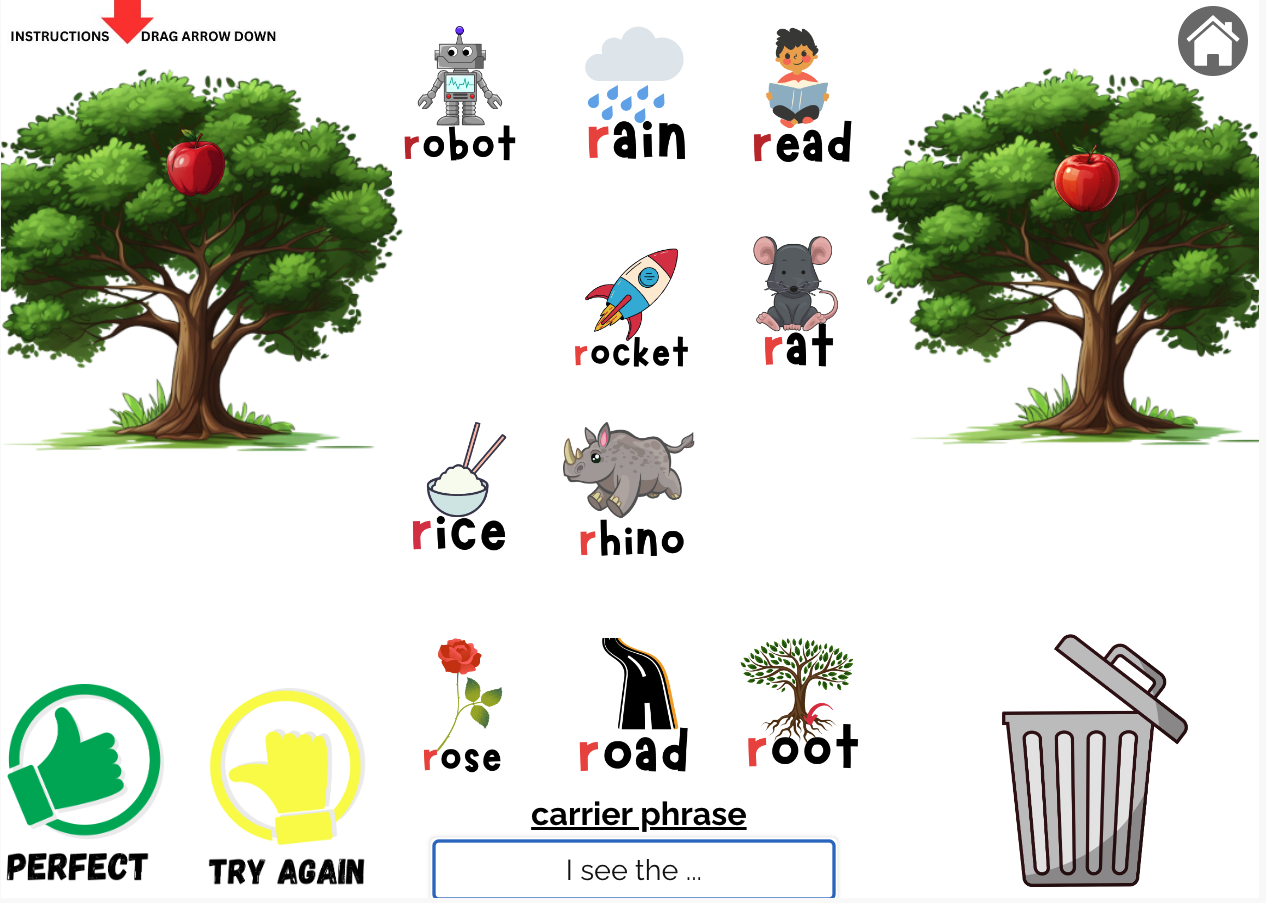
Try to collect more apples than the other team. If you get lucky, you might get help from the raccoon thief who can steal an apple from the other team's tree!
Fall Apple Quest
Halloween Candy Chompers
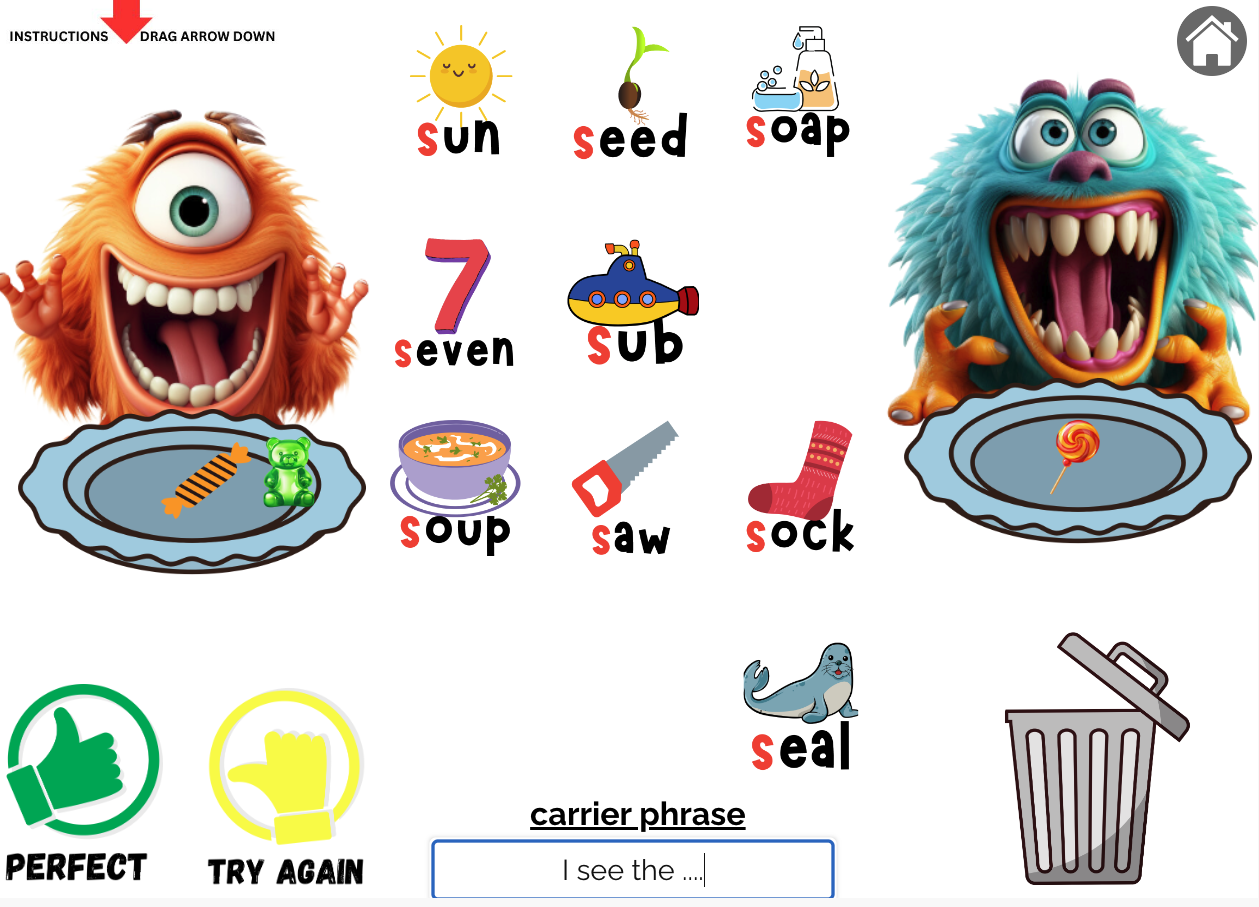
Which team can put more Halloween candy on their monster's plate?!
Candy Chompers
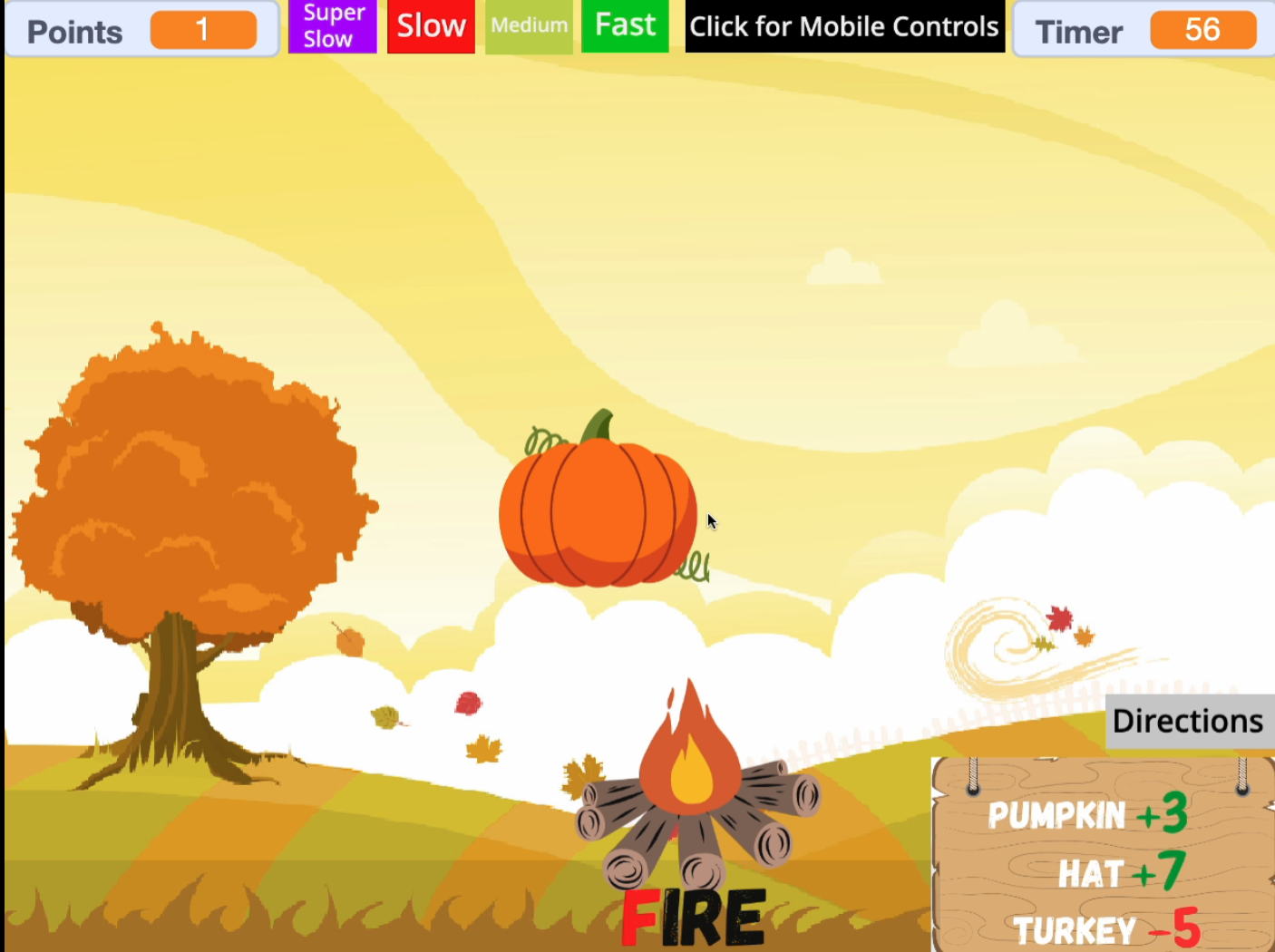
Thanksgiving Treats
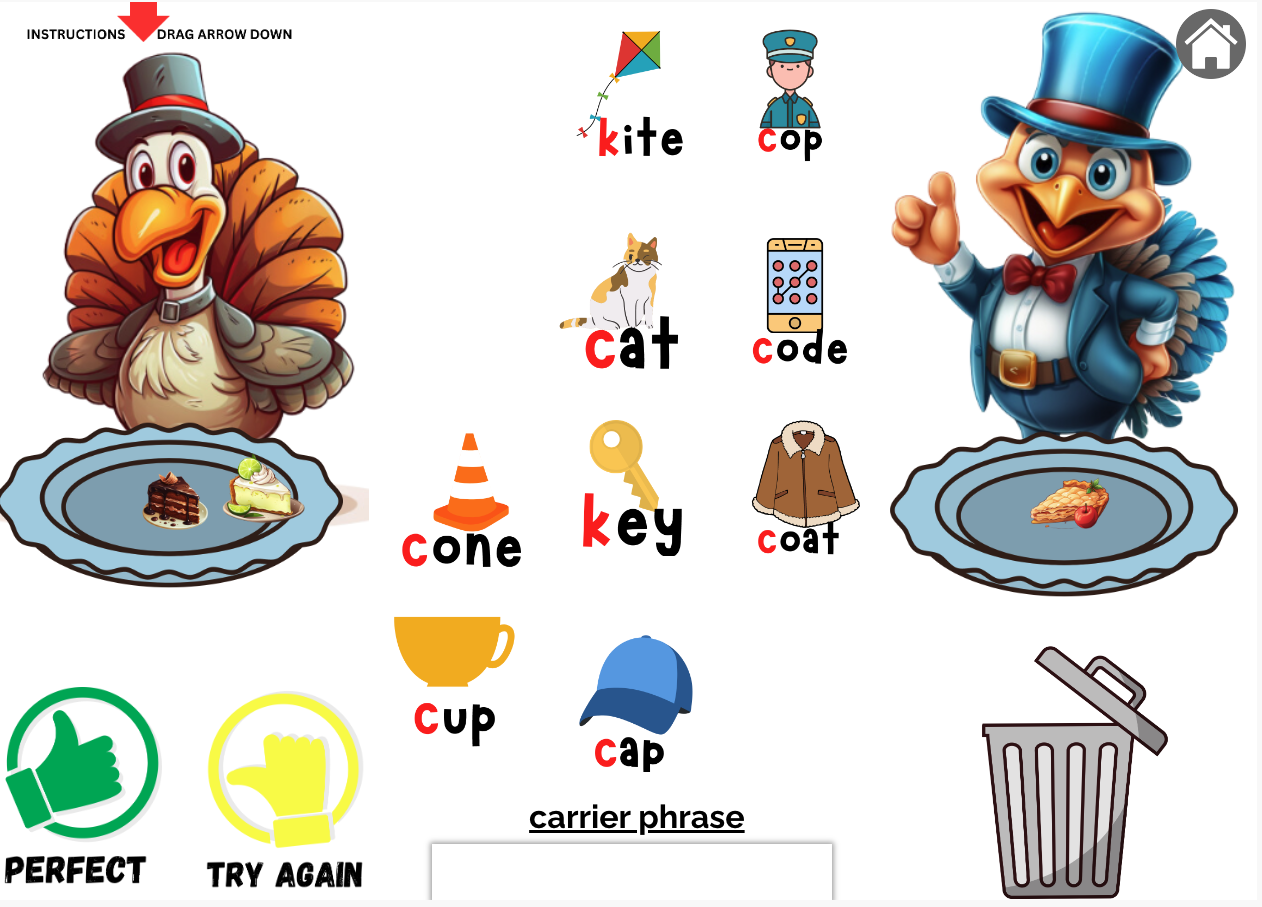
The turkeys have a huge sweet tooth. Do you think you can put more pie on your turkey's plate than the other team?!
Thanksgiving Treats
Cupid's Valentines Candies
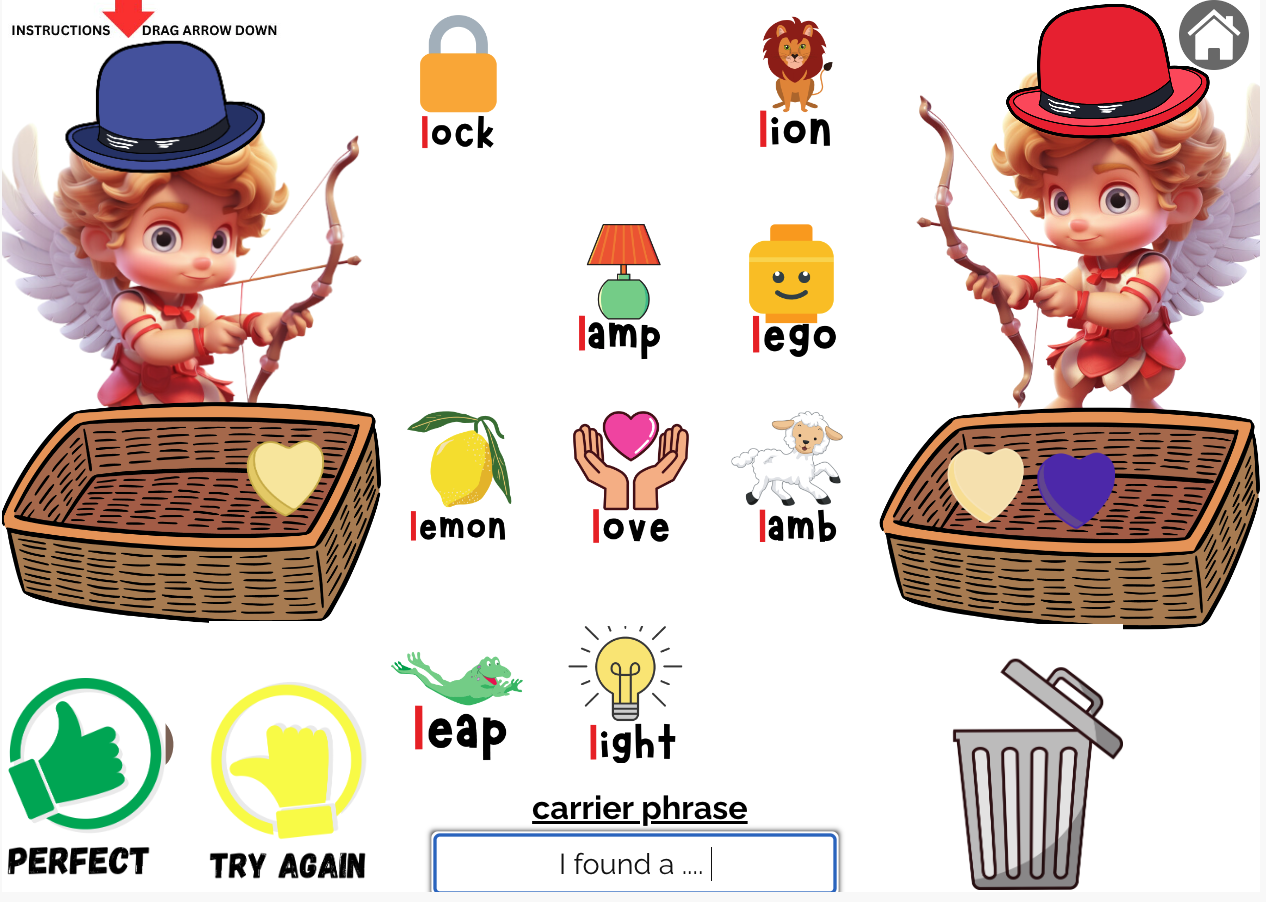
The cupid twins are having a competition to see who can collect more heart candies.
Cupid's Candies
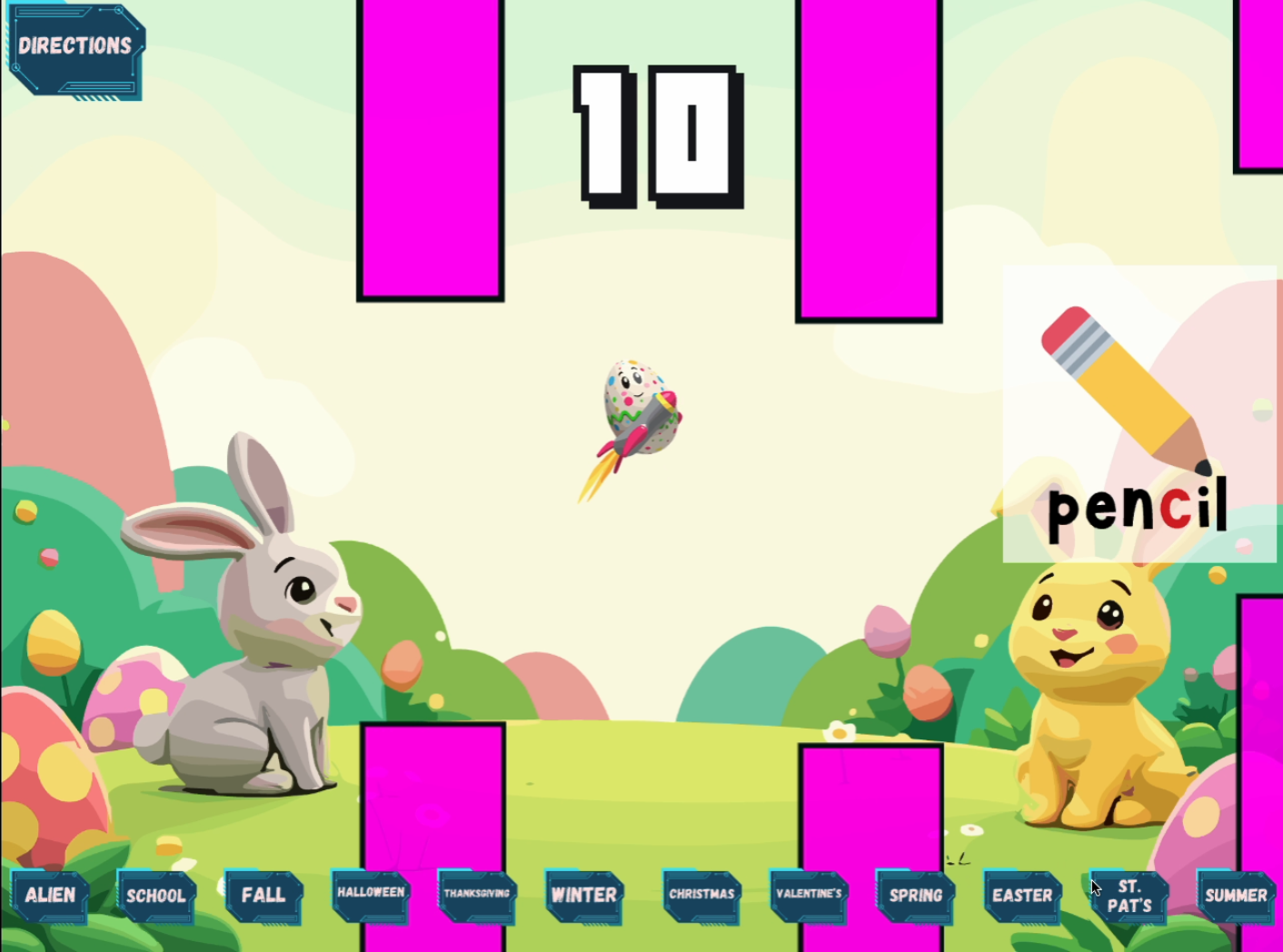
Alien Artic Flying Adventure
Soar thru the sky and set high scores while practicing your artic sounds!
Artic Flying Adventure
School Artic Flying Adventure
Soar thru the sky and set high scores while practicing your artic sounds!
Artic Flying Adventure
Fall Artic Flying Adventure
Soar thru the sky and set high scores while practicing your artic sounds!
Artic Flying Adventure
Halloween Artic Flying Adventure
Soar thru the sky and set high scores while practicing your artic sounds!
Artic Flying Adventure
Thanksgiving Artic Flying Adventure
Soar thru the sky and set high scores while practicing your artic sounds!
Artic Flying Adventure
Winter Artic Flying Adventure
Soar thru the sky and set high scores while practicing your artic sounds!
Artic Flying Adventure
Christmas Artic Flying Adventure
Soar thru the sky and set high scores while practicing your artic sounds!
Artic Flying Adventure
Valentine's Artic Flying Adventure
Soar thru the sky and set high scores while practicing your artic sounds!
Artic Flying Adventure
Spring Artic Flying Adventure
Soar thru the sky and set high scores while practicing your artic sounds!
Artic Flying Adventure
Easter Artic Flying Adventure
Soar thru the sky and set high scores while practicing your artic sounds!
Artic Flying Adventure
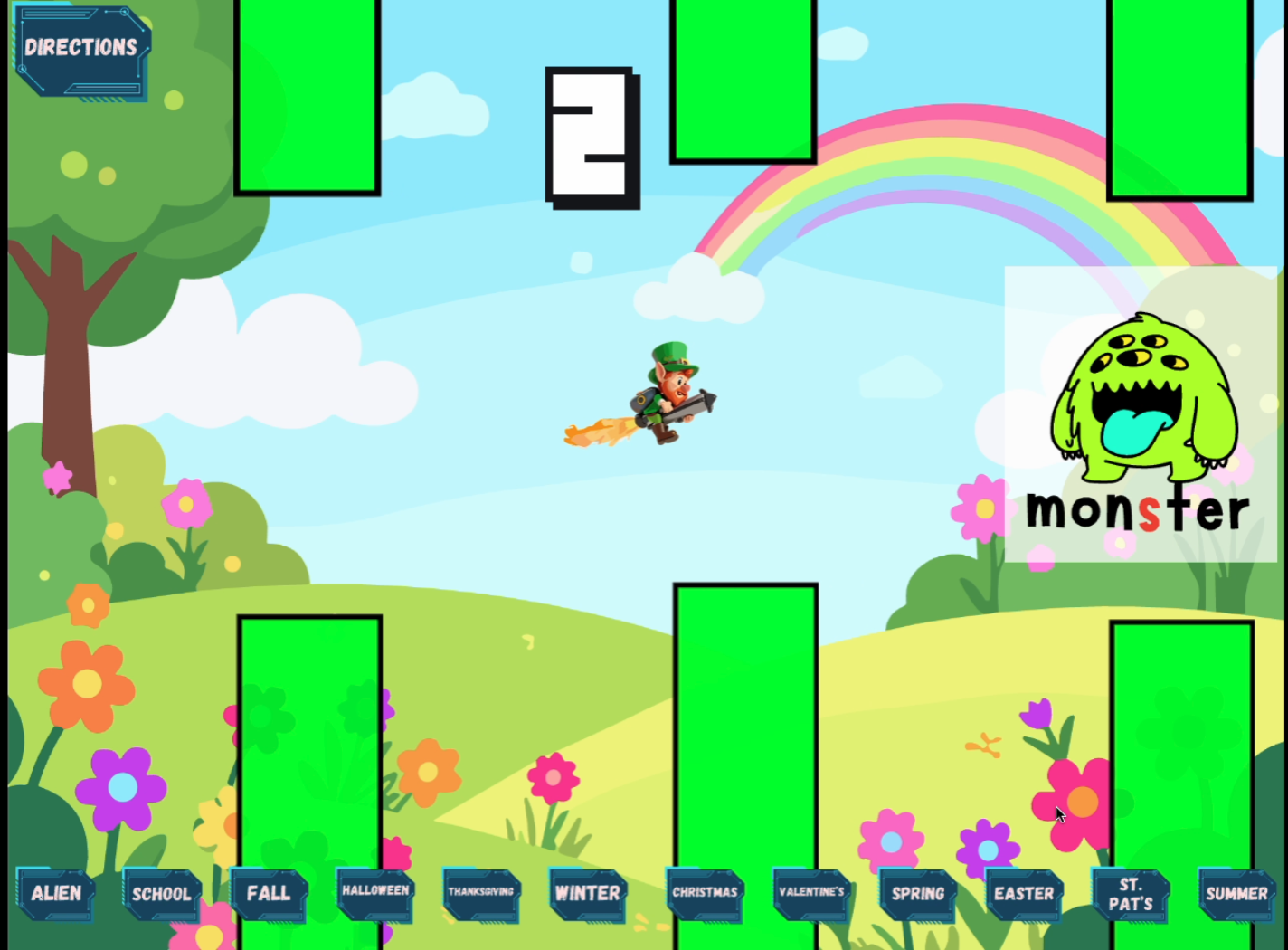
St. Patrick's Artic Flying Adventure
Soar thru the sky and set high scores while practicing your artic sounds!
Artic Flying Adventure
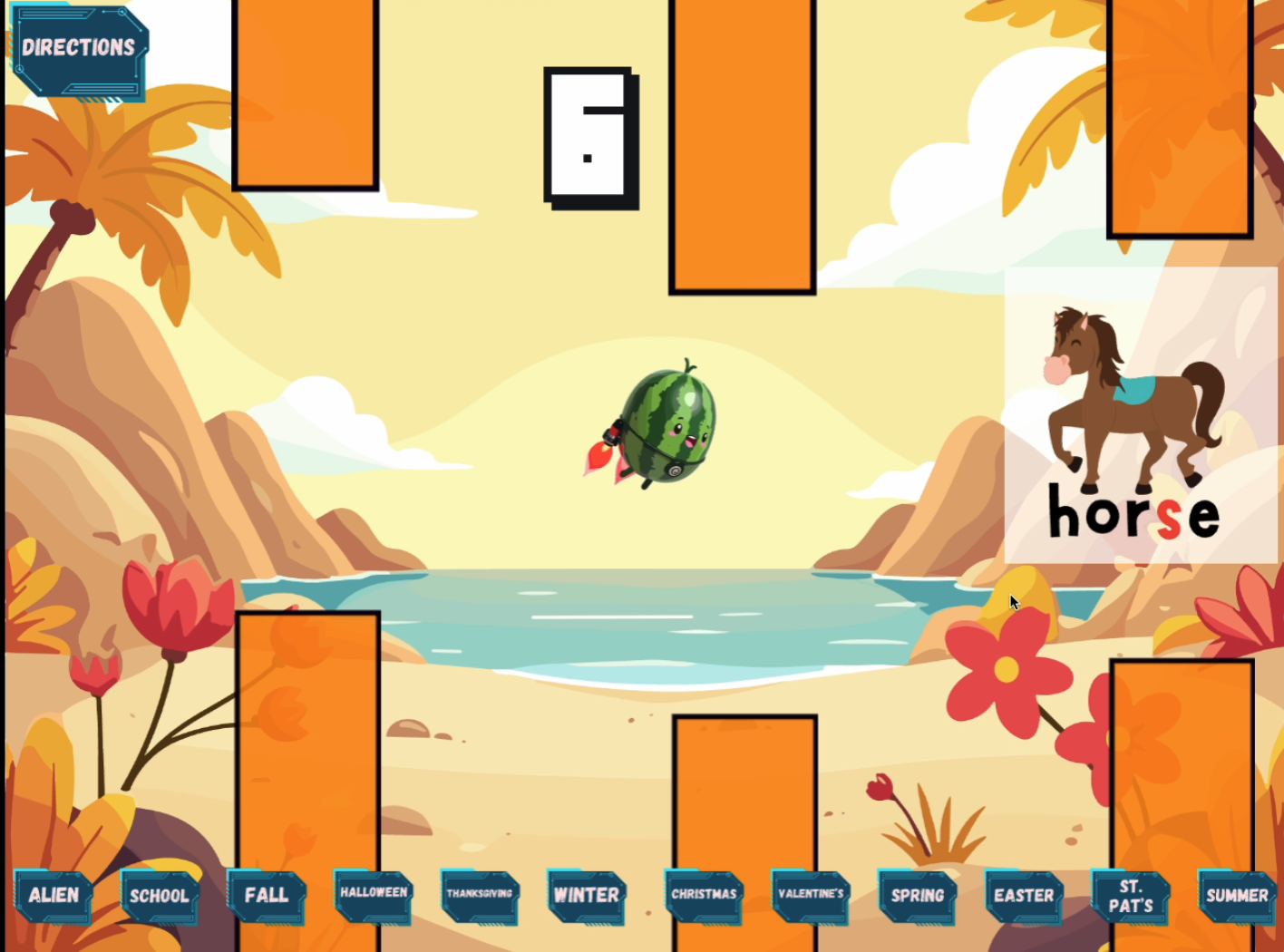
Summer Artic Flying Adventure
Soar thru the sky and set high scores while practicing your artic sounds!
Artic Flying Adventure
Flashlight Finder
Use the flashlight to find as many hiding pictures that have your target sound in them!
Flashlight Finder
Halloween Eraser Activity
Say an artic word you see, and then click on the word. The zombie cat will float down and erase the word you said. Say it twice for it to completely disappear!
Halloween Eraser Activity
Fall Eraser Activity
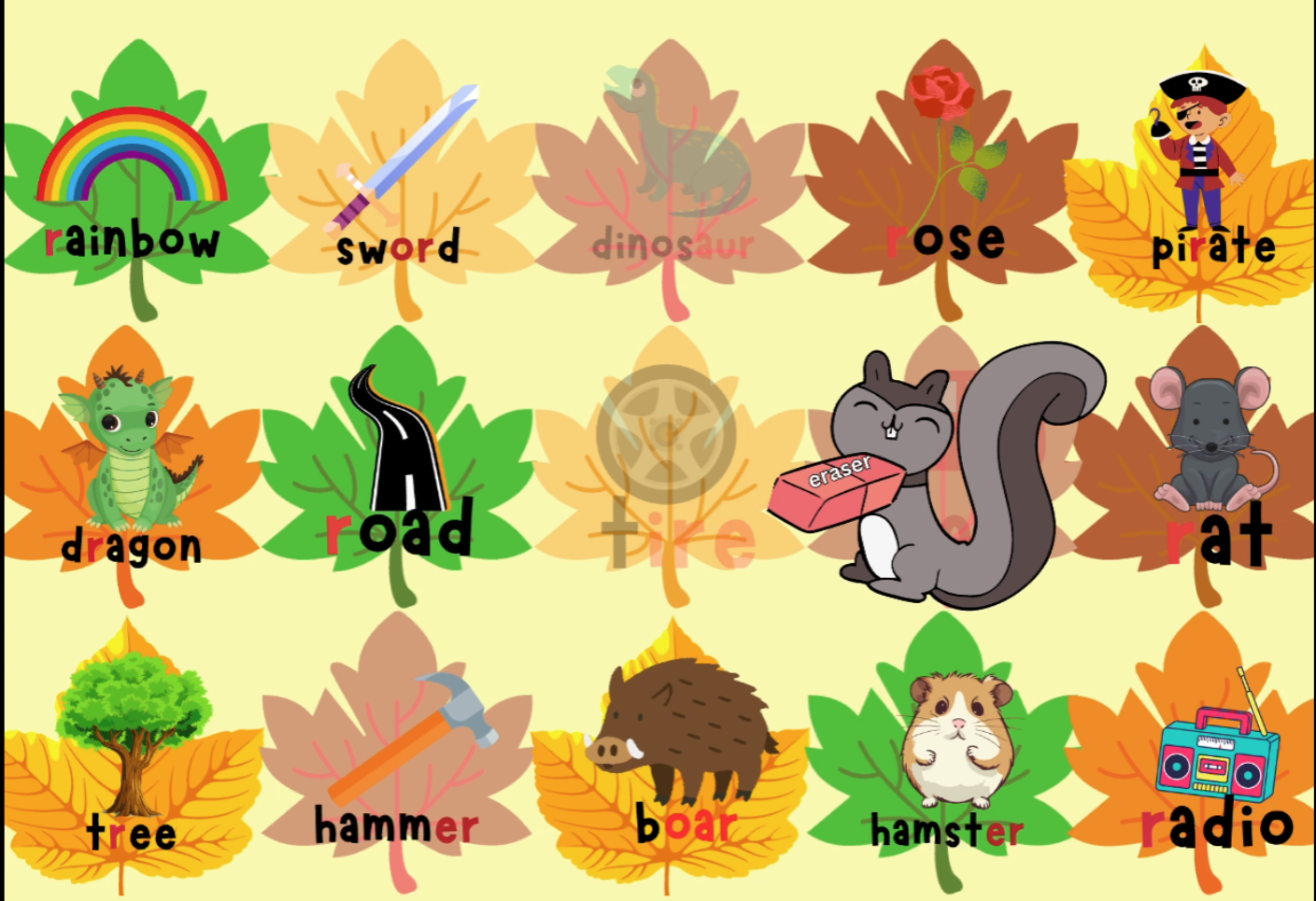
Say an artic word you see, and then click on the word. The squirrel will float down and erase the word you said. Say it twice for it to completely disappear!
Fall Eraser Activity
Winter 2 Eraser Activity
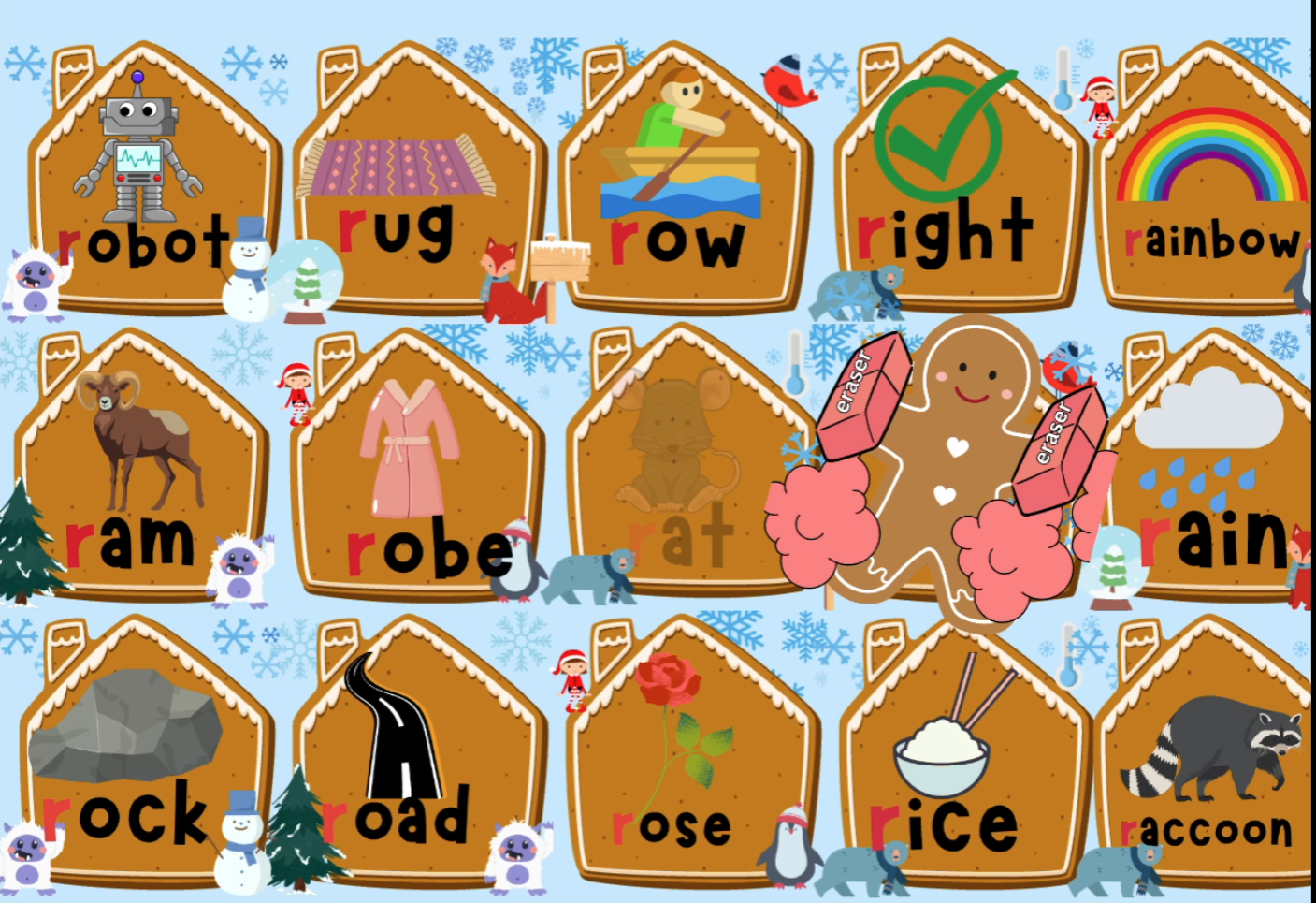
Say an artic word you see, and then click on the word. The gingerbread man will float down and erase the word you said. Say it twice for it to completely disappear!
Winter 2 Eraser Activity
Valentines Day Eraser Activity
Say an artic word you see, and then click on the word. The teddy bear will float down and erase the word you said. Say it twice for it to completely disappear!
Valentines Day Eraser Activity
St. Patrick's Day Eraser Activity
Say an artic word you see, and then click on the word. The leprechaun will float down and erase the word you said. Say it twice for it to completely disappear!
St. Patrick's Eraser Activity
Easter Eraser Activity
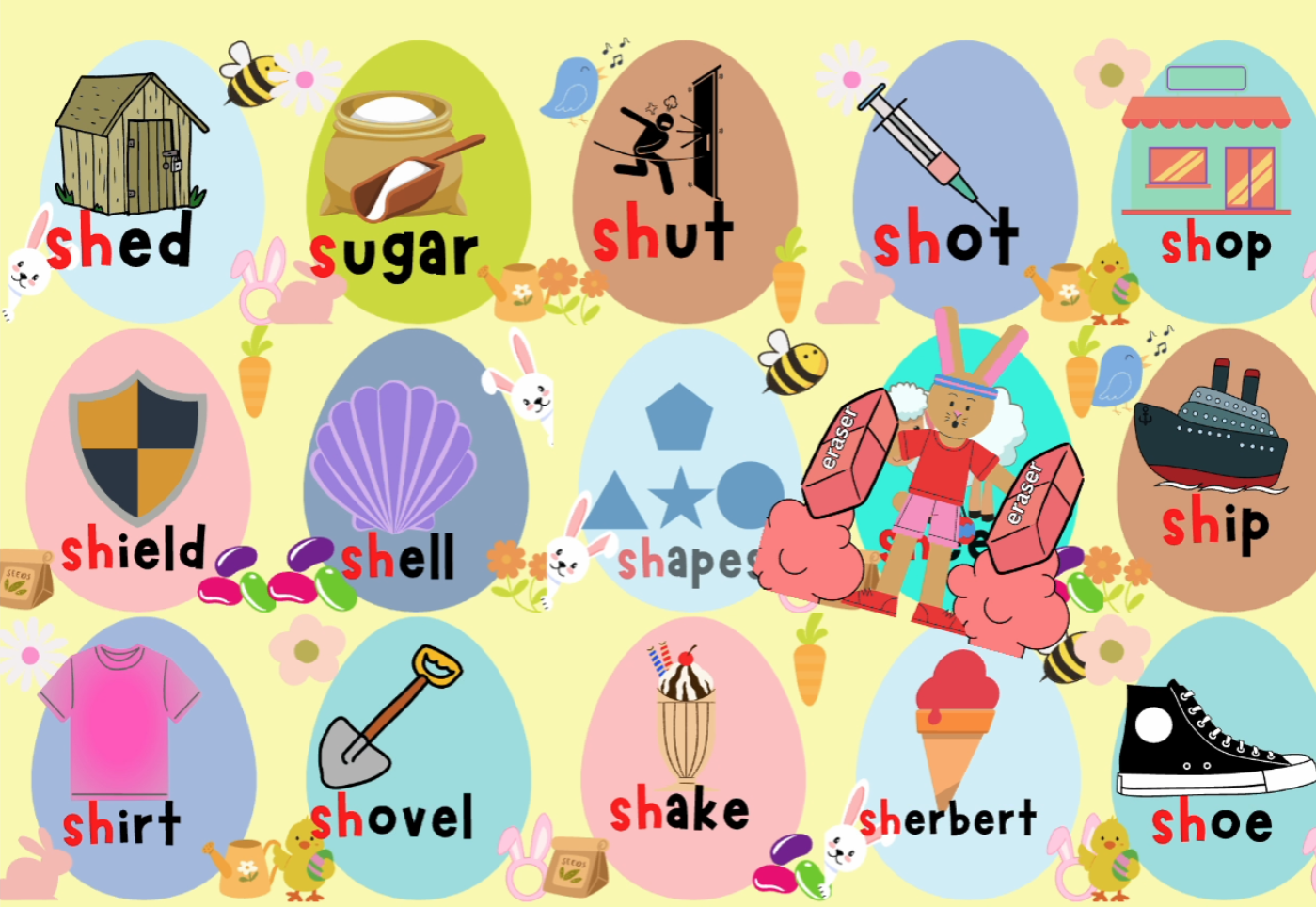
Say an artic word you see, and then click on the word. The bunny will float down and erase the word you said. Say it twice for it to completely disappear!
Easter Eraser Activity
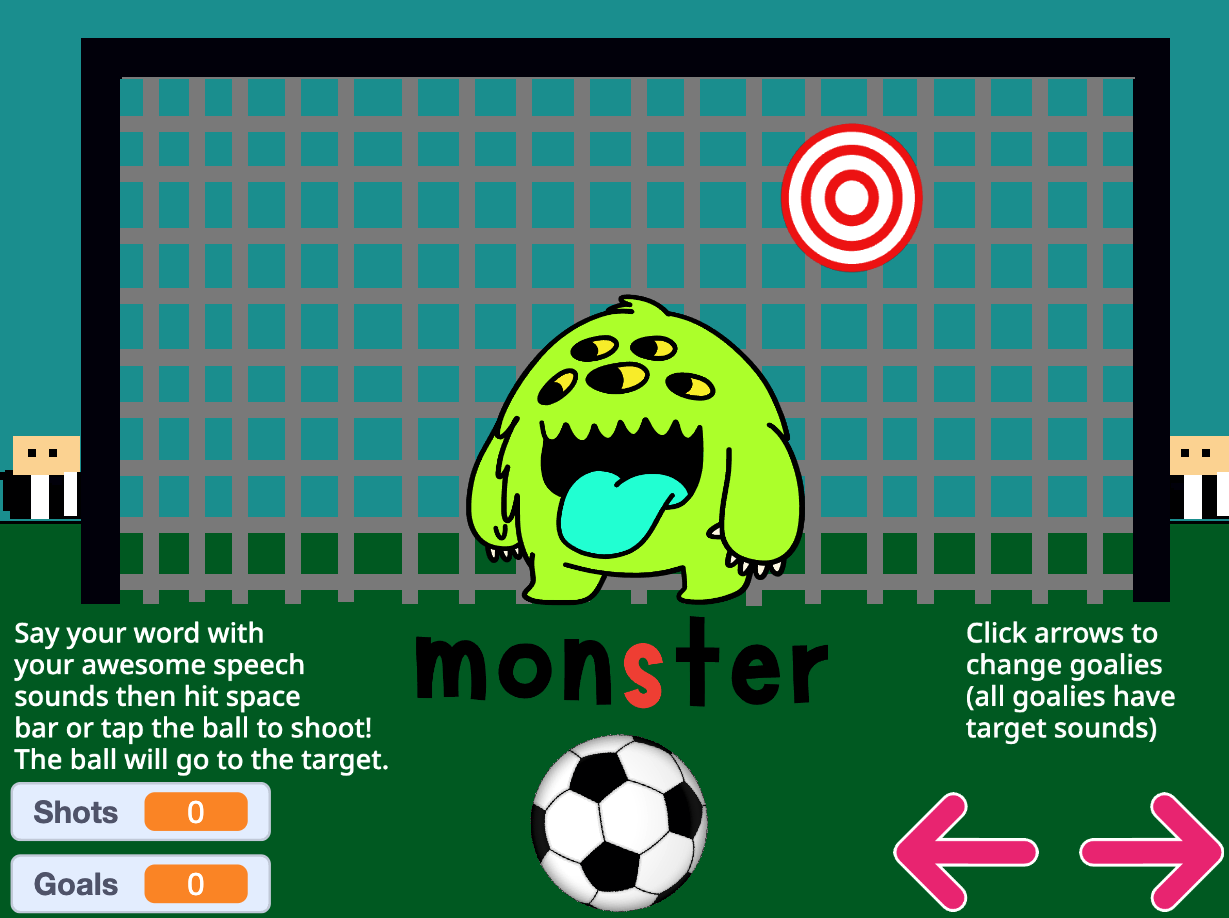
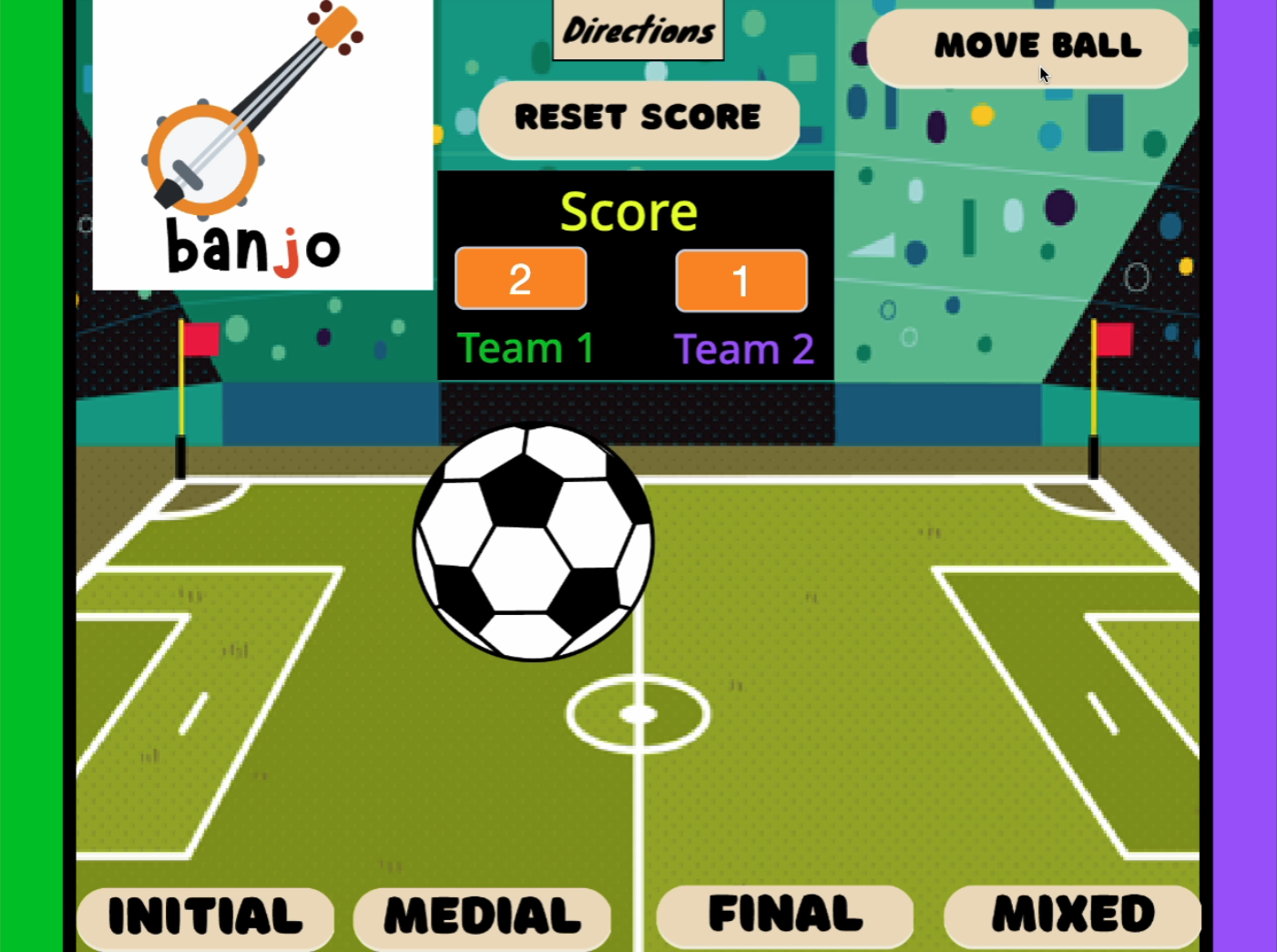
Soccer Artic Battle
See who can score the most points! After you practice you speech word, press move ball. and the ball move randomly from side to side. If it touches your side, you get a point!
Soccer Artic Battle
Fall Artic Battle
See who can score the most points! After you practice you speech word, press move turkey. and the turkey move randomly from side to side. If it touches your side, you get a point!
Artic Battle
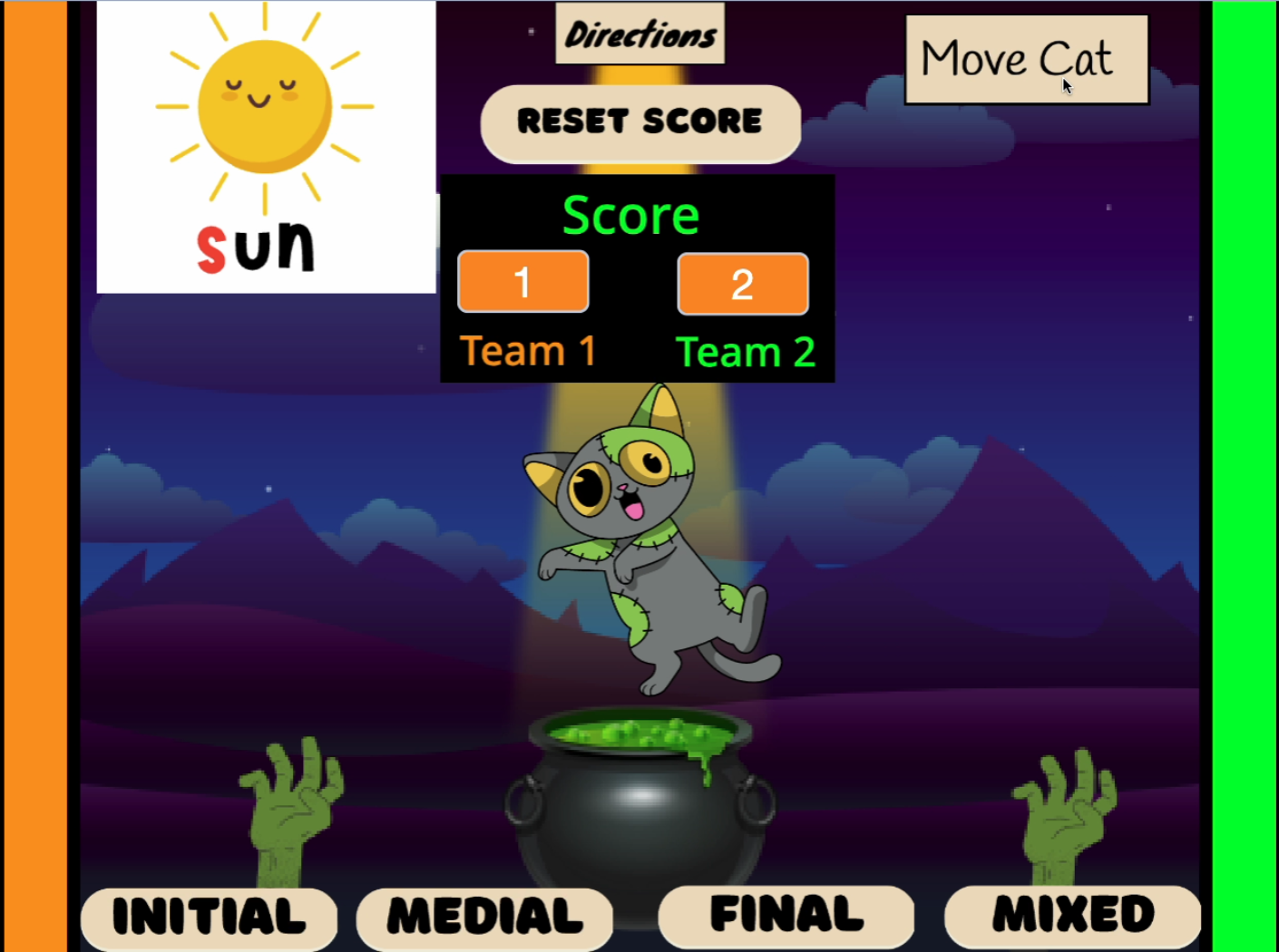
Halloween Artic Battle
See who can score the most points! After you practice you speech word, press move cat. and the cat move randomly from side to side. If it touches your side, you get a point!
Halloween Artic Battle
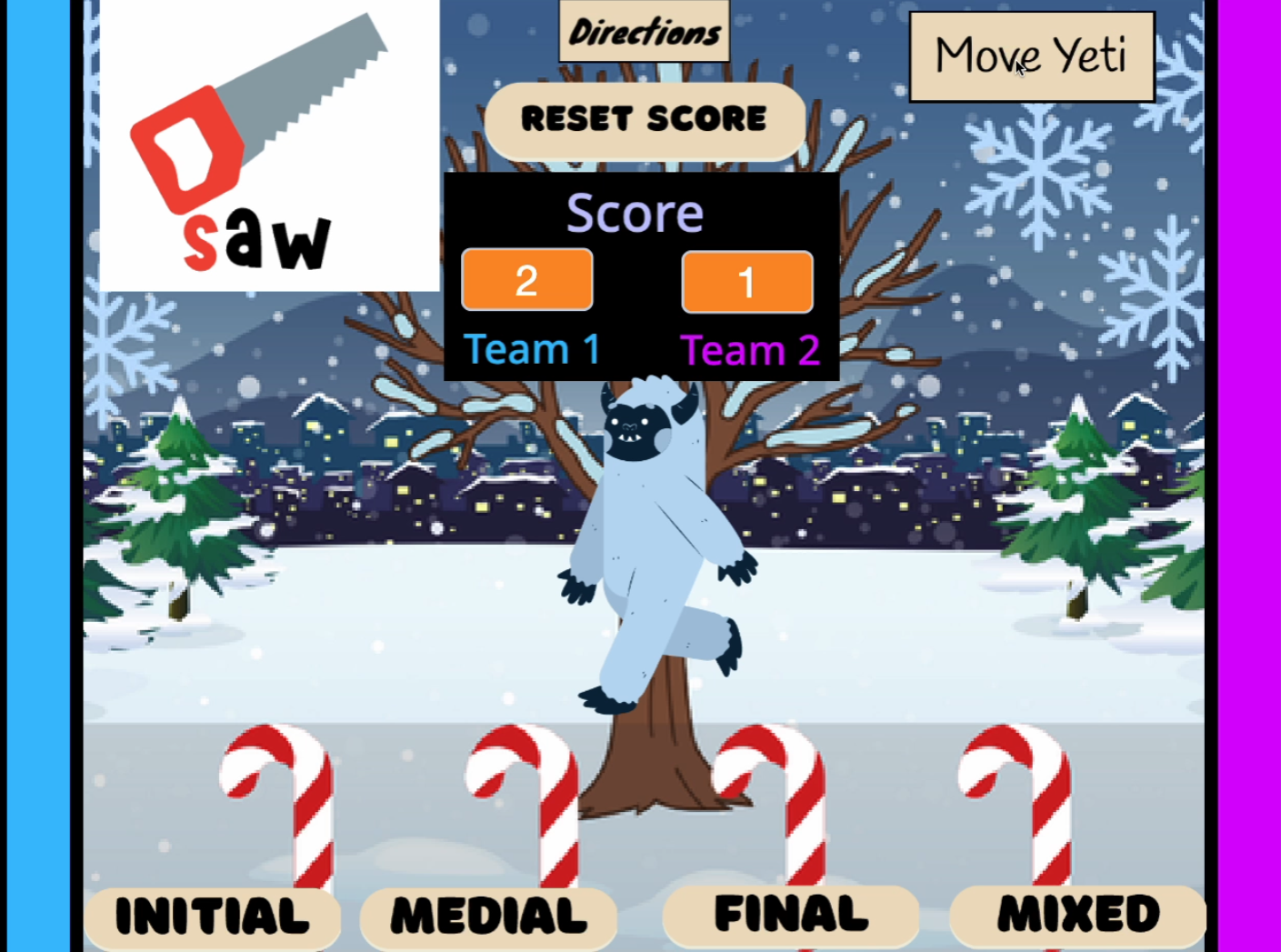
Winter Artic Battle
See who can score the most points! After you practice you speech word, press move yeti. and the yeti move randomly from side to side. If it touches your side, you get a point!
Winter Artic Battle
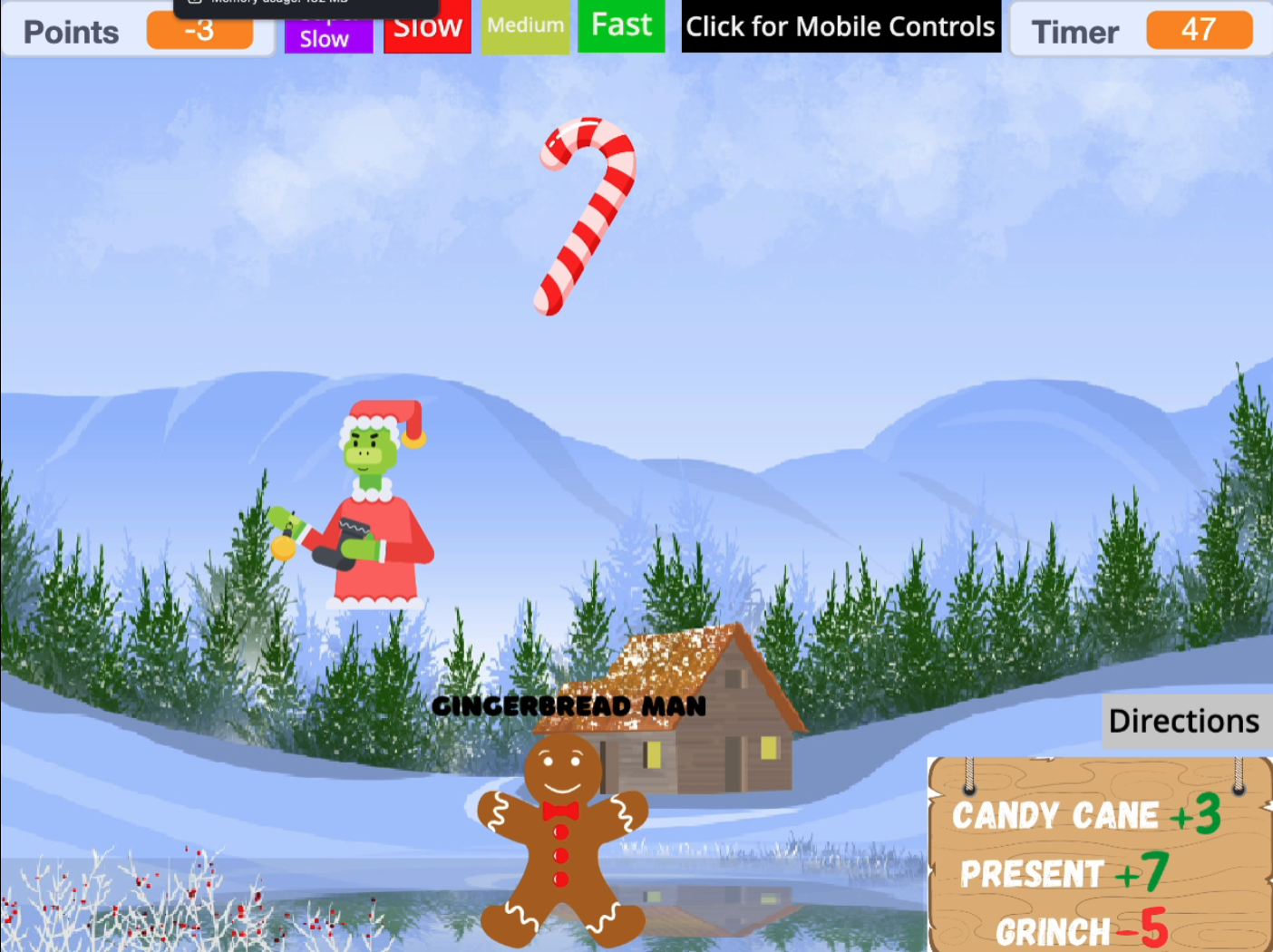
Christmas Artic Battle
See who can score the most points! After you practice you speech word, press move gingerbread man. and the gingerbread man move randomly from side to side. If it touches your side, you get a point!
Christmas Artic Battle
Valentines Artic Battle
See who can score the most points! After you practice you speech word, press move penguins. and the penguins move randomly from side to side. If it touches your side, you get a point!
Valentines Artic Battle
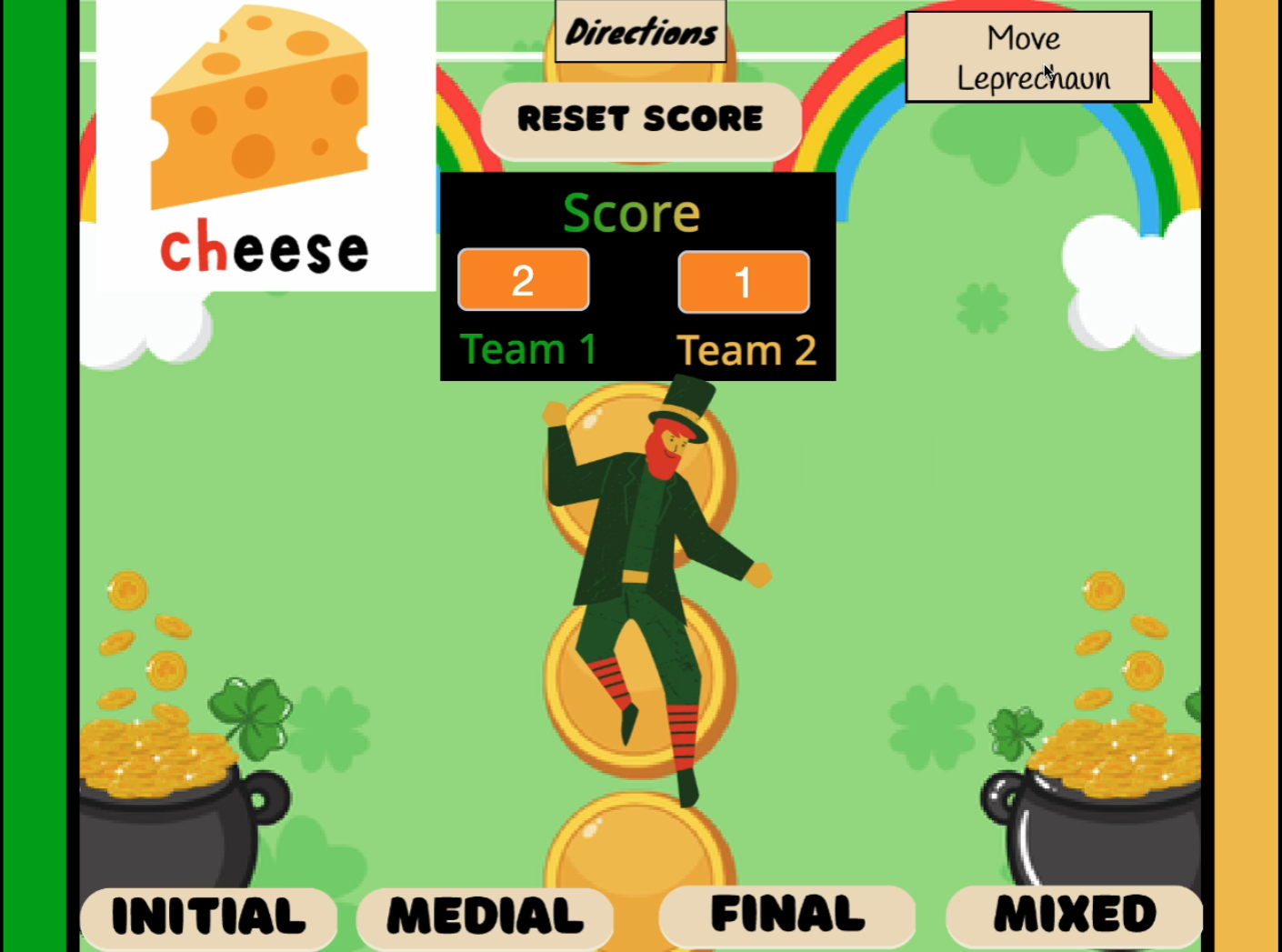
St. Patrick's Day Artic Battle
See who can score the most points! After you practice you speech word, press move leprechaun. and the leprechaun move randomly from side to side. If it touches your side, you get a point!
Valentines Artic Battle
Spring Artic Battle
See who can score the most points! After you practice you speech word, press move butterfly. and the butterfly move randomly from side to side. If it touches your side, you get a point!
Spring Artic Battle
Easter Artic Battle
See who can score the most points! After you practice you speech word, press move bunny. and the bunny move randomly from side to side. If it touches your side, you get a point!
Easter Artic Battle
Summer Artic Battle
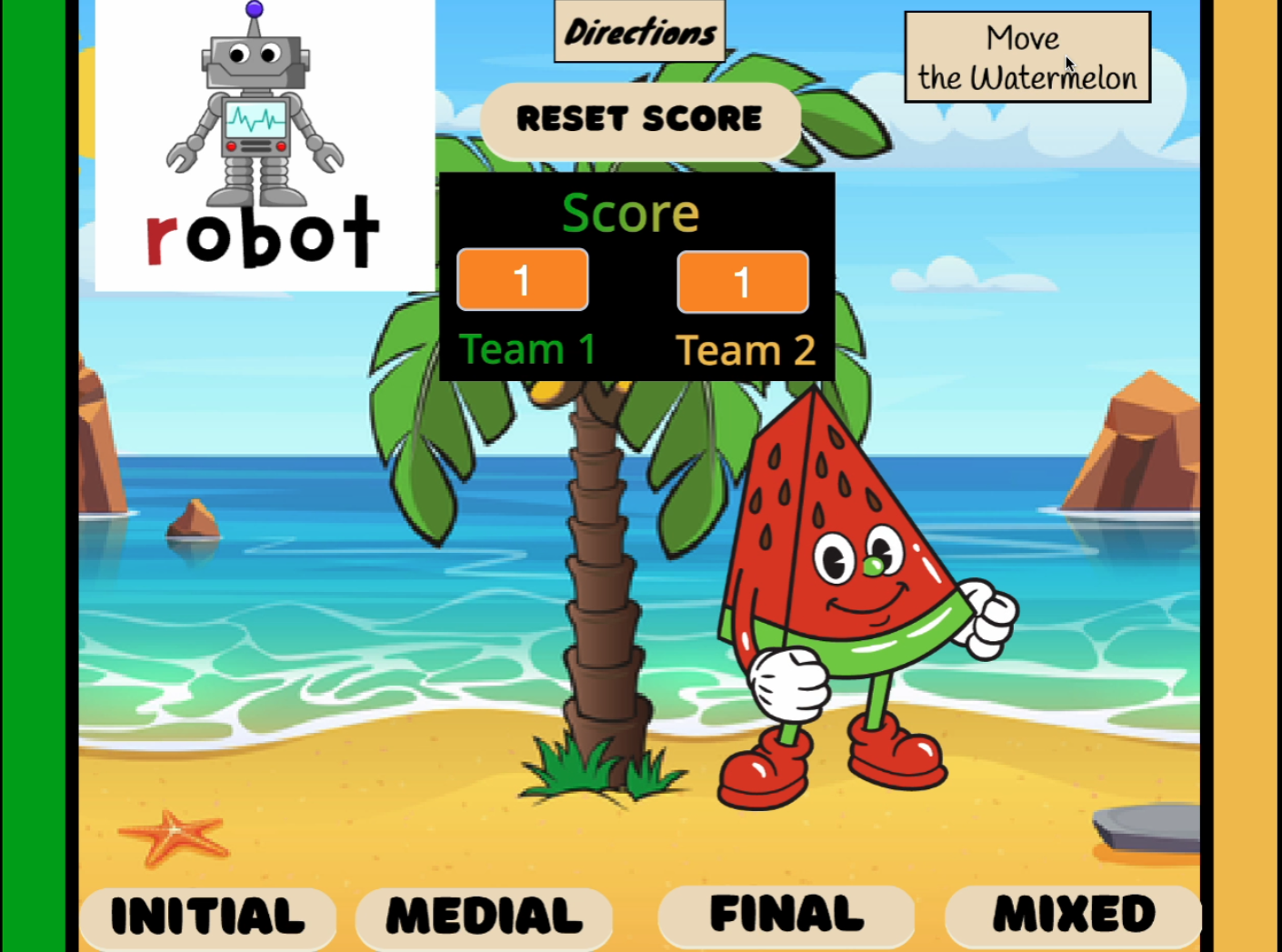
See who can score the most points! After you practice you speech word, press move watermelon. and the watermelon move randomly from side to side. If it touches your side, you get a point!
Summer Artic Battle
Spot the Differences
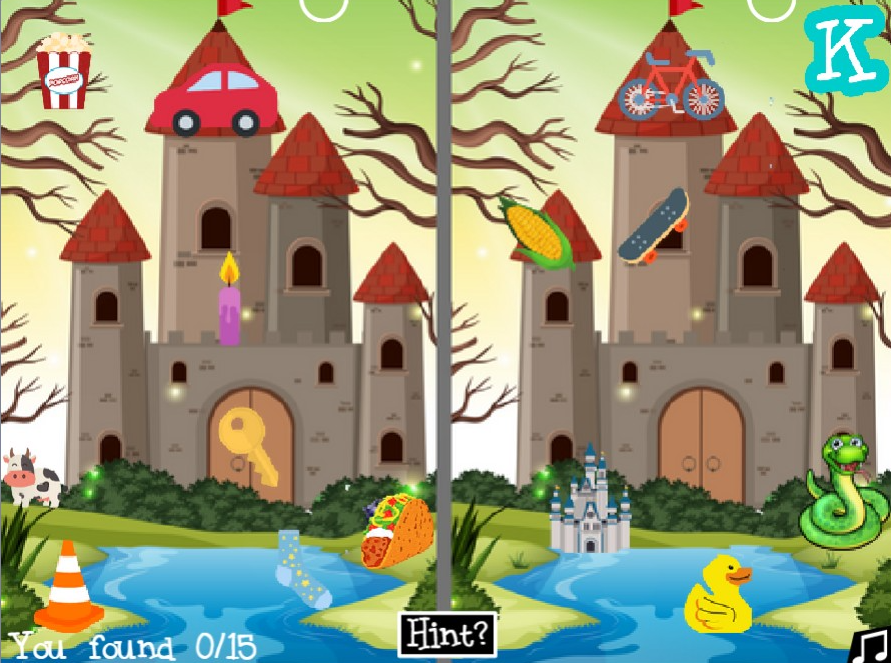
Two pictures that look the same until you look closer! Can you find all the differences between the two pictures?! Hint: the differences all have our targeted speech sounds!
Spot the Differences
Matching
12 Cards and 6 Matches! Challenge a friend to see who can find the most, or challenge yourself and see how fast you can find all the matches!
Matching
Treasure Hunt
Long ago, a pirate hid treasure under one of the maps. Unfortunately he also buried a bunch of our speech sound words too! See if you can find his buried treasure!
Treasure Hunt
Crossword
Classic crossword puzzle but all the answers have our targeted speech sound in them!
Crossword
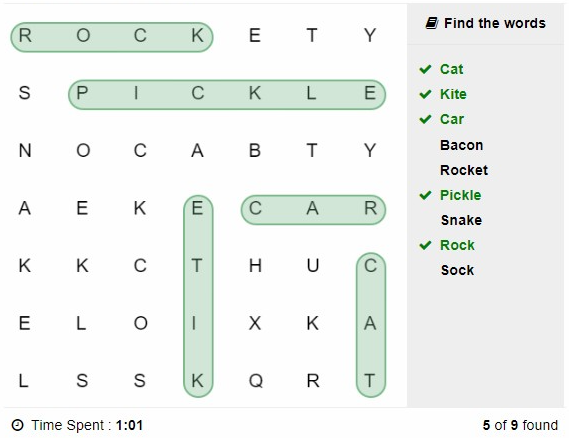
Word Find 1
Words with our targeted speech sound have become all jumbled up! Help find them all!
Word Find 1
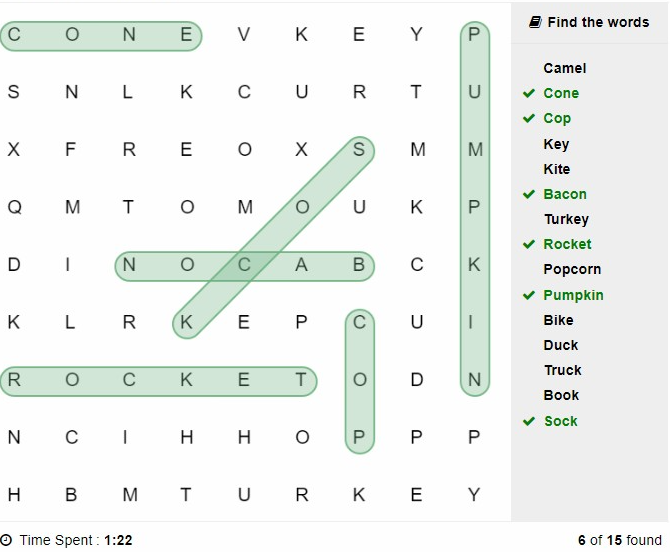
Word Find 2
Just like Word Find 1, but this time with even more letters are words to find!
Word Find 2
Summer Artic Adventure
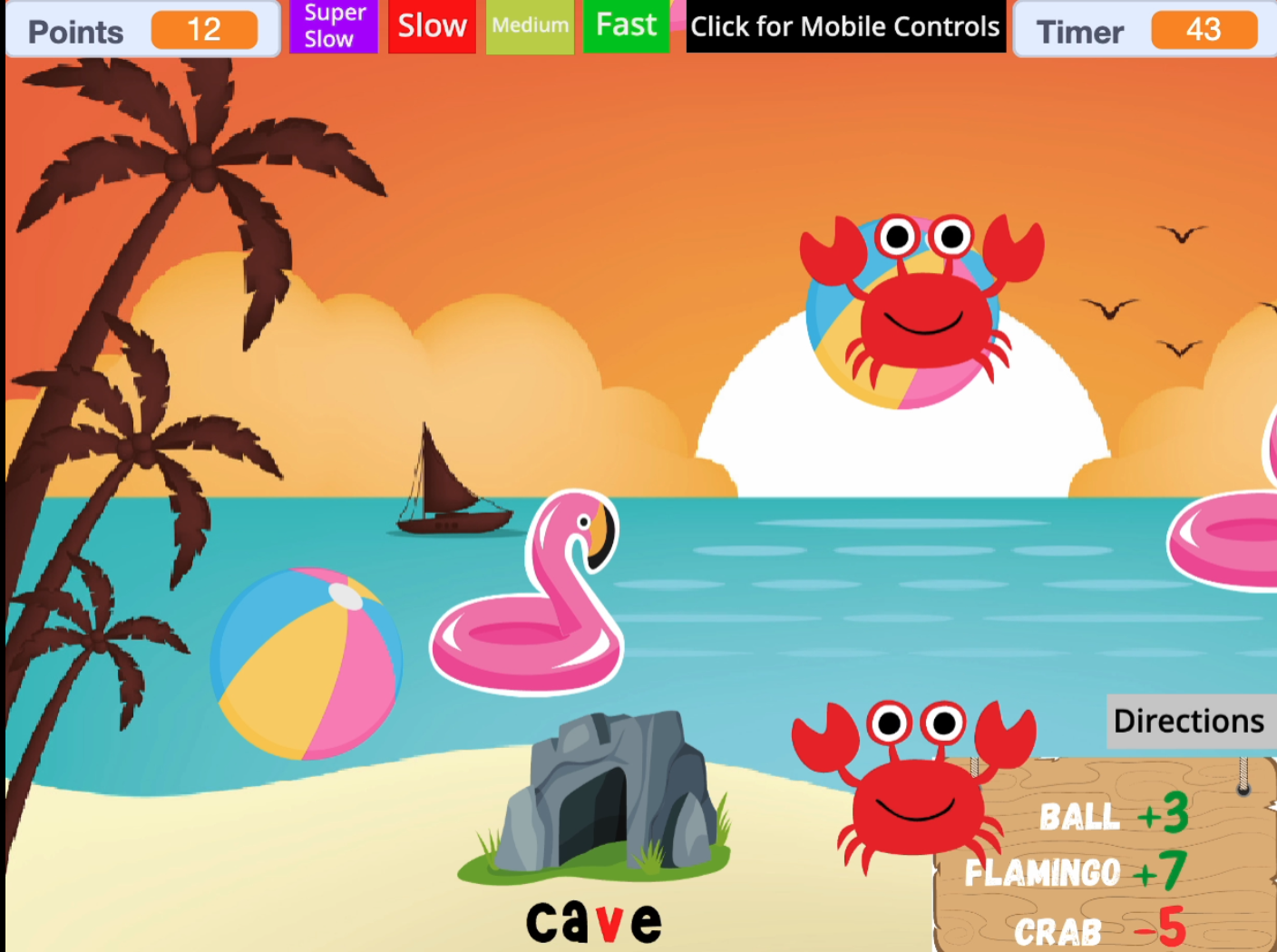
Using artic words as the catcher, see if you can set a high school by catching all of the summer items that are falling from the sky!
Summer Artic Adventure
Back to School Artic Adventure
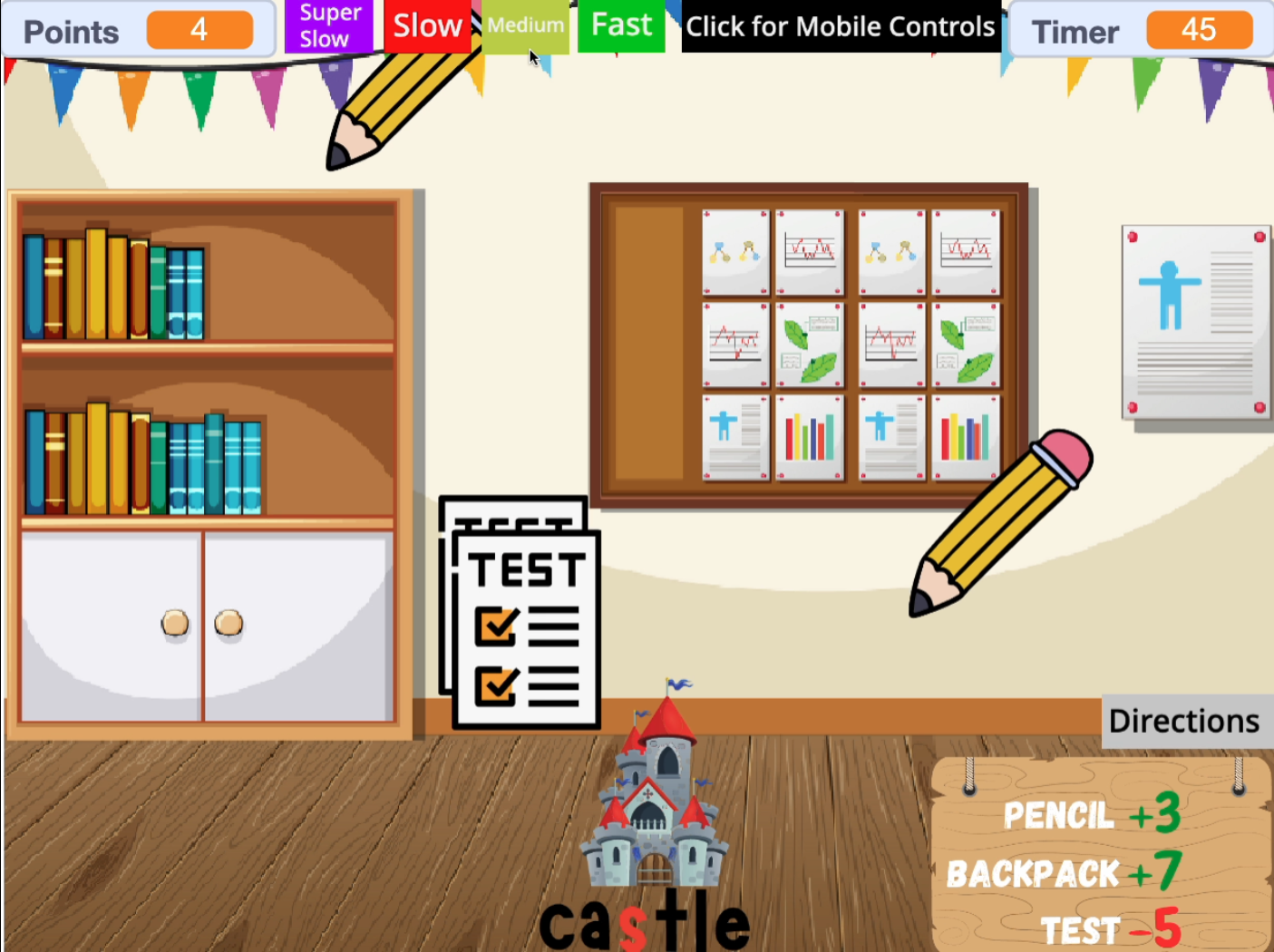
Using artic words as the catcher, see if you can set a high school by catching all of the school items that are falling from the sky!
Back to School Artic Adventure
Fall Artic Adventure
Using artic words as the catcher, see if you can set a high school by catching all of the Fall items that are falling from the sky!
Fall Artic Adventure
Halloween Artic Adventure
Using artic words as the catcher, see if you can set a high school by catching all of the Halloween items that are falling from the sky!
Halloween Artic Adventure
Valentines Day Artic Adventure
Using artic words as the catcher, see if you can set a high school by catching all of the Valentines items that are falling from the sky!
Valentine's Day Artic Adventure
Saint Patrick's Day Artic Adventure
Using artic words as the catcher, see if you can set a high school by catching all of the St. Patrick's Day items that are falling from the sky!
Saint Patrick's Day Artic Adventure
Easter Artic Adventure
Using artic words as the catcher, see if you can set a high school by catching all of the Easter items that are falling from the sky!
Easter Artic Adventure
Cinco De Mayo Artic Adventure
Using artic words as the catcher, see if you can set a high school by catching all of the Cinco De Mayo items that are falling from the sky!
Cinco De Mayo Artic Adventure
Winter Artic Adventure
Using artic words as the catcher, see if you can set a high school by catching all of the winter items that are falling from the sky!
Winter Artic Adventure
Christmas Artic Adventure
Using artic words as the catcher, see if you can set a high school by catching all of the Christmas items that are falling from the sky!
Christmas Artic Adventure
New Year's Artic Adventure
Using artic words as the catcher, see if you can set a high school by catching all of the New Year's items that are falling from the sky!
New Year's Artic Adventure
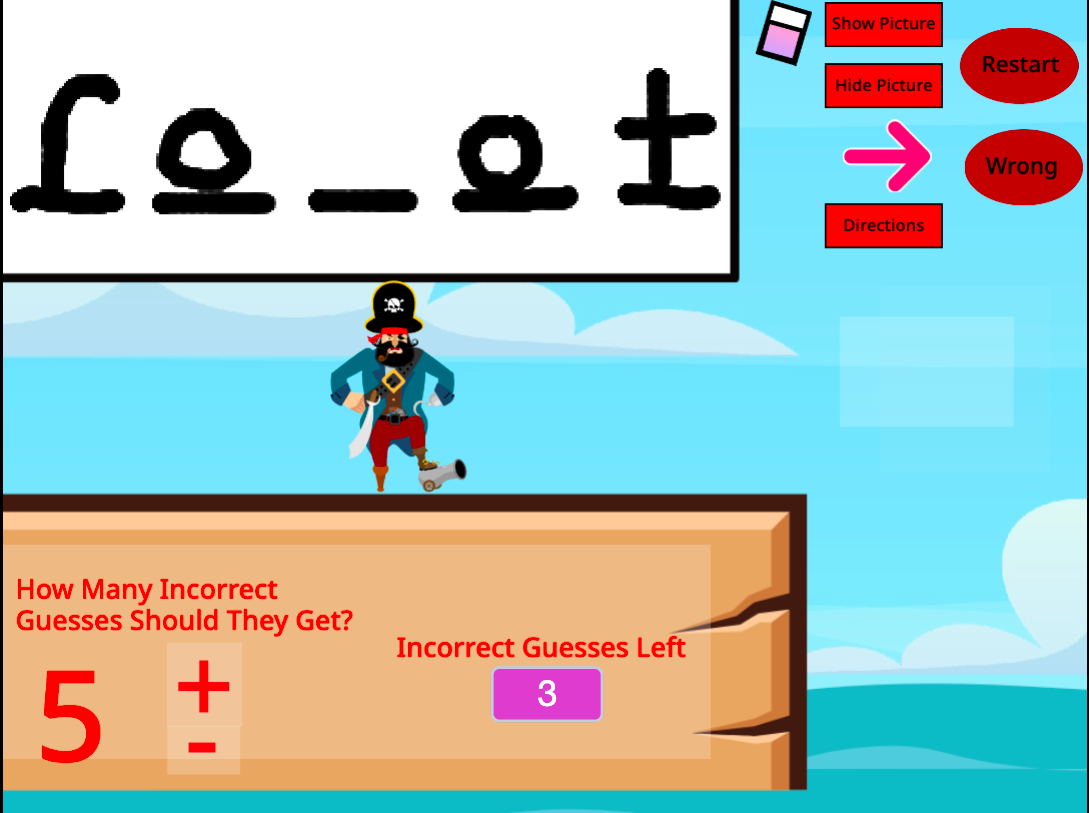
Pirate Artic Word Guess
Can you guess the artic word before the pirate falls in the ocean?!
Pirate Artic Word Guess
Alien Artic Word Guess
Can you guess the artic word before the alien falls off the spaceship?!
Alien Artic Word Guess
Back to School Artic Word Guess
Can you guess the artic word before the pencil falls in the trashcan?!
Back to School Artic Word Guess
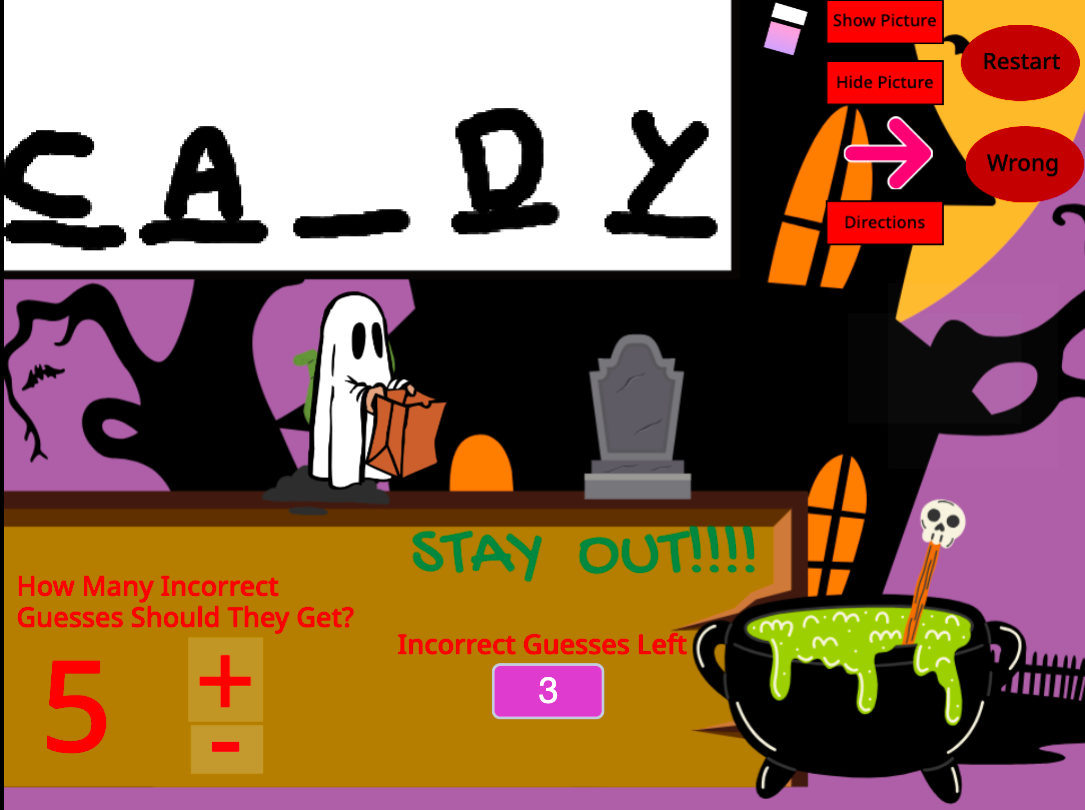
Halloween Artic Word Guess
Can you guess the artic word before the ghost falls in the cauldron?!
Halloween Artic Word Guess
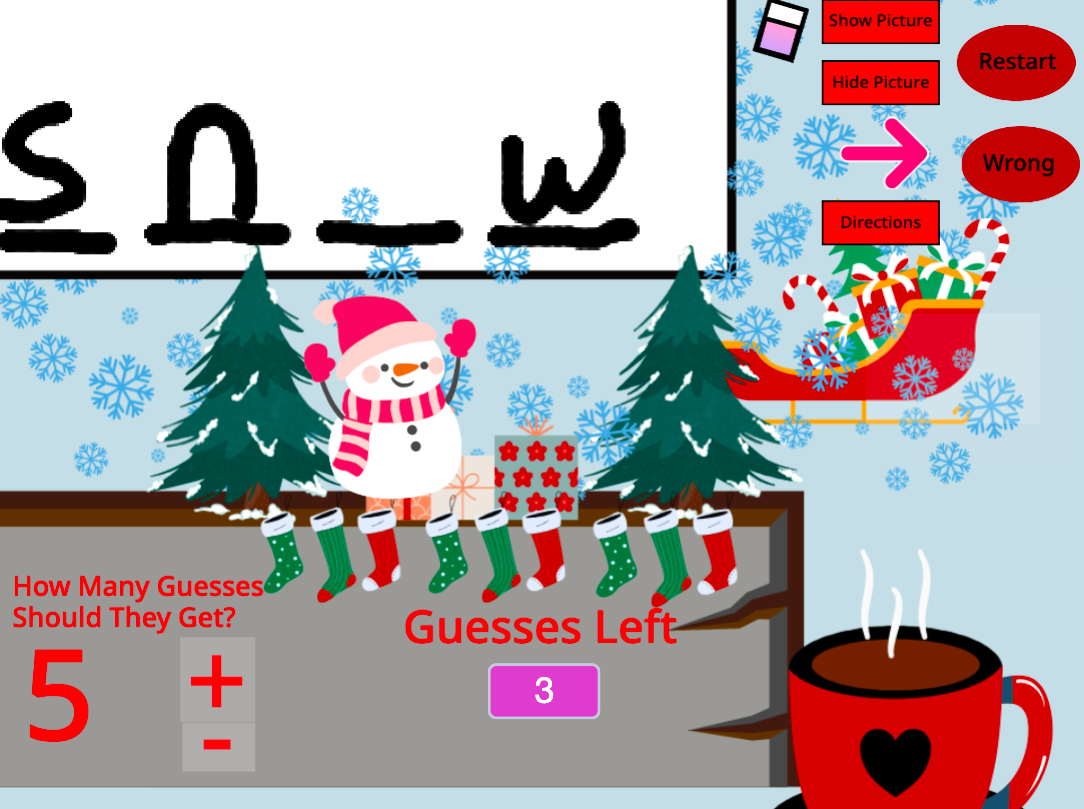
Winter Artic Word Guess
Can you guess the artic word before the snowman falls in the hot cocoa?!
Winter Artic Word Guess
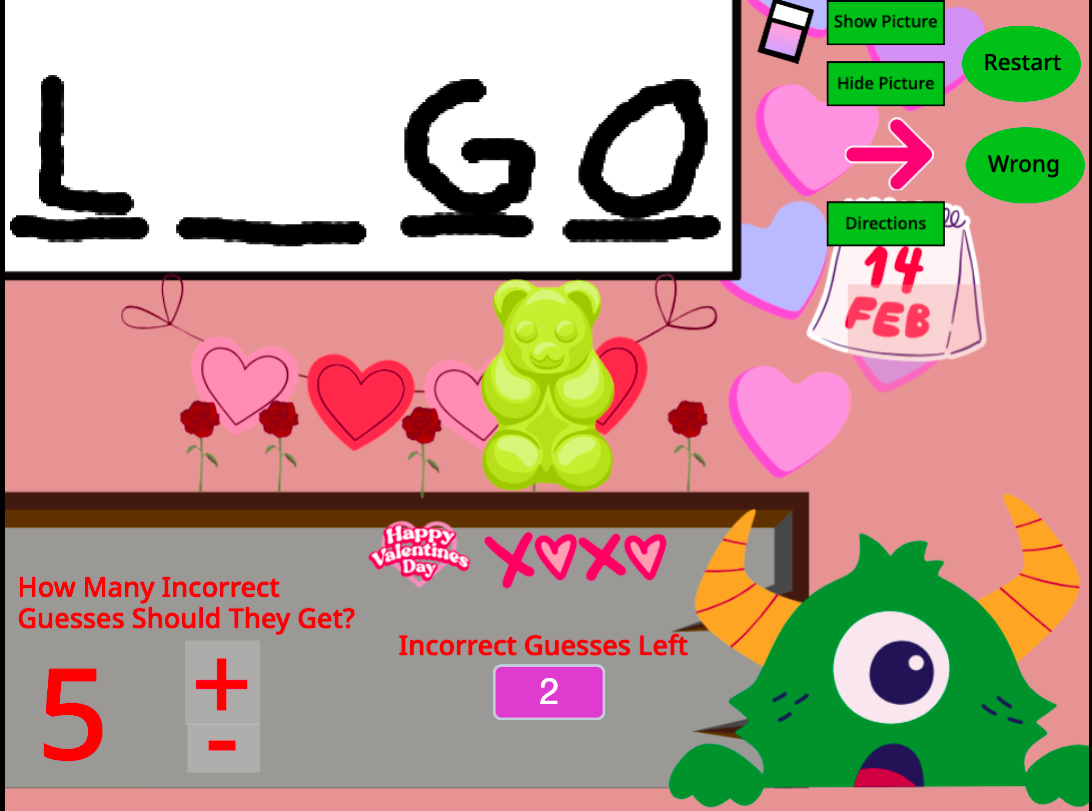
Valentines Artic Word Guess
Can you guess the artic word before the gummy bear falls in the mouth of the monster?!
Valentine's Artic Word Guess
St. Patrick's Artic Word Guess
Can you guess the artic word before the Leprechaun falls in the pot of gold?!
St. Patrick's Artic Word Guess
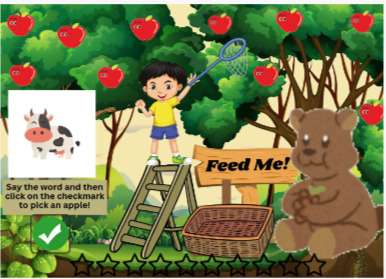
Feed the Bear
Feed the bear by saying your sounds! Initial, medial, final, and mixed sets are available!
Feed the Bear
Pumpkin Carving
Carve a pumpkin by saying your sounds! Initial, medial, final, and mixed sets are available!
Pumpkin Carving
Build-a-Snowman
Build a snowman by saying your sounds! Initial, medial, final, and mixed sets are available!
Build-a-Snowman
Thanksgiving Dinner
Make a delicious Thanksgiving dinner by saying your sounds! Initial, medial, final, and mixed sets are available!
Thanksgiving Dinner
Fall Tic-Tac-Toe
Fall Tic-Tac-Toe
Halloween Tic-Tac-Toe
Thanksgiving Tic-Tac-Toe
Christmas Tic-Tac-Toe
Winter Tic-Tac-Toe
Winter Tic-Tac-Toe
Spring Tic-Tac-Toe
Spring Tic-Tac-Toe
Valentines Tic-Tac-Toe
St. Patrick's Tic-Tac-Toe
Summer Tic-Tac-Toe
Summer Tic-Tac-Toe
School Tic-Tac-Toe
School Tic-Tac-Toe
Easter Tic-Tac-Toe
Easter Tic-Tac-Toe
Alien Tic-Tac-Toe
Alien Tic-Tac-Toe
Fall Seasonal Four-in-a-Row
Halloween Seasonal Four-in-a-Row
Thanksgiving Seasonal Four-in-a-Row
Winter Seasonal Four-in-a-Row
Christmas Seasonal Four-in-a-Row
Valentine's Seasonal Four-in-a-Row
Spring Seasonal Four-in-a-Row
Saint Patrick's Seasonal Four-in-a-Row
Easter Seasonal Four-in-a-Row
Summer Seasonal Four-in-a-Row
Alien Four-in-a-Row
Alien Four-in-a-Row
Back to School Four-in-a-Row
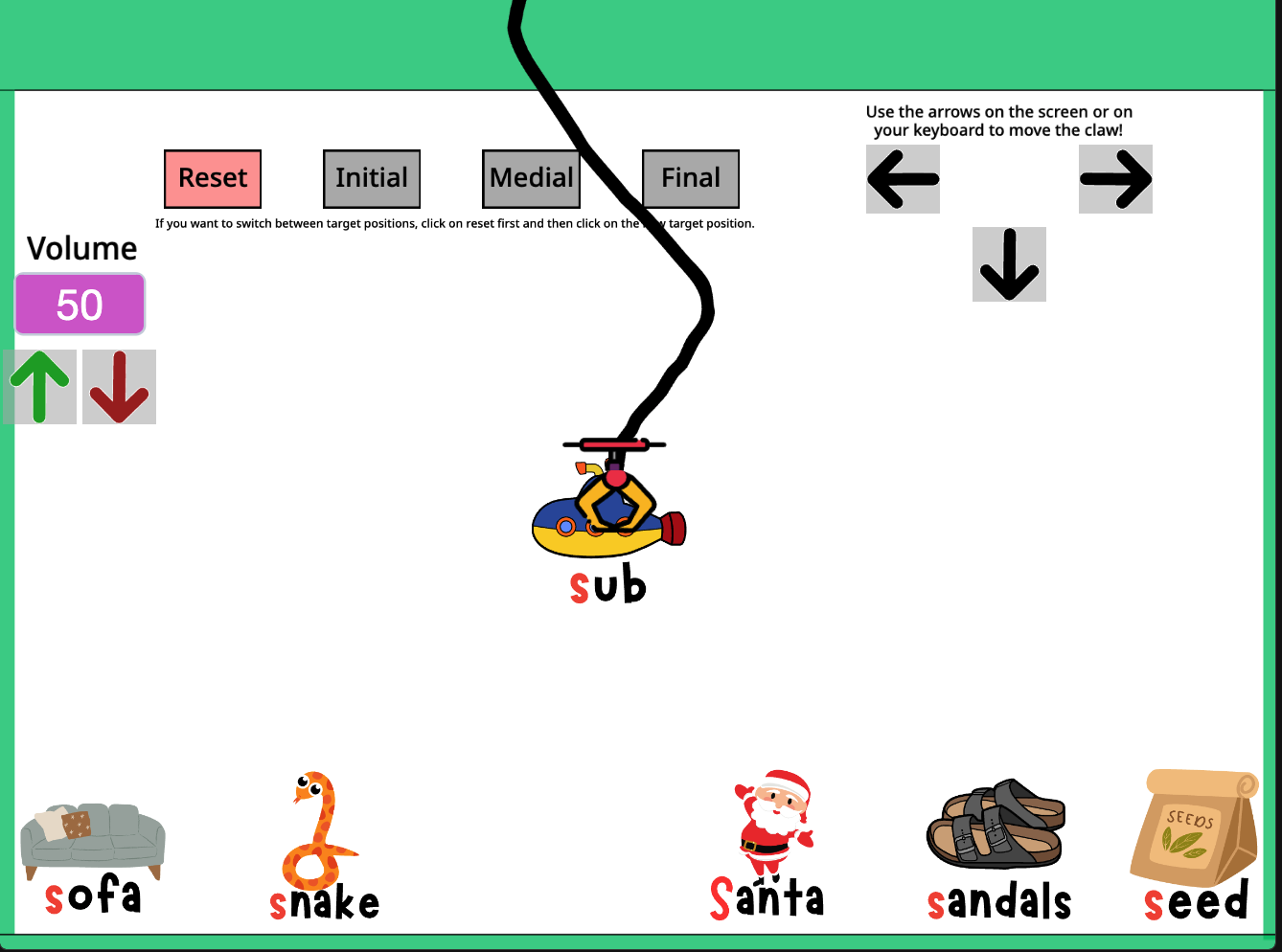
Alien Artic Crane Game
Dinosaur Artic Crane Game
Fall Artic Crane Game
Halloween Artic Crane Game
Winter Artic Crane Game
Christmas Artic Crane Game
Valentine's Artic Crane Game
Spring Artic Crane Game
St. Patrick's Artic Crane Game
Summer Artic Crane Game
Artic Crane Game
Artic Crane Game
TH Videos
TH Videos
TH Word Lists
TH Word Lists
TH Filterable Flashcards
TH Artic Hierarchy Activities
TH Artic Hierarchy ActivitiesHow to Teach the TH Sound in Speech Therapy
Techniques to teach the challenging TH sound in speech therapy with specialized approaches for SLPs, teachers, and parents to help children master this complex fricative.
The TH sound represents one of the most challenging fricatives for children to master in speech development. This interdental fricative requires precise tongue placement and controlled airflow. SLPs, teachers, and parents each play vital roles in helping children overcome difficulties with this frequently misarticulated sound.
Children typically acquire the TH sound between ages 4-7 years, making it one of the later-developing sounds. When production difficulties persist beyond this age, targeted intervention helps prevent literacy challenges and communication frustration. Systematic practice yields the best outcomes for this tricky sound.
This comprehensive guide provides specialized approaches for speech-language pathologists, classroom teachers, and parents. Each section offers role-specific techniques for supporting TH sound development in therapy sessions, classrooms, and home environments.
Understanding TH Sound Development
For Speech-Language Pathologists
The TH sound has two distinct variations: voiceless /θ/ (as in “think”) and voiced /ð/ (as in “this”). Both require precise tongue protrusion between the teeth with controlled airflow. This interdental placement makes visualization easier but motor control more challenging.
Assessment should evaluate production of both voiced and voiceless variations across word positions. Document substitution patterns including fronting (/f,v/ for /θ,ð/), stopping (/t,d/ for /θ,ð/), or interdentalization of sibilants. Consider stimulability across phonetic contexts.
Most children master these sounds between ages 5-7, though the voiced variation typically develops slightly later. Consider both developmental readiness and functional impact when determining intervention timing. Research supports addressing persistent errors rather than waiting indefinitely for spontaneous development.
For Teachers
The TH sound typically develops during later preschool and early elementary years. Many kindergarten and first-grade students will demonstrate developmental errors on these sounds. However, persistent errors beyond second grade often warrant intervention.
These sounds appear frequently in high-frequency vocabulary. Common classroom words like “the,” “this,” “with,” and “three” create daily challenges. Students may show reading hesitancy or spelling patterns reflecting their pronunciation difficulties.
Some children demonstrate phonological awareness challenges related to these sounds. They may struggle with differentiating similar-sounding words like “thin/fin” or “those/doze.” Watch for these patterns during phonics instruction and early literacy activities.
For Parents
Your child may struggle with words containing the TH sound like “thumb,” “bath,” or “feather” during preschool and early elementary years. These sounds typically develop between ages 4-7. Young children often substitute easier sounds like “f” or “d” (saying “fumb” or “dat”).
If your child consistently misarticulates these sounds after age 7, consider consulting a speech-language pathologist. Early intervention prevents compensatory error patterns and potential literacy challenges. Many children respond well to targeted practice with these sounds.
Home practice significantly impacts therapy success for the TH sound. Brief, playful practice sessions using specific techniques make a meaningful difference. Your consistent reinforcement helps establish these challenging speech patterns.
Strategies for Teaching the TH Sound
1. Establish Proper Tongue Placement and Visibility
For SLPs: Implement direct placement cues using tongue depressors or specialized tools. Emphasize the “tongue between teeth” placement with controlled protrusion. Develop customized visual analogies based on the child’s understanding of oral anatomy.
For Teachers: Use simple language to describe mouth position: “Put your tongue between your teeth like a sandwich.” Create classroom-friendly imagery like “the sneaky tongue peeking out.” Reinforce SLP terminology consistently in classroom reminders.
For Parents: Help your child feel the correct tongue position through playful cues. Try phrases like “make your tongue play peek-a-boo with your teeth” or “let your tongue take a tiny trip outside.” Use simple demonstrations with household objects to show tongue position.
2. Differentiate Between Voiced and Voiceless Variations
For SLPs: Implement explicit instruction contrasting /θ/ and /ð/ using minimal pairs and tactile feedback. Teach the “hand on throat” technique to feel vibration differences. Develop hierarchical treatment approaches addressing each variation systematically.
For Teachers: Help students feel the difference between “quiet” (/θ/) and “noisy” (/ð/) TH sounds by placing fingers on their throat. Use consistent terminology when reminding students about the two variations. Incorporate both types into phonics instruction with clear distinctions.
For Parents: Practice the difference between “thinking” and “this” by feeling throat vibration. Use playful analogies like “whispering TH” versus “talking TH” to distinguish the variations. Focus first on whichever variation your child finds easier before tackling the more difficult one.
3. Implement Visual and Tactile Feedback Systems
For SLPs: Use mirrors to provide immediate visual feedback on tongue positioning. Implement tactical kinesthetic cues like feeling airflow against the back of the hand. Create custom visual supports showing the mouth position for home practice.
For Teachers: Place small mirrors at literacy centers for self-monitoring during reading practice. Teach a hand signal representing the TH sound (tongue poking between fingers). Use visual cue cards with mouth position diagrams during phonics instruction.
For Parents: Use bathroom mirrors during daily routines to practice together. Hold a tissue in front of your mouth to show the gentle airflow needed. Create simple picture reminders showing the tongue position between teeth.
4. Utilize Sound Shaping Techniques from Established Sounds
For SLPs: Implement systematic shaping techniques using facilitating contexts. For some children, shaping from /f/ to /θ/ works by changing placement but maintaining similar airflow. Develop personalized shaping hierarchies based on the child’s existing sound inventory.
For Teachers: Understand which sounds the student already produces correctly. Reinforce the transitions between similar sounds and the TH sound using consistent cues. Use the concept of “moving sounds from one spot to another” during phonics instruction.
For Parents: Practice moving from sounds your child can already make. Try going from “f” to “th” by changing where the air escapes. Make it playful: “Let’s move our ‘ffff’ sound from our lip to between our teeth to make ‘thhhh’.”
5. Progress Through Systematic Linguistic Levels
For SLPs: Develop strategic word lists based on stimulability testing. Many children find initial position (e.g., “thumb”) easier than medial (e.g., “birthday”) or final (e.g., “tooth”). Create personalized hierachies based on diagnostically-driven treatment planning.
For Teachers: Understand which word positions the student finds easiest. Group classroom vocabulary by sound position during word wall activities. Create reading materials emphasizing the child’s most successful word position.
For Parents: Focus first on words containing TH in the position your SLP recommends. Practice 5-10 words daily from the position list provided by your therapist. Gradually expand to other word positions as skills improve.
6. Create Engaging Multisensory Practice Activities
For SLPs: Develop therapy games incorporating visual, auditory, and kinesthetic learning channels. Implement movement-based activities connecting physical actions to sound production. Design thematic therapy sets around high-interest topics containing numerous TH words.
For Teachers: Incorporate multisensory phonics activities for the TH sound. Create art projects featuring items containing the target sound. Develop movement games where children physically respond to hearing TH words.
For Parents: Try sensory activities like drawing “th” in shaving cream while practicing the sound. Play “Thinking Thursday” games focusing on voiceless TH words. Use playdough to create objects from a “TH treasure hunt” list.
7. Address Common Error Patterns Specifically
For SLPs: Develop targeted intervention for specific error patterns (stopping, fronting). Implement minimal pair contrasts highlighting the difference between error and target productions. Create specific feedback systems addressing each child’s unique error pattern.
For Teachers: Learn which specific error pattern the student demonstrates. Provide customized reminders based on the substitution type (e.g., “remember to put your tongue between your teeth, not behind them” for stopping). Use gentle cues specific to the error pattern.
For Parents: Notice which sound your child uses instead of TH. If they say “fink” for “think,” focus on tongue placement (teeth vs. lip). If they say “dat” for “that,” focus on tongue position (between vs. behind teeth). Work with your SLP to understand your child’s specific patterns.
Role-Specific TH Sound Activities
For Speech-Language Pathologists
Assessment Techniques: Use comprehensive TH sound probes examining both voiced and voiceless variations. Contrast production across different word positions and contexts. Document substitution patterns to guide targeted intervention planning.
Therapy Planning: Create individualized hierarchies based on stimulability testing. Develop strategic approaches addressing specific error patterns. Set reasonable timelines and expectations based on developmental readiness.
Progress Monitoring: Implement systematic data collection procedures tracking progress across both variations. Use audio recordings to document improvements over time. Adjust treatment approaches based on response patterns to specific techniques.
For Teachers
Classroom Phonological Awareness: Incorporate TH sound activities into phonics instruction. Create sound-sorting activities contrasting TH with common substitutions (f/v, t/d). Develop minimal pair activities highlighting these contrasts during literacy centers.
Supporting Students in Therapy: Reinforce therapeutic techniques during appropriate classroom moments. Provide additional practice during phonics and reading instruction. Communicate with the SLP about classroom observations and progress patterns.
Literacy Connection Activities: Create special attention to TH digraphs during spelling instruction. Develop reading materials highlighting words with the target sound. Implement phonological awareness activities specifically addressing TH sound discrimination.
For Parents
Daily Routine Integration: Incorporate sound practice during bathtime routines (with “bath,” “mouth,” “teeth”). Use everyday TH words like “thank you,” “the,” and “this.” Keep practice sessions brief (2-3 minutes) but frequent.
Play-Based Practice: Make a “TH thinking box” with small objects containing the sound. Play simple games like “I’m thinking of something that has a TH sound.” Create puppet plays where characters use lots of TH words.
Motivation Strategies: Develop simple reward systems celebrating effort rather than perfect production. Create special traditions making practice time enjoyable. Use your child’s interests to develop personalized practice activities.
Troubleshooting Common TH Sound Challenges
Addressing Specific Error Patterns
For SLPs: Differentiate intervention approaches based on the specific substitution pattern. For fronting (f/v for th), focus on tongue visibility and placement. For stopping (t/d for th), emphasize continuous airflow versus complete stoppage.
For Teachers: Watch for specific error patterns during classroom activities. Report consistent patterns to the SLP to guide intervention approaches. Provide pattern-specific reminders during one-on-one interactions.
For Parents: Notice whether your child consistently replaces TH with the same sound. Different substitution patterns require different practice approaches. Work with your SLP to understand the specific nature of your child’s difficulty.
Supporting Children with Tongue Thrust Patterns
For SLPs: Assess for coexisting tongue thrust patterns that may impact TH production. Consider referral to myofunctional therapy if resting posture issues persist. Implement techniques addressing both articulation and oral-motor patterns.
For Teachers: Be aware that some students may have underlying oral-motor patterns affecting their speech. These students may show tongue protrusion during other activities. Communicate these observations to the SLP for comprehensive intervention planning.
For Parents: If your SLP mentions tongue thrust or tongue resting posture issues, follow their specific recommendations. Some children benefit from oral-motor exercises alongside speech practice. Consistent reinforcement of proper tongue positioning helps establish new patterns.
Frequently Asked Questions
For Speech-Language Pathologists
When is the appropriate time to begin intervention for TH sound errors? Consider both developmental norms and functional impact when making intervention decisions. While the TH sound typically develops between ages 4-7, contextual factors may warrant earlier intervention. For children with multiple sound errors, consider addressing earlier-developing sounds first unless the TH error significantly impacts intelligibility or literacy development. For isolated TH errors in children approaching age 7, direct intervention is typically warranted. Consider the child’s stimulability, error consistency, and potential impact on emerging reading and spelling skills when determining intervention timing.
How should I approach intervention differently for voiced versus voiceless TH variations? Research suggests beginning with whichever variation shows higher stimulability, rather than following a predetermined sequence. Many children find the voiceless variation (/θ/) easier initially due to simpler airflow requirements. However, some children with stopping patterns (/d/ for /ð/) may more readily produce the voiced variation. Assess stimulability for both variations and begin with the most successful. Once one variation is established, explicitly contrast it with the second variation, highlighting the addition or removal of vocal cord vibration while maintaining identical placement. Document which variation generalizes more readily to guide intervention sequencing.
What techniques work best for children who repeatedly revert to stopping patterns (t/d for th)? For persistent stopping patterns, begin with explicit instruction contrasting complete versus partial constriction. Use visual feedback showing the difference between hidden tongue placement (for /t,d/) versus visible tongue placement (for /θ,ð/). Implement minimal pair activities contrasting stop-continuant pairs (this/dis, thin/tin). Some clinicians find success using tactile cues where the child feels the difference between airflow patterns. For children with ingrained motor patterns, consider using principles of motor learning with high-frequency, variable practice and delayed feedback schedules to establish new motor programs.
For Teachers
How can I support students working on the TH sound during reading activities? Pre-mark reading materials highlighting TH words for preview before group reading. Create a discreet signal system for gentle reminders during reading conferences. Position students strategically during reading groups near strong speech models. Be especially attentive during readings with high-frequency words like “the,” “this,” and “with.” Provide positive reinforcement when noticing correct production without drawing peer attention to errors. For students struggling with specific TH words, provide brief pre-reading practice with those specific terms.
Should articulation errors affect phonics or spelling assessments? Speech production differences should generally not impact assessment of phonics knowledge or spelling ability. A student may pronounce “thin” as “fin” but still understand the correct spelling requires the digraph “th.” Evaluate students’ understanding of letter-sound relationships separately from their production abilities. When spelling errors directly reflect pronunciation patterns (writing “fum” for “thumb”), provide explicit instruction connecting spelling patterns to standard pronunciation while acknowledging the student’s current speech development. Consult with the SLP about appropriate accommodations for individual students.
How can I incorporate TH sound practice into classroom phonics instruction? Create specific lessons focused on the TH digraph during letter-sound instruction. Develop sorting activities contrasting TH words with common substitutions (think/fink, this/dis). Use multisensory approaches connecting letters with proper articulation patterns. Create specialized word walls featuring TH words grouped by voiced and voiceless variations. Implement partner practice activities where students can work on these challenging patterns in comfortable pairs. Incorporate TH-focused tongue twisters as brief, engaging phonological awareness activities.
For Parents
How long does TH sound therapy typically take? The timeline varies based on several factors including age, error pattern type, practice consistency, and individual learning style. Most children with isolated TH errors show significant improvement within 3-6 months of consistent therapy and home practice. Children with multiple sound errors or phonological disorders may need longer intervention periods. Regular home practice dramatically reduces overall therapy duration. Focus on progress trends rather than perfect mastery as the goal. Celebrate small improvements in specific contexts along the journey.
Should I correct my child’s TH sound errors during everyday conversations? Balance is key. Constant correction can create negative feelings about communication and reduce verbal participation. Instead, use designated practice times for focused work. During natural conversations, occasionally model the correct pronunciation by repeating what your child said with proper articulation. Maintain a positive, encouraging atmosphere supporting overall communication development rather than perfect speech production. For children who show readiness, establish a special signal they can request when they want feedback on their speech during conversations.
My child can say the TH sound correctly sometimes but not consistently. Is this normal? This inconsistency is completely normal in speech sound development. Children typically master new sounds following a developmental progression: first in isolation, then in specific words with focused attention, and finally in conversational speech without monitoring. The pattern you’re observing likely indicates your child is in the intermediate stage of learning. They have the motor capability to produce the sound but haven’t yet automated it for all contexts. Continue practice focusing on contexts where success is more consistent, then gradually expand to more challenging situations.
For Speech-Language Pathologists
Your specialized knowledge guides this remediation process. Develop comprehensive treatment plans addressing both voiced and voiceless variations strategically. Share accessible techniques with teachers and parents ensuring consistent practice across settings. Your expertise helps the team understand the phonological and articulatory aspects underlying these challenging sounds.
For Teachers
Your classroom provides numerous opportunities for contextual sound practice. Incorporate TH sound awareness into appropriate curriculum activities. Your observations of functional communication in educational settings provide valuable feedback. Partner with SLPs to understand specific techniques supporting individual students with these challenging sounds.
For Parents
Your consistent support through home practice dramatically impacts therapeutic outcomes. Maintain brief, positive practice sessions following specific SLP recommendations. Celebrate small improvements to build your child’s confidence and motivation. Your daily reinforcement creates the repetition needed for motor learning and pattern establishment.
The most effective approach to TH sound development combines expertise from all three perspectives. When SLPs, teachers, and parents coordinate their efforts, children make more consistent progress with less frustration. This collaborative framework ensures children receive systematic support in mastering these challenging but important speech sounds.

TH Virtual Materials / Games
Virtual Flashcards, Tic-Tac-Toe, Find the Match, 4-in-a-Row, Seasonal / Holiday Theme Games, Speech-Recognition Games, Dinosaur Flashcards, and more!
Virtual Materials / Games
TH Word Lists
Over 1,000 TH target opportunities at the word, phrase, sentence, story and tongue twister levels!
TH Word Lists
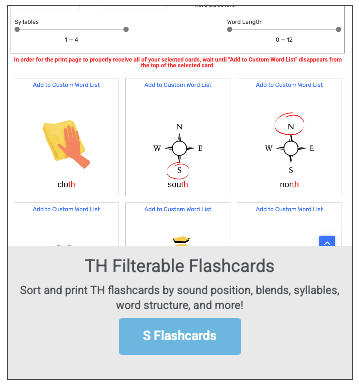
TH Filterable Flashcards
Sort and print TH flashcards by sound position, blends, syllables, word structure, and more!
S Flashcards
TH Printables
Printable B materials like Candy Lands, QR Code Scavenger Hunt, Flashcards, Progression Cards to target words - Tongue Twisters, Tic-Tac-Toe, Word Searches, and More!
More
TH Artic Hierarchy Activities
Virtual materials to target TH from the isolation level all the way up to the conversational level!
Artic Hierarchy ActivitiesThe TH Sound (IPA: /θ/ and /ð/)
Phonetic Description
- IPA Symbols:
- /θ/ – voiceless dental fricative (as in “thin”)
- /ð/ – voiced dental fricative (as in “this”)
- Manner of Articulation: Fricative
- Place of Articulation: Dental
- Voicing:
- /θ/ – Voiceless
- /ð/ – Voiced
Articulatory Characteristics
The TH sounds are dental fricatives, which means:
- The tip or blade of the tongue is placed between the upper and lower teeth, or against the back of the upper teeth
- Air is forced through the narrow channel created by this contact
- For /θ/, the vocal cords do not vibrate
- For /ð/, the vocal cords vibrate throughout the production
- Both sounds create turbulent airflow between the tongue and teeth
Production Technique
Tongue Position:
- Extend the tongue tip slightly between the teeth (interdental)
- Or place the tongue tip against the back of the upper teeth (dental)
- Create a narrow channel for air to pass through
- Ensure the tongue makes light contact with the teeth
Vocal Cord State:
- For /θ/: Keep vocal cords relaxed and apart (no vibration)
- For /ð/: Engage the vocal cords (with vibration)
- You can verify vibration by placing your hand on your throat
Airflow:
- Push air through the narrow space between tongue and teeth
- Maintain steady, controlled airflow
- The friction created should be gentler than for /s/ or /f/
Linguistic Examples
English Words
Voiceless /θ/:
- Initial Position: thin, thumb, thank
- Medial Position: mathematics, ethics, pathway
- Final Position: bath, teeth, wrath
Voiced /ð/:
- Initial Position: this, that, they
- Medial Position: mother, father, breathing
- Final Position: breathe, bathe, soothe
Minimal Pairs
- Voiceless vs. Voiced:
- ether /ˈiθər/ vs. either /ˈiðər/
- thigh /θaɪ/ vs. thy /ðaɪ/
- Contrasting with other sounds:
- think /θɪŋk/ vs. sink /sɪŋk/ vs. fink /fɪŋk/
- that /ðæt/ vs. dat /dæt/
Common Pronunciation Challenges
Tongue Placement
- Ensuring proper positioning between or against the teeth
- Avoiding substitution with more common sounds
Voicing Distinction
- Maintaining the contrast between /θ/ and /ð/
- Controlling vocal cord vibration appropriately
Phonetic Notation
- Broad Transcription: /θ/ (voiceless), /ð/ (voiced)
- Narrow Transcription: [θ], [ð] (generally consistent across contexts)
Related Sounds
- Other dental sounds:
- Dental stops [t̪], [d̪] (found in languages like Spanish)
- Common substitutes:
- Labiodental fricatives /f/, /v/
- Alveolar fricatives /s/, /z/
- Alveolar stops /t/, /d/
Acoustic Properties
- Lower intensity than sibilant fricatives like /s/
- Relatively diffuse acoustic energy
- /θ/ has energy concentrated in higher frequencies
- /ð/ shows voice bar in lower frequencies due to voicing
Developmental Considerations
- Children typically master /θ/ and /ð/ relatively late (between ages 5-8)
- Among the last consonants acquired by native English-speaking children
- Common substitutions in development: /f/ for /θ/ and /d/ for /ð/
Phonological Process
- Stopping: Producing stops (/t/, /d/) instead of fricatives (/θ/, /ð/)
- Fronting: Substituting labial fricatives (/f/, /v/) for dental fricatives
Practical Exercises
- Practice minimal pairs (thin/fin, that/dat)
- Use a mirror to observe tongue placement between teeth
- Practice prolonged “thhhhhh” sound (both voiced and voiceless versions)
- Feel the difference in vibration between /θ/ and /ð/