How to Help Your Child Say the “CH” Sound Clearly
The “CH” sound can be a tricky one for kids to master. You might hear your child say “tair” for chair or “sips” for chips. Don’t worry — this is common, especially for younger children who are still refining their articulation skills.
As a speech-language pathologist (SLP), I often remind parents that mastering sounds takes time and practice. With a few helpful strategies and plenty of encouragement, you can support your child’s progress right at home.
When Children Usually Learn the “CH” Sound
Most children learn to produce the “CH” sound (as in chair and chew) around ages 4 to 6. It’s considered a later-developing sound because it requires precise tongue, lip, and airflow coordination.
If your child is younger than 4, occasional “CH” errors are normal. But if they’re older and still struggling, some extra practice — or a quick check-in with an SLP — can help get things back on track.
What Makes the “CH” Sound Special
“CH” is an affricate, which means it’s made up of two sounds blended together — a “T” sound followed by a “SH” sound. When we say “CH,” the tongue first touches the roof of the mouth like it does for “T,” then quickly releases a burst of air like “SH.”
You can feel this by saying “T-SH” slowly, then blending it into “CH.” Try it with your child — it’s a fun little discovery!
Step-by-Step: How to Teach the “CH” Sound
Helping your child pronounce “CH” clearly is all about awareness, practice, and play. Here’s how to break it down.
1. Start with Listening Practice
Before saying “CH,” your child needs to hear and notice it.
Play a listening game:
Say pairs like “ship–chip,” “shop–chop,” or “seat–cheat.”
Ask, “Which one has the ‘CH’ sound?”
You can make it fun by having them jump, clap, or hold up a picture when they hear “CH.”
2. Show How to Make the Sound
Model the mouth movement slowly:
Tongue: Touch the tip of your tongue just behind your top teeth (like you’re making a “T”).
Lips: Round them slightly.
Airflow: Hold your breath briefly, then release it in a burst — like a gentle sneeze sound: “CH!”
Encourage your child to watch your mouth in a mirror. You can say, “Let’s make our ‘choo-choo train’ sound!”
3. Practice in Isolation (“CH” by Itself)
Once your child understands how to shape their mouth, have them practice just the sound — “ch, ch, ch.”
Make it playful: pretend to be a train (“ch, ch, choo!”) or a sneezing chipmunk (“ah-CHOO!”).
4. Add “CH” to Syllables
Next, blend “CH” with vowels:
cha, chee, chi, cho, choo
Use silly words or songs to keep it engaging. Rhythm and repetition help the sound stick.
5. Move to Real Words
Once the sound is clear in isolation, practice simple words with “CH.” Start with ones where the sound is at the beginning, then move to middle and end positions.
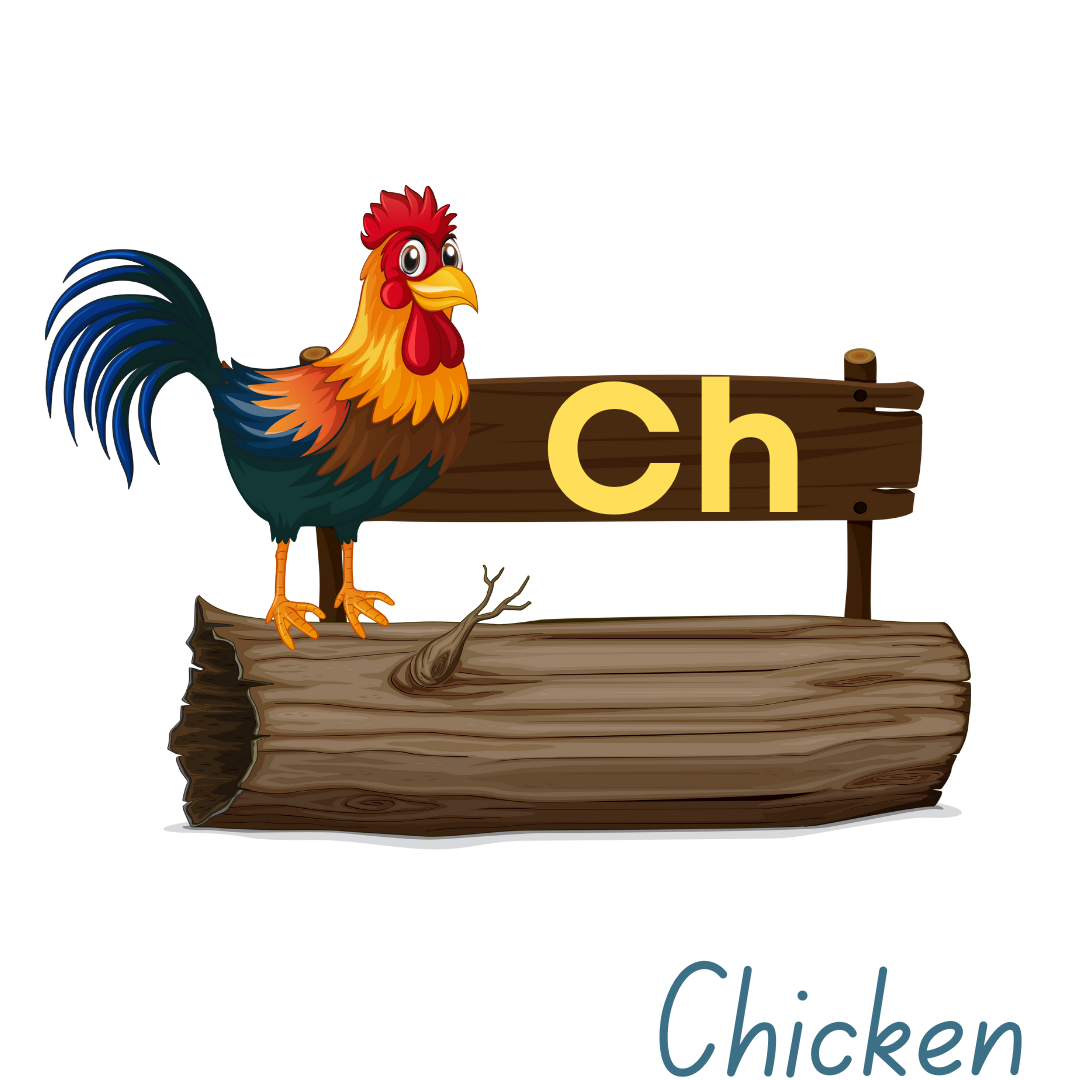
Beginning: chair, cheese, chalk, chip, chicken
Middle: teacher, ketchup, peaches, beaches
End: lunch, peach, beach, catch, watch
Try using picture cards or favorite snacks (like “chips” and “cheese”) to keep it fun and meaningful.
6. Practice in Short Sentences
When your child can say the sound in single words, put it into phrases and sentences:
You can also play “silly sentence” games:
“Charlie chews chewy chocolate chips.”
Tongue twisters like this make great practice once your child gains confidence!
Common Substitutions for “CH”
Children who struggle with “CH” often replace it with:
/SH/ → saying “ship” for chip
/T/ → saying “tair” for chair
/J/ → saying “jeep” for cheap
If your child consistently substitutes sounds after age 6, an SLP can provide targeted exercises to fine-tune articulation.
Tips for Success
Keep it playful. Kids learn faster when practice feels like a game.
Use mirrors. Watching how their tongue and lips move increases awareness.
Practice often, but briefly. Five minutes a few times a day is ideal.
Model naturally. Say words with “CH” clearly in conversation — repetition matters.
Avoid pressure. Encourage effort, not perfection. Progress takes time.
When to Seek Support
If your child is over 6 and still replaces “CH” with another sound, or if they feel frustrated when trying to correct it, consider reaching out to a speech-language pathologist. An SLP can identify why the sound is difficult and create a plan tailored to your child’s needs.
Therapy for “CH” typically includes fun activities, picture cues, and step-by-step practice that helps children feel successful and proud of their progress.
FAQs
Is the “CH” sound supposed to come in early speech?
No, it’s a later-developing sound that many children don’t master until around age 6.
Can I practice the “CH” sound if my child doesn’t have speech therapy yet?
Yes! Use simple games and listen-for-sound activities to build awareness. Just keep it positive and light.
What if my child says “J” instead of “CH”?
That’s common. The “J” sound is voiced (it uses the vocal cords), while “CH” is voiceless. Practice whispering “CH” to feel the difference.
Final Thoughts
Learning to pronounce “CH” clearly is an exciting milestone — and with patience, play, and support, your child can get there. Every “chip,” “chair,” and “chew” brings them one step closer to clear, confident communication.