How to Teach Yes and No Questions in Speech Therapy
Answering yes and no questions is one of the earliest and most important language milestones for children. It may seem simple, but this skill involves both understanding meaning and responding appropriately — two essential parts of communication.
Speech-language pathologists (SLPs) often target yes/no questions early in therapy, especially for children with limited language, autism, or receptive language delays. With the right approach, this skill can be taught naturally and playfully through daily routines, games, and visuals.
Let’s explore why yes/no questions matter, how to teach them step by step, and what kinds of activities help children master them.
Why Yes/No Questions Matter
Yes/no questions are foundational because they:
Help children express preferences (“Do you want milk?”)
Build comprehension and attention to language
Support safety (“Do you hurt?” “Is this hot?”)
Encourage early turn-taking and conversation skills
Lead to more advanced question-answering abilities later on
Children who can answer yes/no questions gain more independence and confidence — it’s often a turning point in early communication.
When Do Children Learn Yes/No Questions?
Typically developing children begin to:
Respond nonverbally (by nodding or shaking head) around 18–24 months
Answer simple factual yes/no questions (“Is this a dog?”) around age 2½–3
Answer preference-based questions (“Do you want more?”) around age 3–4
Children with language delays may need extra support and repetition to master both understanding and response consistency.
Why Yes/No Questions Can Be Difficult
Many children who struggle with yes/no questions aren’t just having trouble saying the words — they may not fully understand the meaning or purpose behind them.
Common challenges include:
Confusing the concepts of “yes” and “no”
Echoing the question instead of answering (“Do you want juice?” → “Juice!”)
Responding automatically (“yes” to everything) without comprehension
Difficulty processing auditory information or remembering the question
That’s why SLPs teach yes/no questions systematically, beginning with concrete experiences before moving to abstract ideas.
How to Teach Yes/No Questions Step by Step
Step 1: Start with Simple, Concrete Questions
Begin with questions about objects or actions the child can see and understand.
Examples:
Provide clear, visual feedback after each response:
Start with questions where the answer is clearly visible to help the child connect words with meaning.
Step 2: Pair Verbal and Nonverbal Cues
Use gestures (nodding for “yes,” shaking head for “no”) to help the child link language with body movement.
Model both verbally and visually:
“Do you want more bubbles?” (model nodding and saying “yes”)
“Do you want to stop?” (model shaking head and saying “no”)
Many children learn the gestures first — then add the words once the concept is understood.
Step 3: Use Highly Motivating Contexts
Practice yes/no questions in situations that are meaningful and fun. Examples:
During snack time: “Do you want crackers?”
During play: “Do you want the car?” “Do you want the ball?”
During songs: “Should we sing again?”
When the question relates to something the child enjoys, understanding and participation improve naturally.
Step 4: Teach Through Repetition and Routines
Repetition builds confidence and consistency. Incorporate yes/no questions into daily routines such as dressing, mealtime, or storytime.
Examples:
Predictable routines help children anticipate the meaning and pattern of the question.
Step 5: Use Visual Supports
Visuals are powerful tools for children learning new language concepts. Try:
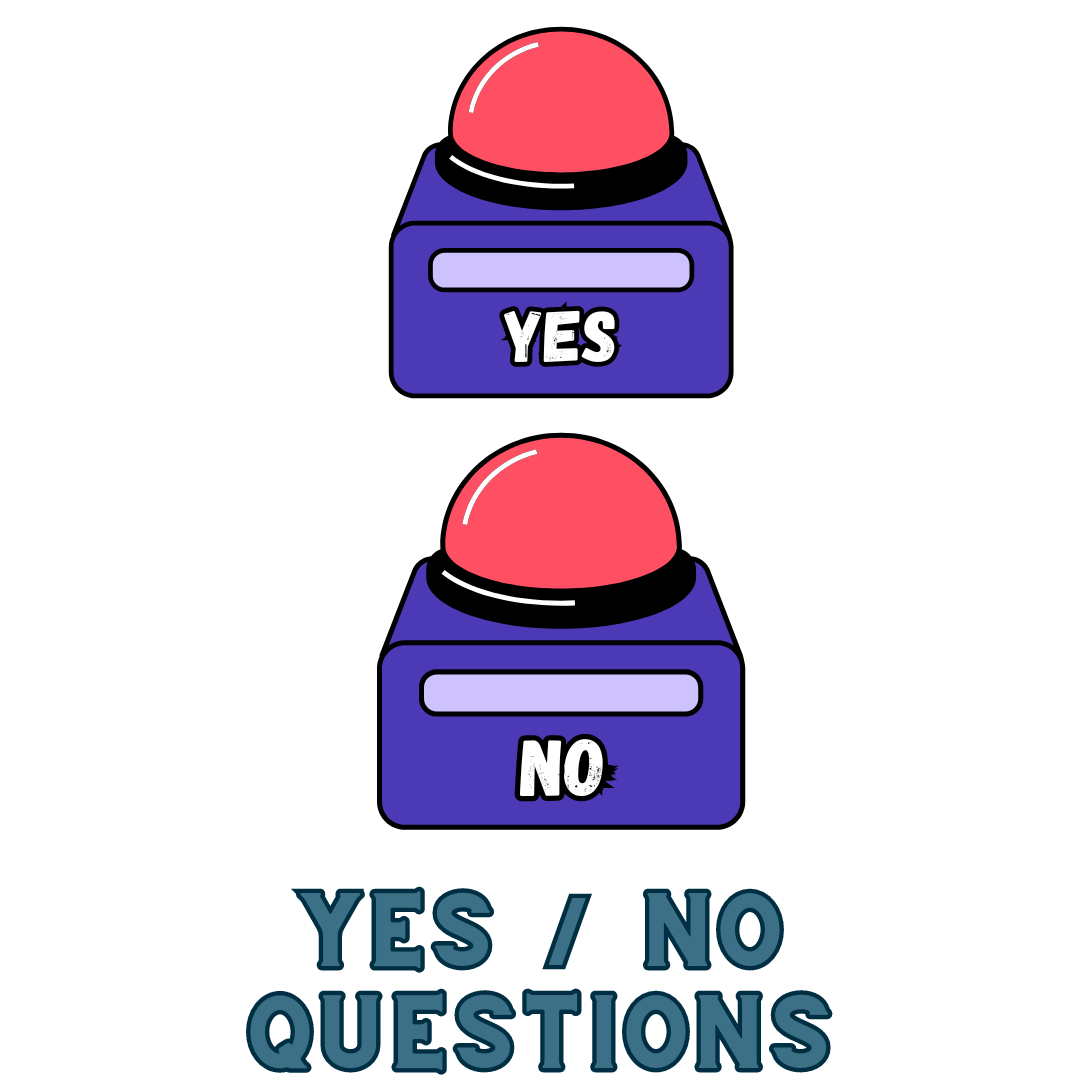
Yes/No cards: The child points to or taps the correct answer.
Color-coded symbols: Green for “yes,” red for “no.”
Picture choices: Photos showing correct and incorrect examples.
Gradually fade the visuals as comprehension grows.
Step 6: Move from Factual to Preference Questions
Once the child answers basic identification questions (“Is this a ball?”), move toward personal preference questions (“Do you like apples?”).
This step helps generalize the skill from labeling to self-expression.
Examples:
Encourage the child to think about their own feelings and choices, not just right or wrong answers.
Step 7: Introduce Abstract and Social Questions
When ready, practice yes/no questions that require reasoning or social understanding:
“Was that funny?”
“Do you think he’s sad?”
“Should we help her?”
These higher-level questions help children apply yes/no responses to emotions, problem solving, and conversation.
Tips for Success
Keep sessions short and positive — 5 minutes of daily practice is enough.
Use exaggerated tone and facial expression for emphasis.
Reinforce correct responses immediately with praise or a reward.
Avoid rapid questioning; pause to let the child process.
Make errors teachable moments: “Oops! That was no, not yes. Let’s try again.”
Fun Yes/No Activities for Therapy or Home
1. Mystery Bag Game
Place familiar objects in a bag. Pull one out and ask, “Is this a spoon?” “Is this a car?”
2. Snack Choices
Offer two foods: “Do you want apple?” “Do you want cookie?”
3. Silly Questions
Ask funny ones to keep engagement high:
Children love laughing while learning — and humor reinforces comprehension.
4. Yes/No Sorting Game
Create two baskets labeled “Yes” and “No.” Show pictures or say sentences. The child sorts them correctly.
5. Storybook Practice
Pause during reading to ask simple yes/no questions:
“Is the bear sleeping?”
“Is the boy running?”
When to Seek Help
If your child:
Doesn’t respond to yes/no questions by age 3½
Always answers “yes” or “no” regardless of context
Echoes the question instead of answering
Struggles to understand questions even with visuals
…it may be time for a speech and language evaluation.
An SLP can determine whether the difficulty is primarily receptive (understanding) or expressive (answering) and provide a structured treatment plan.
FAQs
Should I force my child to answer “yes” or “no”?
No. Avoid pressure. Instead, model the correct response and encourage participation through play.
Can nonverbal children learn to answer yes/no?
Yes. Many use alternative responses such as gestures, picture cards, or AAC buttons for “yes” and “no.”
How long does it take to teach yes/no questions?
Progress varies. Some children learn within weeks; others need months of consistent, reinforced practice.
Final Thoughts
Teaching yes/no questions builds more than just vocabulary — it opens the door to communication, independence, and meaningful connection.
By starting with simple, visual, and motivating experiences, SLPs and parents can help children move from understanding to confident expression.