



Why Sequencing Skills Matter in Language Development
Do youFr students struggle to tell stories in a logical order or follow multi-step directions? Many children find sequencing challenging yet crucial for communication success. Sequencing helps children organize information, understand time concepts, and express ideas clearly.
Children with language disorders often have difficulty arranging events in order or recalling steps in activities. These challenges impact their storytelling, reading comprehension, and ability to follow instructions. Teaching sequencing creates foundations for stronger communication across contexts.
Mastering this skill affects both academic and daily life success. Let’s explore why sequencing matters and how you can support its development through engaging activities.
Understanding Sequencing Development
Sequencing abilities develop in predictable patterns as children grow. This progression helps speech therapists target appropriate skills at each developmental stage.
SLPs use this developmental framework to guide intervention planning. Understanding these milestones helps set realistic expectations for progress.
Here’s how sequencing typically develops:
Early Sequencing (Ages 2-3)
Toddlers begin understanding simple two-step sequences related to familiar routines. They recognize that hand-washing comes before eating or that pajamas come before bedtime stories.
At this stage, sequencing remains tied to daily experiences. Children rely on routine and repetition to understand order.
Parents can support this development by narrating everyday activities: “First we put on shoes, then we go outside.” These simple sequences build awareness of order naturally.
Basic Sequencing (Ages 3-4)
Preschoolers start recognizing beginning, middle, and end in simple stories. They can arrange 3-4 picture cards in order when they show familiar activities like making a sandwich.
Children begin using basic sequence words like “first” and “then” in their speech. Their understanding of time relationships strengthens through repeated exposure.
Teachers introduce sequencing through predictable stories and classroom routines. These structured experiences help children internalize temporal concepts.
Expanded Sequencing (Ages 4-5)
Children develop the ability to retell familiar stories with correct event order. They can sequence 4-6 pictures showing less familiar activities with some guidance.
At this stage, children begin understanding broader time concepts like “before” and “after.” Their temporal vocabulary expands to include more sequence words.
SLPs often target this level with picture sequencing cards and story retelling activities. The visual supports help bridge concrete and abstract understanding.
Advanced Sequencing (Ages 5-7)
School-age children can follow multi-step directions and recall sequences from stories without visual supports. They arrange 6-8 pictures in order and explain the logical connections between events.
Children begin generating their own sequential narratives with clear beginnings, middles, and ends. Their stories contain cause-effect relationships and logical transitions.
Parents notice improved ability to explain processes and recount daily events in order. This skill transfers to academic tasks requiring sequential thinking.
Complex Sequencing (Ages 7+)
Older children understand complex temporal relationships and can switch between different time frames in stories. They recognize flashbacks and flash-forwards in narratives.
Children apply sequencing to academic tasks like writing stories, following science experiments, or solving multi-step math problems. The skill becomes more automatic and integrated.
Teachers focus on higher-level sequencing through planning, outlining, and organizing information across subjects. These activities build on the foundation established in earlier years.
The Benefits of Strong Sequencing Skills
Sequencing impacts multiple aspects of a child’s development. These skills extend far beyond simply putting events in order.
SLPs target sequencing because it affects communication broadly. The improvements influence both academic and daily functioning.
Here’s how strong sequencing benefits children:
Enhances Narrative Skills
Well-structured stories rely on logical sequencing. When children can organize events in order, their narratives become more coherent and engaging.
This organization helps listeners follow the story without confusion. Clear beginnings, middles, and endings create satisfying narrative arcs.
Parents notice that children with strong sequencing tell more detailed, organized stories about their day. These narratives build connections with others through shared experiences.
Improves Reading Comprehension
Understanding text requires tracking the sequence of events. Strong sequencing skills help children follow plot developments and recall important information.
When reading, children must remember what happened earlier to understand current events. This temporal relationship forms the foundation of comprehension.
Teachers observe that students with good sequencing often perform better on reading assessments. Their ability to track story elements supports deeper understanding.
Strengthens Following Directions
Many daily activities and classroom instructions involve multi-step sequences. Children who understand sequencing can follow these directions more accurately.
This skill supports independence in self-care routines, classroom transitions, and academic tasks. Children learn to complete steps in the correct order without constant reminders.
Parents value this independence in daily routines like getting dressed, brushing teeth, or packing backpacks. The ability to follow sequential steps reduces family stress.
Boosts Problem-Solving Abilities
Logical solutions often require understanding cause and effect relationships. Sequencing helps children recognize how earlier actions influence later outcomes.
This understanding supports planning and decision-making. Children learn to think through consequences before acting.
SLPs note that improved sequencing often correlates with stronger reasoning skills. The logical thinking extends beyond language to general problem-solving.
Develops Executive Functioning
Organization, planning, and time management all rely on sequencing abilities. Children must understand order to plan their approach to tasks.
These executive function skills support academic success across subjects. Students who can organize information sequentially often show stronger work completion.
Teachers value this connection between sequencing and executive function. The organizational benefits extend to homework management, project completion, and test preparation.
Effective Strategies for Teaching Sequencing
The approach you take to teaching sequencing significantly impacts learning success. These evidence-based strategies help children grasp this sometimes challenging concept.
SLPs implement these techniques in therapy sessions, but parents and teachers can adapt them for home and classroom use. Consistency across settings maximizes progress.
Try these proven teaching strategies:
Use Visual Supports and Cues
Visual aids make abstract sequencing concepts more concrete. Picture cards, flow charts, and graphic organizers help children see the order of events clearly.
Create visual schedules for daily routines with removable pictures. Children can manipulate the sequence while discussing the order of activities.
Parents can post simple visual sequences for common routines like bedtime or morning preparation. These reminders support independence while building sequencing concepts.
Incorporate Consistent Sequence Vocabulary
Using the same temporal terms across settings strengthens understanding. Words like “first,” “next,” “then,” and “last” create clear markers for order.
Emphasize these words by slightly stressing them when giving directions: “FIRST, put on your coat. NEXT, zip it up. LAST, put on your hat.”
Teachers can post sequence word cards in the classroom as visual reminders. These references help children incorporate the vocabulary into their own expressions.
Model Sequential Language in Conversations
Demonstrate sequencing naturally throughout the day. Describe activities using clear sequential language to provide constant models.
For example, explain a process while doing it: “First, I’m putting peanut butter on the bread. Next, I’m adding jelly. Last, I’m putting the pieces together.”
SLPs encourage parents to narrate daily activities using sequence words. This natural modeling embeds practice in meaningful contexts.
Break Down Complex Sequences
Divide longer sequences into manageable parts when teaching new skills. Start with two-step sequences before gradually increasing complexity.
For complex tasks, create mini-sequences that children master before combining them. This scaffolded approach prevents overwhelm.
Parents can use this strategy for teaching new self-care routines. Breaking down tooth-brushing into smaller sequences builds success before tackling the entire process.
Connect Sequencing to Children’s Interests
Engage children by focusing sequences on high-interest topics. A child who loves dinosaurs might sequence a story about a dinosaur’s day.
This personalization increases motivation and attention. Children process sequential information more effectively when genuinely interested.
Teachers can incorporate student interests into sequencing activities across subjects. This connection makes abstract concepts more accessible and engaging.
20 Engaging Sequencing Activities for Speech Therapy
Effective therapy combines structured learning with playful engagement. These activities make sequencing practice enjoyable while targeting specific skills.
SLPs, parents, and teachers can adapt these ideas based on children’s abilities and interests. The key is providing varied practice with increasing complexity.
Try these twenty engaging activities to build sequencing skills:
1. Picture Sequence Cards
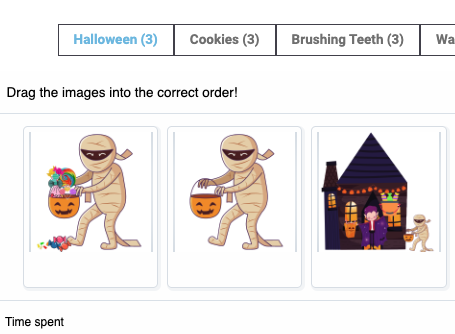
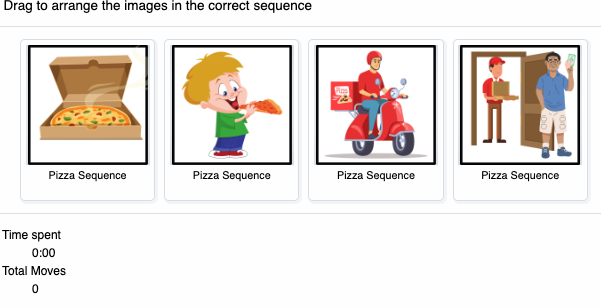
Create or purchase sets of cards showing familiar activities broken into steps. Children arrange the cards in logical order and describe the sequence.
Start with three-card sequences for beginners before progressing to more complex series. The visual support makes the task concrete and accessible.
Parents can make simple sequence cards using family photos of daily routines. This personal connection increases relevance and engagement.
2. Story Retelling with Props
Read a simple story, then provide objects representing key elements. Children retell the story using the props to maintain correct sequence.
For “The Three Little Pigs,” offer three house materials (straw, sticks, bricks) and character puppets. The physical props provide memory cues for sequencing.
Teachers find this activity bridges oral language and literacy. The hands-on approach supports children who struggle with purely verbal tasks.
3. Sequence Chain Craft
Create paper chains where each link represents a step in a sequence. Write or draw each step on separate strips before connecting them in order.
This visual representation shows how events link together. Children can manipulate the chain while discussing the sequence.
SLPs use this craft to reinforce both fine motor skills and sequencing. The physical chain serves as a concrete reminder of sequential relationships.
4. Simon Says with Sequences
Play Simon Says using multi-step directions: “Simon says clap your hands, touch your toes, then spin around.” Children must perform actions in the correct order.
Begin with two-step sequences for younger children before gradually increasing to three or four steps. The game format makes direction-following practice fun.
Parents can play this game during transition times or when waiting in lines. The activity requires no materials while building essential sequencing skills.
5. Cooking and Recipe Activities
Follow simple recipes that clearly demonstrate sequence. Picture recipes work well for non-readers, while text recipes support older children.
Making a sandwich or simple snack provides immediate feedback for sequence errors. If steps are completed out of order, the result shows it!
Teachers appreciate how cooking activities naturally incorporate math and science concepts alongside sequencing. This cross-curricular approach maximizes learning.
6. Daily Schedule Review
Begin each day by reviewing the schedule using pictures or words. Discuss what comes first, next, and last throughout the daily routine.
This predictable structure strengthens temporal concepts through repetition. Children learn to anticipate transitions based on sequential understanding.
Parents can create simple home schedules for mornings, after school, or bedtime. These visual guides support independence while reinforcing sequencing.
7. Sequence Movement Patterns
Create movement sequences that children must follow in order: “Jump, clap, touch knees, stamp feet.” Gradually increase the number of steps as skills improve.
This kinesthetic approach benefits active learners. The physical movements provide another pathway for learning sequential patterns.
SLPs sometimes use rhythm instruments to add auditory components to movement sequences. This multisensory approach supports different learning styles.
8. Comic Strip Stories
Provide blank comic strip templates where children draw a story with clear beginning, middle, and end. The visual format naturally emphasizes sequence.
For younger children, offer three panels. Older students can use more complex multi-panel formats for detailed sequences.
Teachers can connect this activity to literature by having students create comic versions of stories they’ve read. This reinforces both comprehension and sequencing.
9. Before and After Picture Sorting
Show pairs of related pictures and ask children to determine which comes first. For example, show a cake and ingredients, or dirty hands and washing hands.
This simple sorting activity focuses attention on logical order. The binary choice simplifies decision-making while building sequential reasoning.
Parents can create this game using magazine pictures or printed images. The activity works well for quick practice sessions at home.
10. Sequence Songs and Fingerplays
Teach songs with clear sequential actions like “This is the Way We Wash Our Hands” or “Head, Shoulders, Knees and Toes.” The predictable patterns reinforce order.
The musical element helps children remember sequences. The rhythm supports memory for order while making practice enjoyable.
Teachers often use these songs during transitions or group times. The familiar format creates successful sequencing experiences for all children.
11. Story Mapping
Create visual diagrams showing the beginning, middle, and end of stories. Children identify key events for each section after reading or listening.
This structured approach helps children see the skeleton of narrative sequence. The visual format highlights the organizational pattern.
SLPs use story maps to bridge from simple sequences to more complex narrative structures. The framework supports both comprehension and expression.
12. Sequence Puzzles
Cut pictures into strips showing sequential steps. Children reassemble the complete picture by arranging strips in logical order.
The self-correcting nature provides immediate feedback. When assembled correctly, the picture makes sense visually.
Parents can create simple sequence puzzles by cutting magazine pictures into horizontal strips. This low-cost activity offers valuable sequencing practice.
13. Backward Sequencing Practice
Reverse typical sequencing by starting with the end result and working backward. Ask “What happened before that?” to trace steps in reverse.
This variation strengthens flexible thinking about order. Children must consider cause-effect relationships from different perspectives.
Teachers find this approach particularly valuable for understanding math processes and scientific procedures. The backward analysis deepens comprehension.
14. Digital Storytelling
Use simple apps where children create sequential stories by arranging pictures and recording narration. The technology appeal increases engagement with sequencing tasks.
Apps like “My Story” or “Toontastic” provide structures for creating sequenced narratives. The digital format often motivates reluctant participants.
SLPs appreciate how these tools save created stories for review. The recorded narratives demonstrate progress in sequencing abilities over time.
15. What Comes Next? Prediction Game
Read familiar stories but stop before key events, asking children to predict what happens next. This focuses attention on logical progression and sequence cues.
The prediction element makes this more engaging than simple recall. Children must use existing sequence information to make reasonable predictions.
Parents can use this technique during bedtime reading. The interactive approach builds both sequencing and critical thinking skills.
16. Sequence Barrier Games
Pair children with identical sets of objects separated by a barrier. One child creates a sequence, then verbally directs their partner to duplicate it without seeing.
This activity combines sequencing with giving sequential directions. Both participants practice important sequential language skills.
Teachers value how this activity builds communication alongside sequencing. The collaborative nature supports social skills development simultaneously.
17. Real Photo Sequences
Take pictures of children completing familiar activities. Print the photos and have children arrange them in order while describing each step.
Using photos of the children themselves increases engagement. The personal connection makes sequencing more meaningful and concrete.
Parents find this activity creates lasting learning materials. The photo sequences can be used repeatedly for practice while maintaining interest.
18. Sequence Bingo
Create bingo cards with pictures showing steps of various activities. Call out sequence terms (“the step that comes after putting on shoes”) for children to mark.
This game format makes identification of sequence relationships fun. The competitive element increases motivation for many children.
SLPs can customize bingo cards to target specific sequence vocabularies or concepts. This adaptability makes the activity appropriate for various skill levels.
19. Process Writing
Guide children to write “how-to” instructions for simple activities like making a sandwich or playing a game. The writing process forces clear sequencing consideration.
For younger children, dictate their verbal instructions and reread to check order. Older children can write and revise their own sequential text.
Teachers connect this activity to expository writing instruction. The functional format gives purpose to the sequencing practice.
20. Sequence Scavenger Hunt
Hide picture cards representing steps in a sequence around the room. Children find the cards and must arrange them in order once all are collected.
The movement component adds engagement to the sequencing task. The hunt format creates excitement while working toward the sequencing goal.
Parents can implement this activity at home using simple drawings or pictures from magazines. The game requires minimal preparation while offering valuable practice.
Adapting Sequencing Activities for Different Needs
Children’s sequencing abilities vary widely based on age, language level, and cognitive development. Thoughtful adaptations make activities accessible to all learners.
SLPs regularly modify activities to match individual profiles. These adjustments ensure appropriate challenge without frustration.
Consider these adaptations for different groups:
For Preschool Children
Use photographs or clear illustrations showing familiar routines. The concrete representation supports early sequencing understanding.
Limit sequences to 2-3 steps initially. This manageable number prevents cognitive overload while building basic concepts.
Incorporate songs, movement, and hands-on manipulation. These multisensory approaches match young children’s learning styles.
For School-Age Children
Introduce written sequence words alongside pictures. This pairing builds connections between oral and written sequencing language.
Extend sequences to 4-6 steps with more complex relationships. School-age children can handle longer series with logical connections.
Connect sequencing to academic content in science, math, and reading. These curriculum connections reinforce the relevance of sequencing skills.
For Children with Language Disorders
Provide additional visual supports like numbered cards or color-coding. These extras help children who struggle with purely verbal sequencing.
Allow non-verbal sequencing before requiring verbal explanation. Children can demonstrate understanding through arrangement before facing expressive language demands.
Practice the same sequences repeatedly before introducing new ones. This consistency builds mastery through focused repetition.
For Children with Attention Challenges
Break longer sequences into smaller chunks. Teaching 2-3 steps at a time prevents attention fatigue.
Incorporate movement between sequencing activities. Physical breaks help reset attention for continued focus.
Use high-interest themes that capture attention naturally. When content is engaging, attention to sequence improves automatically.
For Children with Autism Spectrum Disorder
Create clear visual boundaries between sequence steps. Well-defined visual organization supports processing of sequential information.
Maintain consistent language and visual formats. Predictable structures reduce cognitive load while building sequencing concepts.
Connect sequences to special interests when possible. Leveraging motivating topics increases engagement with sequencing tasks.
Frequently Asked Questions About Sequencing Skills
How do I know if my child has difficulty with sequencing?
Watch for these signs: telling stories in a jumbled order, struggling to follow multi-step directions, having trouble with daily routines, or mixing up the order of events when recalling experiences.
By age 4, most children can arrange a simple 3-4 step sequence with pictures. By age 5-6, they typically retell familiar stories with correct event order.
If sequencing difficulties persist and affect daily functioning or learning, consider consulting with an SLP. Early intervention prevents these challenges from impacting academic performance.
Which sequence words should I teach first?
Start with basic terms like “first,” “next,” and “last.” These create a simple framework for understanding beginning, middle, and end.
Once these are mastered, introduce “before,” “after,” “then,” and “finally.” This expanded vocabulary allows for more precise sequence descriptions.
For older children, add transitional terms like “meanwhile,” “subsequently,” “previously,” and “following that.” These advanced words support complex narrative sequencing.
How do sequencing and executive function skills connect?
Sequencing forms the foundation for planning, organization, and time management. Children must understand order to plan their approach to tasks.
Executive functions rely on the ability to visualize steps in advance. This mental sequencing allows children to prepare for multi-step activities.
Supporting sequencing skills often produces improvements in task initiation, work completion, and general organization. The cognitive processes share significant overlap.
Can technology help with teaching sequencing?
Quality apps and digital activities can provide engaging practice with immediate feedback. Look for programs that offer varying levels of complexity to match developmental needs.
Digital storytelling tools allow children to create and manipulate sequences. The visual and interactive nature of these tools appeals to many learners.
Balance screen-based activities with hands-on, real-world sequencing practice. The most effective approach includes varied experiences across contexts.
How do sequencing skills affect academic performance?
Reading comprehension relies heavily on tracking story sequences and understanding temporal relationships. Strong sequencers follow plot development more successfully.
Writing organization depends on logical sequencing of ideas. Children who understand sequencing produce more coherent written work.
Math procedures, science experiments, and history timelines all require sequential understanding. The skill transfers across academic subjects.
What if my student can sequence pictures but struggles with verbal sequencing?
This pattern suggests the child understands sequencing concepts but has difficulty with verbal expression. Focus on bridging from visual to verbal sequencing.
Try having the child arrange pictures first, then provide sentence starters for describing each step. This scaffolding supports the transition to verbal sequencing.
Practice recording verbal descriptions of already-arranged sequences. This separates the cognitive task of ordering from the language task of describing.
Supporting Sequencing Skills at Home
Parents play a crucial role in developing sequencing ability. These simple strategies integrate sequencing practice into daily family life.
Consistent, natural practice at home reinforces skills learned in therapy or school. These everyday learning opportunities often prove most effective.
Try these family-friendly approaches:
Incorporate Into Daily Routines
Talk through morning and bedtime routines using sequence words: “First we brush teeth, then we put on pajamas, last we read a story.” This natural narration reinforces order.
Post visual schedules showing the sequence of daily activities. These references help children internalize common sequences while supporting independence.
Ask sequencing questions during familiar activities: “What do we do first when we make your lunch?” These questions prompt sequential thinking in meaningful contexts.
Make Sequencing Playful
Turn clean-up into a sequencing game: “First let’s pick up the blocks, next we’ll put away the books, then we’ll clean up the crayons.” The play element makes sequencing practice enjoyable.
Play “What’s Missing?” with familiar sequences. Demonstrate a routine but skip one step, asking children to identify what was missed.
Create silly mixed-up sequences and let children correct them. The humor in statements like “First I put on my shoes, then I put on my socks” engages children in sequential reasoning.
Connect to Children’s Interests
Read books about favorite topics with clear sequences. Whether dinosaurs, trucks, or princesses, most children’s books contain sequences that can be discussed.
Create custom sequence activities around passionate interests. A train enthusiast might sequence the steps of a train journey or a dinosaur lover might sequence a day in a dinosaur’s life.
Watch short videos about favorite topics, then practice retelling the sequence of events. This high-interest content motivates sequential recall.
Measuring Progress in Sequencing Skills
Tracking growth in sequencing helps adjust instruction and celebrate improvements. These approaches provide meaningful assessment without creating testing pressure.
SLPs use both formal and informal measures to monitor development. Regular assessment guides therapy planning and documents progress.
Consider these methods for tracking sequencing development:
Observe Natural Sequencing in Conversations
Notice how children naturally sequence information when sharing experiences. Do they maintain logical order or jump between events randomly?
Listen for spontaneous use of sequence vocabulary in daily discussions. The unprompted use of words like “first” and “next” shows internalization of concepts.
Document the length and complexity of sequences children can produce or follow. This progression shows growth from simple to more complex sequencing.
Use Structured Sequencing Tasks
Periodically assess the number of steps children can sequence correctly. Progress from 3-step to 6-step sequences shows measurable growth.
Compare performance on familiar versus novel sequences. The ability to apply sequencing skills to new content demonstrates true mastery.
Track both receptive sequencing (following directions) and expressive sequencing (telling sequential stories). These related skills sometimes develop at different rates.
Collect Work Samples Over Time
Save examples of sequence activities, drawings, or recordings to compare over months. This collection provides concrete evidence of development.
Review early and recent story retellings to note improvements in logical organization. The comparison often reveals subtle progress that daily observation might miss.
Create a portfolio of sequencing work across different contexts. This comprehensive view shows how skills generalize across settings and activities.
Sequencing forms a critical foundation for communication, comprehension, and cognitive organization. Through engaging activities and consistent practice, children can develop the sequencing skills they need for clearer expression, better understanding, and stronger executive function.
SLPs, teachers, and parents each play important roles in supporting sequencing development. By providing varied, appropriate activities across settings, adults help children build strong temporal understanding that will serve them throughout life.
Remember that sequencing develops gradually through natural experiences, targeted practice, and supportive feedback. Celebrate progress, keep activities playful, and maintain a positive approach to this essential aspect of language and thinking.