






Articulation / Phonological Process Virtual Games, Materials, & Activities
Language Virtual Games, Materials, & Activities
"Speech Therapy Free Resources" The SLP's Complete List
You know the feeling. You have 10 minutes between sessions, a new client on the way, or a parent just asked for “something to work on at home,” and you need a resource. Right now.
The scramble to find good, free speech therapy materials is real. And let’s be honest, “free” can sometimes mean “a 20-page download of ads with one blurry worksheet.”
Not here.
I’m an SLP who lives in the digital and no-prep world. My goal is to find things that are effective, engaging, and (best of all) easy. Here’s my personal list of where to find the good stuff.
Key Takeaways
The best “free” resources are often no-prep activities or simple, reusable printables.
You can find high-quality free articulation worksheets and language activities on trusted SLP blogs and resource sites.
For teletherapy, look for free digital tools like spinners, whiteboards, and sample Boom Cards™.
For parents, the best home practice is often using everyday routines and books, not complex worksheets.
Where I Find the Best Free Articulation Worksheets
When you need a solid free articulation worksheet for kids, you need it to be simple and clear. You don’t want to spend 10 minutes just explaining the directions.
My go-to’s are resources that are print-and-go. This means no cutting, gluing, or complicated prep.
Simple Word Lists: Don’t underestimate a good, clean word list. You can use them for drills, sentence building, or to send home for practice.
“Find It” Sheets: These are awesome. A one-page scene with 10-15 target words hidden in the picture. Kids love them, and you can get a ton of trials.
Carryover & Home Practice Sheets: The best free speech therapy home practice sheets are the ones parents will actually use. They should be simple, maybe a one-week calendar with a “5-minute” activity for each day.
I always look for resources made by other SLPs. You can usually find great freebies by following your favorite SLP creators on their blogs or resource-sharing sites. [I
Free Language Worksheets That Aren’t Just Drill
Ugh, boring drills. For language, we need context. We need to get kids talking, describing, and thinking.
When I look for free language worksheets for speech therapy, I’m really looking for “activity mats” or “visual aids” that spark conversation.
What to search for:
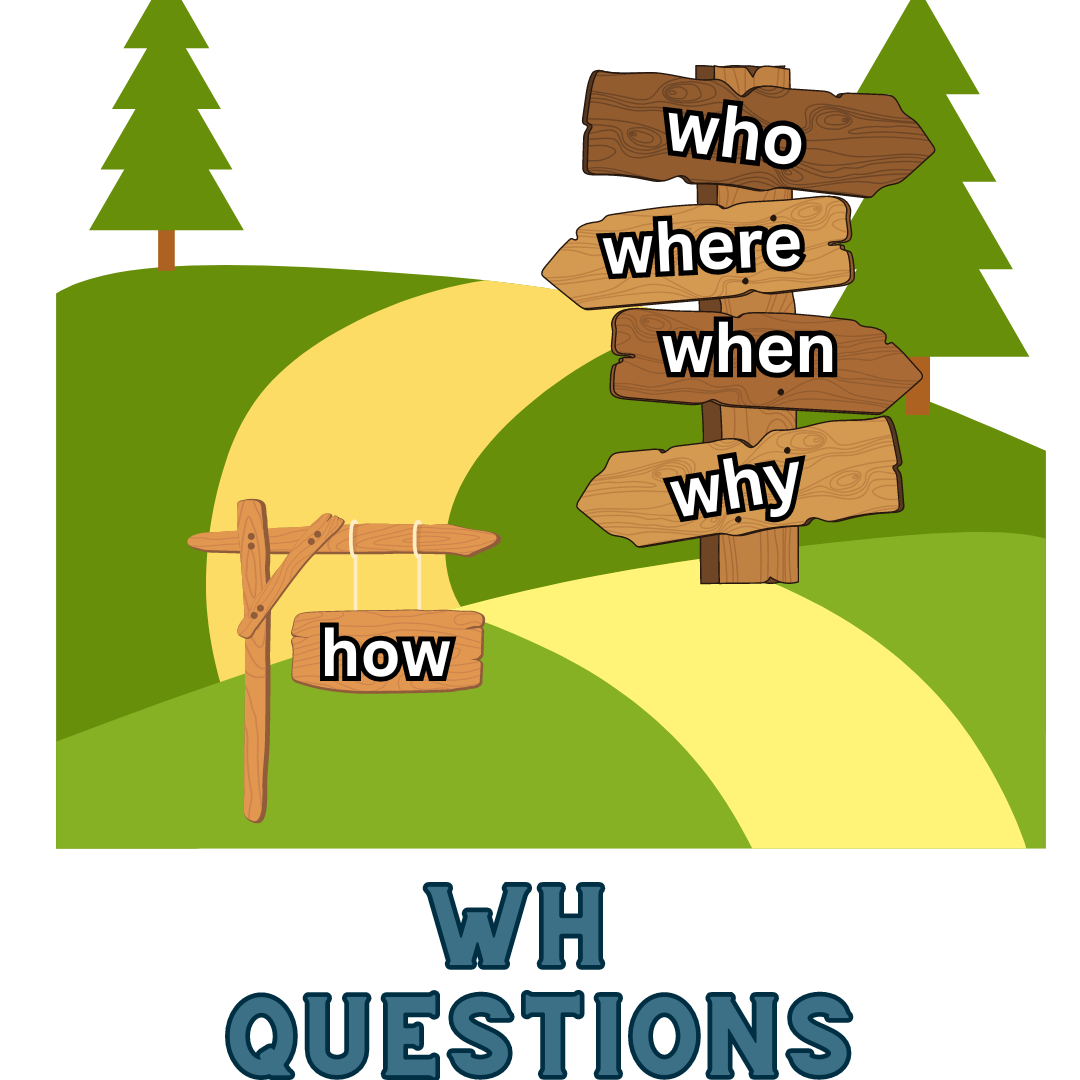
WH-Question Scenes: A simple picture scene (like a park or a birthday party) with a list of “who,” “what,” and “where” questions. Perfect for working on comprehension and expressive language.
Category Sorts: Simple mats with two or three categories (like “food,” “animals,” “clothes”). You can use them with the included paper cut-outs, or better yet, grab some plastic toys or just have the child name items for each one.
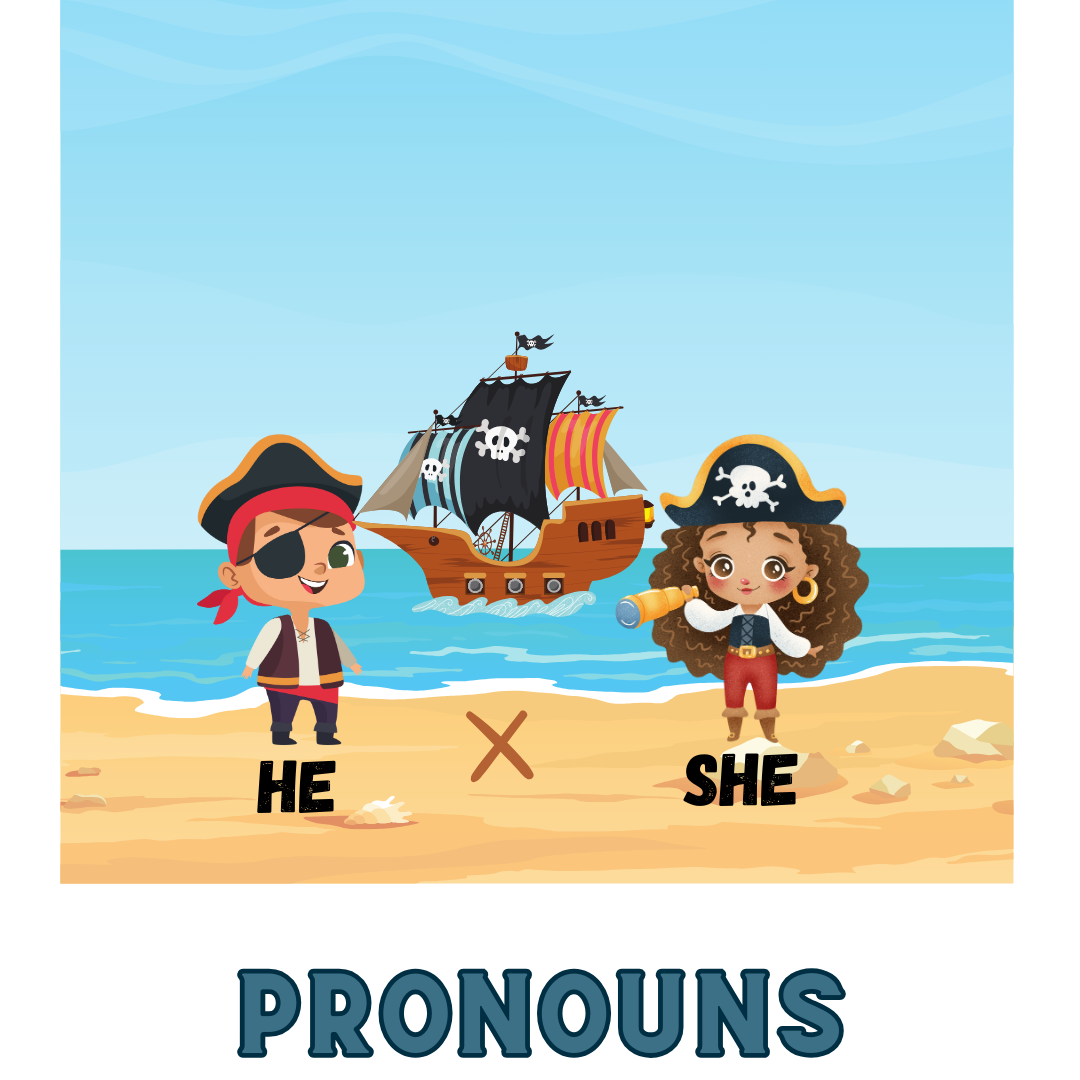
Verb & Pronoun Mats: A sheet with a few pictures of kids doing different things (e.g., “He is jumping,” “She is eating”). You can use them to target “he/she/they,” “-ing” endings, or past tense.
The Magic of No-Prep & Teletherapy Resources
This is where you save your sanity. No-prep speech therapy activities are my jam, and they’re almost always free. This is perfect for teletherapy, but I use them in-person all the time, too.
My Favorite “Digital” Freebies
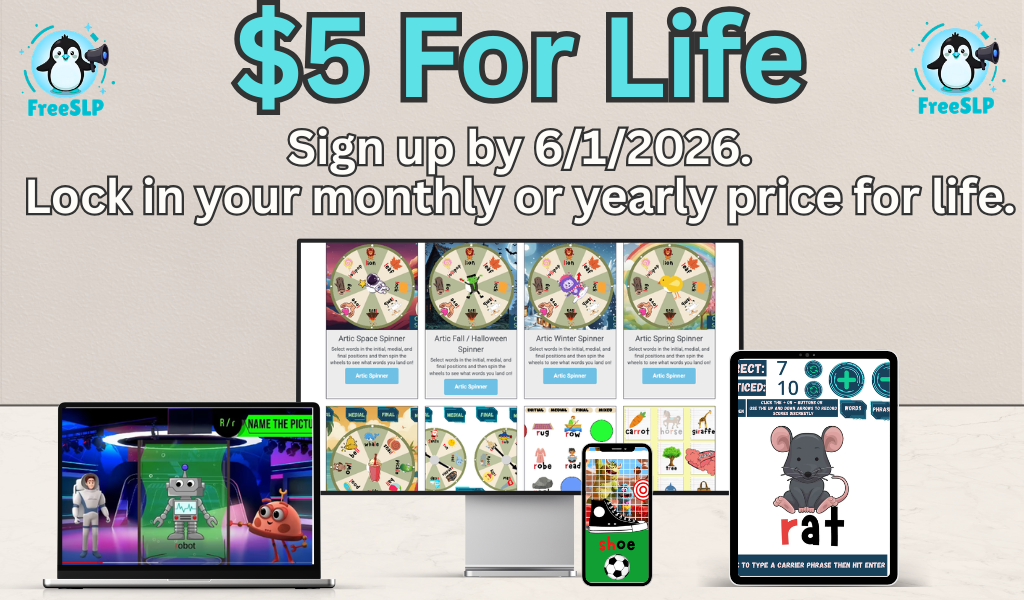
Digital Spinners: Ditch the plastic spinner. Use a free website with a digital wheel. You can plug in target words, questions, or even “turn-taking” breaks.
Online Whiteboards: Most teletherapy platforms have one built-in. You can pull up a blank screen and play Tic-Tac-Toe with artic words, draw concepts, or make a graphic organizer.
Boom Cards™ Samples: So many SLP authors offer free “sampler” decks of their Boom Cards. These are interactive, self-grading digital task cards. You can build a whole library just from free samples.
The Truly Free Stuff: Everyday Life
Here’s the deal: You don’t always need a worksheet. The best SLPs know how to turn anything into therapy.
A Toy Catalog: Got junk mail? It’s a goldmine for articulation (“Find me things with /s/!”) and language (“What do we do with this?”).
A Box of Blocks: Target prepositions (“on,” “under,” “next to”), following directions (“Put the red block on the blue block”), and turn-taking.
A Picture Book (No Words): These are amazing for high-level language. The child has to infer, describe, and use sequential language.
A Quick Tip for Parents
If you’re a parent looking for free materials, hi! Here’s my biggest piece of advice: Your daily routines are more powerful than any worksheet.
You don’t need a formal “speech time.” Talk about what you’re doing while making dinner (“I’m chopping the carrots.”). Read a book and just talk about the pictures—you don’t even have to read the words. That’s it. That’s the best “home practice” you can do.\