If you’ve ever run a virtual articulation session with a wiggly first grader or a chatty middle-schooler, you already know the truth — not every online activity holds attention for long. That’s where good articulation games come in. The best ones turn practice into play, and they keep kids repeating sounds without even realizing they’re working.
After years of juggling digital sessions and in-person therapy, we’ve learned one thing: you don’t need hundreds of materials. You just need a few good ones that actually work, are easy to adapt, and don’t require endless prep. The good news? There are tons of great, free articulation resources online — you just need to know where to find them.
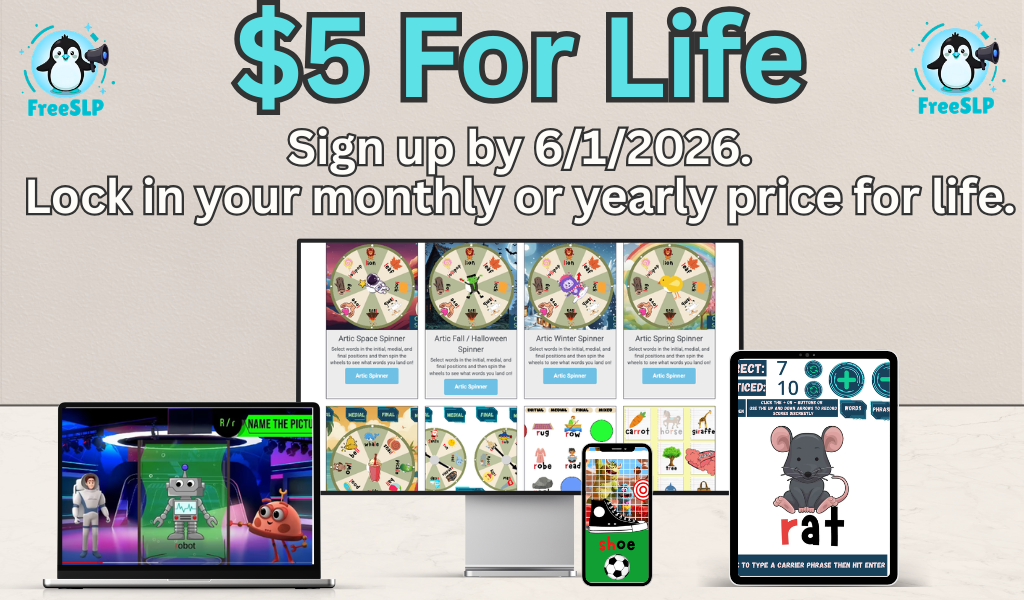
We’ll start with our favorite corner of the internet: FreeSLP.com. The site was built by speech-language pathologists who know exactly how precious our time is. It’s full of free, no-prep articulation materials that work perfectly for both teletherapy and in-person sessions. You can screen-share them in a virtual setting or print them for a quick grab-and-go activity. Each resource focuses on what actually helps kids — lots of meaningful repetitions, built-in motivation, and visuals that make practice fun.
We use FreeSLP materials all the time for online sessions because they’re simple to open and easy to customize. One day we might use a themed articulation board for /r/ sounds, and the next, we’ll use a picture prompt sheet that works for multiple goals. Everything is designed to be flexible so you can adapt it to any group or student.
When we want something a little more interactive, Boom Cards are next on our list. These digital decks are a favorite among SLPs for good reason. Kids can click, drag, and get instant feedback as they work through practice words. The free decks available online cover every sound you could possibly need — from early developing sounds like /p/ and /b/ to tricky ones like /r/ and /th/. We love how easily they fit into short sessions or quick warm-ups.
Another go-to for online articulation is Pink Cat Games. The platform feels like a mix between a video game and a therapy tool — bright colors, simple directions, and just enough competition to keep kids motivated. We often use Pink Cat activities at the end of a session as a reward. Students get so caught up in the fun, they don’t even realize they’re practicing their sounds for the fiftieth time. That’s the magic of a good articulation game.
If we need printable materials for home practice or backup plans, Teachers Pay Teachers (TPT) is our favorite stop. Searching “free articulation” brings up hundreds of great options created by other speech-language pathologists. You can find word lists, picture cards, board games, and interactive worksheets that can be printed, uploaded to a digital whiteboard, or shared with families for at-home use. Many of the free TPT materials are simple enough for parents to follow on their own, which makes carryover easier and progress faster.
We also keep a few general educational sites bookmarked that double as speech therapy goldmines. ABCya, Toy Theater, and PBS Kids all have interactive games that can be easily adapted for articulation practice. For example, you might have a student say a target word before taking a turn, or describe what’s happening on the screen using their sound. Simple tweaks like that turn any fun game into speech practice with purpose.
One of the best things about articulation therapy online is how easy it is to mix and match tools. A typical session might look like this: a five-minute warm-up using a Boom Card deck, focused practice using a FreeSLP articulation printable, and a few minutes of Pink Cat for reinforcement at the end. That combination works across age groups and keeps energy levels balanced.
We know every SLP has a different rhythm, but most of us agree that the biggest challenge in teletherapy is engagement. That’s why we build variety into our sessions. Kids like novelty, and even a small change — a different visual theme or new format — can re-ignite their interest. FreeSLP’s seasonal packets, for example, are perfect for switching things up. When we move from a fall apple theme to winter snowflakes, our students instantly perk up.
It’s also important to remember that articulation games don’t have to be long or elaborate. In fact, the best ones usually aren’t. A quick digital spinner, a picture prompt, or a simple matching activity can easily fill a session with productive practice. The goal is to make sure your student gets lots of correct repetitions without feeling like they’re in a drill.
If you’re working with parents, share links to sites like FreeSLP.com, Boom Cards, and TPT so they can continue practice at home. Many families feel unsure about how to help between sessions, and showing them where to find free, SLP-approved materials gives them confidence. It also helps your students make faster progress — when practice becomes part of daily life, skills start to stick.
As SLPs, we’re constantly balancing creativity and time management. We want sessions to feel engaging and fresh, but we don’t always have hours to prep. That’s why we rely on free articulation games and resources that are ready in seconds. Between FreeSLP’s printables, Boom Cards’ interactive decks, Pink Cat’s cheerful games, and TPT’s endless ideas, there’s no shortage of inspiration.
When you find a few resources that click, hold onto them. Build a small digital library of favorites you can open anytime — the ones that consistently get your students talking, laughing, and learning. Because in the end, articulation therapy doesn’t have to be complicated to be effective. It just has to be consistent, engaging, and fun.
So the next time you open your teletherapy platform, grab a FreeSLP printable, load a Boom Card deck, and queue up a quick Pink Cat Game. You’ll be amazed how much smoother your session feels — and how many repetitions you can fit in when your students are genuinely having fun.
Speech therapy progress starts with good practice, and good practice starts with a great game.