Types of Following Directions: A Complete Guide for Parents and Teachers
Discover how mastering different types of directions can improve a child’s listening skills, academic performance, and social interactions.
Why Following Directions Matters
Following directions forms the foundation of daily communication and learning. Children receive verbal instructions throughout their day—at home, in school, and during play. Their ability to understand and follow these directions impacts behavior, social interactions, and academic success.
The skill requires processing and remembering auditory information while understanding basic concepts. Many children struggle with this seemingly simple task because it involves multiple cognitive skills working together.
Understanding Basic Concepts First
Before mastering complex directions, children need a strong foundation in basic concepts. These fundamental vocabulary words appear in most instructions children receive daily.
Basic concepts include several categories:
- Colors – red, blue, green, yellow
- Directions – through, around, across
- Quantities – few, many, some, all
- Sequences – first, next, last
- Shapes – round, square, oval
- Sizes – big, small, tiny, huge
- Emotions – happy, sad, angry
- Characteristics – old, new, clean
- Textures – rough, smooth, bumpy
- Time concepts – early, late, before, after
- Spatial relationships – front, behind, top, bottom
The Five Types of Directions
Children encounter different types of verbal directions throughout their day. Each type requires specific cognitive skills and increases in complexity as more elements are added.
Understanding these five direction types helps adults provide appropriate support and practice opportunities.
1. Basic Directions
Basic directions start simply and gradually increase in complexity. At the beginning level, they involve just one step with a single element: “Point to the ball.”
As a child’s skills improve, more elements get added to make these directions more challenging:
- Adding color: “Point to the red ball.”
- Adding size: “Point to the big ball.”
- Adding action: “Point to the ball that is rolling.”
- Adding location: “Point to the ball under the table.”
Advanced basic directions combine multiple elements: “Find the small red ball that is rolling under the table.” This requires processing and remembering several descriptive details simultaneously.
2. Sequential Directions
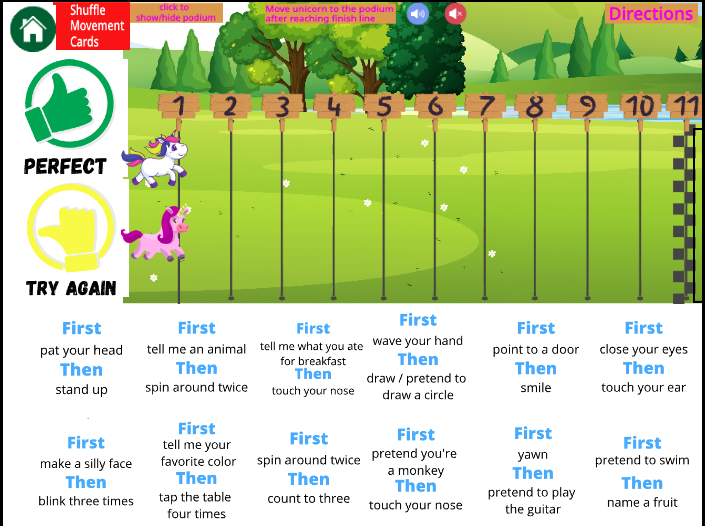
Sequential directions challenge children to follow multiple steps in a specific order. These directions test both auditory memory and processing abilities.
Multi-step directions require following two or more instructions given together: “Put your pencil in your desk and get your reading book.” The child must remember both parts while completing the first action.
Sequential directions emphasize performing actions in a specific sequence: “Put the glue in the box, push your chair under the table, and get in line.” The order matters, adding another layer of complexity.
3. Quantitative and Spatial Directions
These directions incorporate concepts about quantity and location. They require understanding specialized vocabulary terms that describe “how many” and “where.”
Quantitative terms include:
- one, two, three
- all, both, none
- either, or, and
- not, except, don’t
Spatial location terms include:
- first, second, third, last
- between, middle, center
- left, right, beside
Advanced directions combine these terms with descriptive elements: “Choose the toy that is between the small green rocket and the big yellow train.” This requires processing multiple pieces of information at once.
4. Temporal Directions
Temporal directions involve time concepts, particularly the terms “before” and “after.” These directions challenge children’s sequential thinking and auditory processing.
The position of time words within the instruction adds complexity:
- Middle position: “Put the truck in the box before you put the robot in the box.”
- Beginning position: “Before you put the doll in the box, put the rocket in the box.”
Higher-level temporal directions add descriptive elements: “After you put the green doll in the box, put the red plane in the box.” This increases both memory demands and processing complexity.
5. Conditional Directions
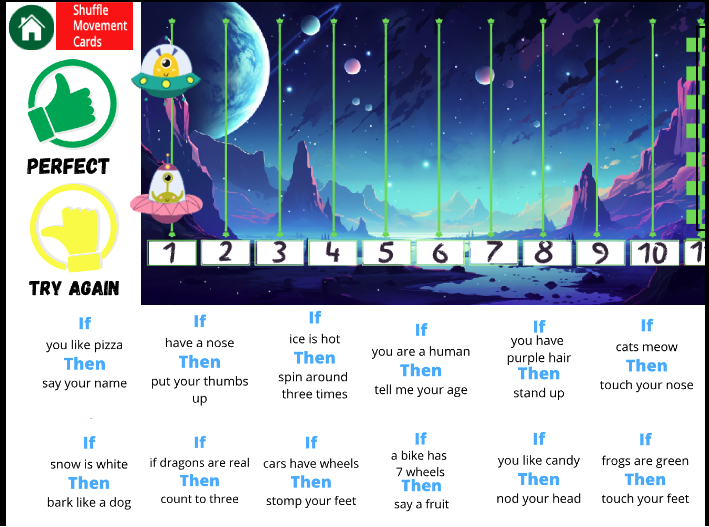
Conditional directions represent the most complex type. They require decision-making based on specific conditions, often using “if-then” structures.
Simple conditional directions establish a basic condition: “If a doll is in the box, put the box on the truck.” The child must first check whether the condition exists before deciding which action to take.
More complex conditions involve negation: “If a rocket is not in the box, put the box on the truck.” This requires understanding both the condition and its opposite.
Advanced conditional directions combine multiple elements: “If a green doll and a blue train are in the box, put the box on the large truck. If not, put the box on the small truck.” These directions test auditory memory, processing, and conditional reasoning simultaneously.
Building Direction-Following Skills at Home
Parents can strengthen direction-following skills through everyday activities. Simple games and consistent practice help children develop these important listening abilities.
Start with directions at your child’s current ability level. Success builds confidence and motivation for more challenging instructions. Gradually increase complexity as your child masters each level.
Use visual supports when introducing new direction types. Pictures, objects, or demonstrations help children understand what’s expected before relying solely on verbal instructions.
Simple Activities That Help
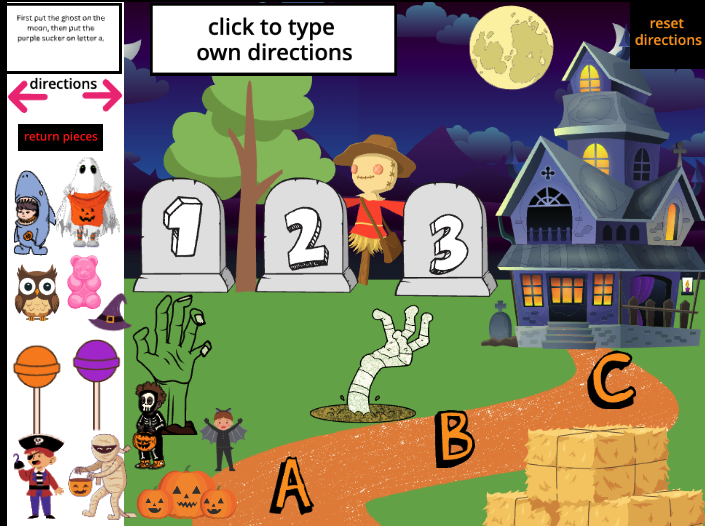
Simon Says provides natural practice for basic and sequential directions. Start with simple commands and gradually add more elements and steps.
Scavenger hunts incorporate multiple direction types. Create clues using spatial terms: “Look under the cushion that’s between the blue pillow and the red blanket.”
Cooking together naturally includes sequential directions. Have your child help follow recipe steps in order while learning kitchen vocabulary.
Craft projects offer opportunities for conditional directions: “If you want a blue flower, use this paper. If you want a yellow flower, use that paper.”
Supporting Children Who Struggle
Some children find following directions particularly challenging. Language disorders, auditory processing difficulties, or attention issues can impact this important skill area.
Watch for signs that a child needs extra support:
- Frequently asking for directions to be repeated
- Following only part of multi-step instructions
- Appearing confused after receiving directions
- Watching what others do before starting
- Consistently making errors in direction-following
For children with significant difficulties, a speech-language pathologist can provide specialized assessment and intervention.
Following Directions in the Classroom
Classroom success depends heavily on following directions. Teachers give an estimated 800 directions each day, making this skill essential for academic performance.
Teachers can support students by:
- Providing visual supports alongside verbal directions
- Breaking complex directions into smaller steps
- Using consistent language for routine instructions
- Checking for understanding before students begin tasks
- Teaching direction vocabulary explicitly
Following Directions
Following directions requires integrating multiple language and cognitive skills. Children must understand vocabulary, process information sequentially, hold details in memory, and execute actions accurately.
This complex skill develops gradually through consistent practice and exposure. Starting with basic directions and systematically introducing more complex types helps build comprehensive listening abilities.
Frequently Asked Questions About Following Directions
At what age should children follow multi-step directions?
Most children can follow two-step directions by age 3-4, such as “Get your shoes and put them on.” By age 5-6, many children manage three-step directions. However, individual development varies, and some children need more practice than others.
Why does my child follow directions at school but not at home?
This common situation often relates to environmental differences. Schools typically have structured routines, visual supports, and consistent consequences. At home, try using similar strategies: provide clear, specific directions; maintain consistent expectations; and create visual reminders for routine tasks.
How can I tell if my child’s direction-following difficulties indicate a larger problem?
Occasional difficulty following directions is normal, especially with complex instructions. However, consistent problems across settings might indicate language processing issues, auditory processing disorders, or attention difficulties. If your child struggles despite using supports like visual cues and simplified language, consider a professional evaluation.
Should I repeat directions when my child doesn’t follow them?
Rather than simply repeating directions, try different approaches. Break complex directions into smaller steps, add visual supports, or demonstrate what you want. These strategies help children process information more effectively than just hearing the same words again.
How can I help my child with conditional directions?
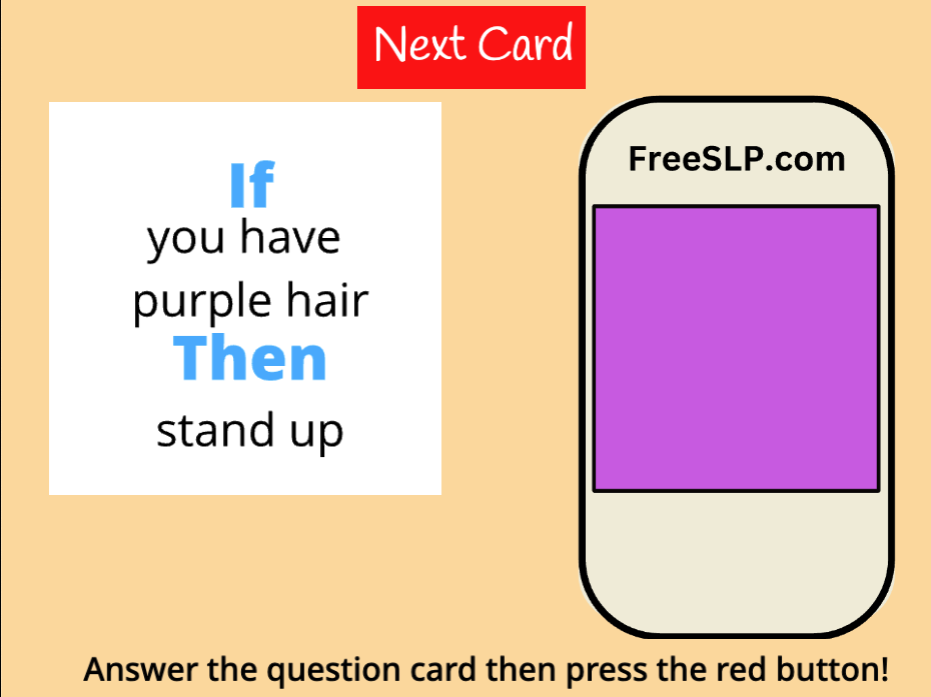
Conditional directions (“If X, then Y”) are challenging because they require decision-making. Practice with simple games: “If I tap once, stand up. If I tap twice, sit down.” Use visual supports like picture cards that show both the condition and the corresponding action. Gradually increase complexity as your child masters simpler conditional directions.
Can technology help improve direction-following skills?
Yes, appropriate apps and programs can support direction-following development. Look for activities that provide clear instructions, visual supports, and graduated difficulty levels. However, technology should supplement, not replace, real-life practice with directions in natural contexts.
Following directions represents a fundamental skill that impacts a child’s success at home, school, and in social settings. Understanding the five types of directions—basic, sequential, quantitative/spatial, temporal, and conditional—helps adults provide appropriate support and practice opportunities.
By building strong basic concept knowledge and systematically introducing more complex direction types, adults can help children develop comprehensive listening skills. Regular practice through everyday activities and structured exercises strengthens these important abilities.
Through targeted intervention and consistent practice, children can develop the direction-following abilities needed for academic success, social interaction, and independent functioning in daily life.